
April 29, 2019

what is spot cooler2
Uncategorized

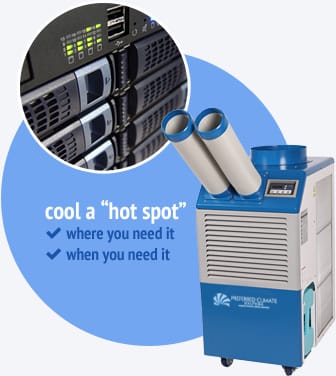
There are two different types of commercial spot coolers to consider: Air cooled and water cooled. Water cool units require water to help cool warm air, while air-cooled units convert warm air into cool air with an icy cold coil. Here are the pros and cons for each air cooled and water cooled spot coolers.

Air Cooled – Pros

These spot coolers do not require a water hookup like their water-cooled counterparts, so these are more common among spot cooler owners. This means you require fewer resources in order to get them up and running.

These spot coolers have a much higher limit in cooling power compared to water coolers. You can get an air-cooled sport cooler that goes up to 120,000 BTU, whereas the most powerful water-cooled spot cooler can only go up to half of that.

Most air-cooled spot coolers are considered to be portable. They have a set of wheels so that you can move it from one room to another if need be. You will, however, need to consider disassembling and reassembling ventilation of the moisture that it captures.

Air Cooled – Cons

For air-cooled units, you need the moisture to be properly ventilated so that the warm moisture has the means to escape your room. If you have a window or ceiling tile, you have a great way of doing this, but setting it up has to be done so that the warmth doesn’t enter or re-enter the room.

Additionally, there is no way to enhance an air-cooled spot cooler with a chiller system, such as with a water-cooled spot cooler. The max BTU your cooler comes with cannot go any higher by any means necessary.

Water Cooled – Pros

Water cooled spot coolers tend to be more energy efficient, meaning they will use less power and cost less money to run than air-cooled spot coolers.

These types of spot coolers are self-contained, so they do not require any setups with ducting systems. They just simply make the warm air cold thanks to adding colder moisture. This is great if you don’t want to have to deal with opening windows or worrying about that warm air coming back into the room.

The performance of a water-cooled spot cooler can be enhanced if you also have a chiller system. This can help make your spot cooler run colder, thus further making it more energy efficient and produce cooler air.

Water Cooled – Cons

While they can help to save on your electrical bill, they could raise your water bill. Because you constantly need water to keep this spot cooler going, you will need to continually use water for the spot cooler’s water supply.

Also, water-cooled spot coolers tend to be heavier, occupy more space and become more immobile, thanks to the added need for water supply. These are only good spot coolers if you have just one and only room that you have to cool.

Contact us at 888.466.7180. No one offers faster response than we do.

We’re based in southeast Houston, near the Sam Houston Tollway and South Freeway. We also have offices in Dallas / Fort Worth, just off the President George Bush Turnpike in Carrollton, and in Austin, just off the Pickle Parkway in Hutto.
how spot cooler works2
Uncategorized

Spot coolers are amazing appliances to help you stay cool inside of a garage, workshop, basement, or tented area outdoors. But the lines still might be unclear when it comes to whether or not you might need a commercial spot cooler or a personal spot cooler, because not all living and working conditions are similar to one another. Here are some things to consider when contemplating personal and commercial spot coolers.

Usage

What you need the spot cooler for should better clarify which kind of spot cooler you need. For personal spot coolers, you can use it to cool a bedroom, a sunroom or simply when you want to save money by not running an air conditioner in the home. Commercial spot coolers are ideal for cooling an office, a server room, for stores and restaurants and for garages for mechanics and other auto specialists.

Power

Personal spot coolers run on 115-volt power, which is what you get from your average outlet. You basically just plug it in and turn it on with no additional steps to take. For commercial spot coolers, they typically come with greater power than personal coolers, but a dedicated circuit with a proper receptacle is necessary, so it needs a more complex power source in order to run aside from just plugging it into an outlet. You might need to have an electrician help you install a commercial spot cooler.

Exhaust

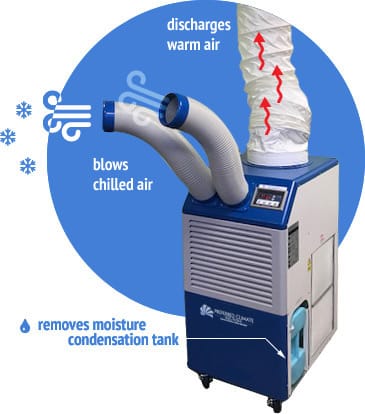
That moisture has to go somewhere, of course. For many commercial spot coolers, this moisture can travel through a hose and out of your window. For personal spot coolers, this moisture goes inside of a tank that you would need to empty from time to time, and depending on the size of the cooler, the tank also has a limit to how much water it can hold. Some commercial spot coolers, however, offer both forms of the exhaust. The hose is more ideal for people that do not want to worry about emptying the tank again and again.

Durability

Commercial spot coolers tend to last a very long time due to what they are made of Insulated metal and reinforced ABS plastic. Drain pads are even made of stainless steel so that moisture doesn’t wear them out over time. For personal spot coolers, these are made of more affordable plastic. They will not last as long as commercial spot coolers, so in order to get the most out of them, ongoing care and maintenance are strongly recommended.

Price

Due to the power, performance, and durability of a commercial spot cooler, these tend to cost much more money. Personal spot coolers are more affordable, in comparison, due to using simpler components and more affordable materials. It might make sense for some owners to choose personal spot coolers to save money, but then again, the performance of commercial spot coolers can make it well worth the investment.

Contact us at 888.466.7180. No one offers faster response than we do.

We’re based in southeast Houston, near the Sam Houston Tollway and South Freeway. We also have offices in Dallas / Fort Worth, just off the President George Bush Turnpike in Carrollton, and in Austin, just off the Pickle Parkway in Hutto.

homepage bg spotcoolers
Uncategorized

Spot coolers are great to have for many different occasions, from outdoor events to business conferences that last a whole weekend. These coolers can even be useful in the event of a power outage or another emergency situation.

When it comes to spotting coolers, you can choose between owning one forever or borrowing one for a limited time. We often get asked about which is better, and the answer to this question isn’t quite clear, as either one seems like a better plan over the over, depending on the situation. So we have compiled four things to consider when choosing a spot cooler to either rent to buy.

How Long Are You Planning To Use The Cooler?

This should be the easiest question for potential spot cooler owners to answer. Many consumers want a spot cooler that they can use for the years ahead. It wouldn’t make sense for these people to sporadically rent out a spot cooler if they need to rely on one for the long term, so if you see yourself needing a spot cooler for more than one occasion, buy it and make it yours. If you only see yourself needing the spot cooler just for one occasion in the near future, rent it and save some money. If you aren’t sure how long you might need the cooler for, continue to read on for other points to consider.

Do You Need The Cooler Unexpectedly?

You might need to get a spot cooler due to an emergency, but it might be unclear for how long you need it for, or if you need it again following the emergency. In most emergencies, consumers tend to rent spot coolers until they no longer need them. However, if you tend to get power outages in your neighborhood more than seldom, buying a spot cooler can be a good idea too, so that you can use it in case of other emergencies in the future. If you understand how often you encounter blackouts in your area, you should be certain about whether or not to buy or rent a spot cooler.

Do You Expect Changes With Cooling In The Future?

If you see yourself needing a cooler for a long period of time, and don’t see that changing any time soon, then you should consider buying the spot cooler. If you are undergoing changes for your home or business, and you momentarily won’t have other means of cooling at hand, then you should definitely rent a cooler.

This also applies to seasonal changes, as well. If you live in a warm area and don’t get cooling in a certain room of the home, such as the bedroom or basement, it would be better to buy a spot cooler over renting it. Even though it might only get hot and humid for a few months during the year, you will always need to use it again next year and the years after that.

Contact us 888.466.7180. No one offers a faster response than we do.

We’re based in southeast Houston, near the Sam Houston Tollway and South Freeway. We also have offices in Dallas / Fort Worth, just off the President George Bush Turnpike in Carrollton, and in Austin, just off the Pickle Parkway in Hutto.
homepage bg event
Uncategorized

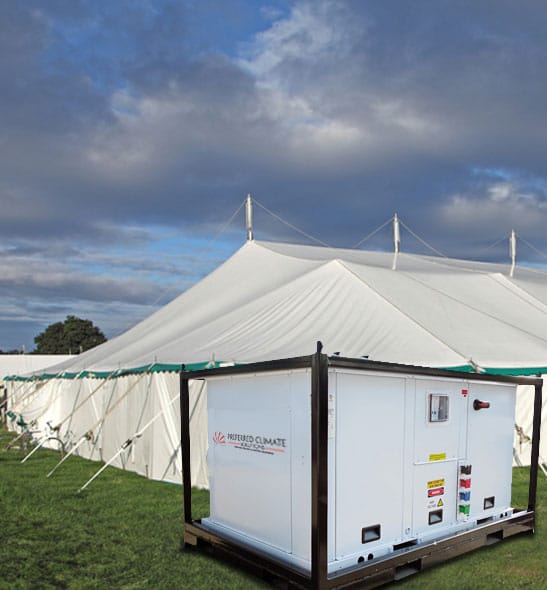
Whether it is for an outdoor event or for sleeping outside, having an air conditioner is important to keep yourself dry, cool and comfortable if you are looking to be inside your tent for lengthy periods of time. Without anything to cool you from inside your tent, you will be perspiring nonstop under hot and humid temperatures.

But what are some things to consider when buying a portable air conditioner for tents? Of course, there isn’t such a thing as air conditioners that are one-size-fits-all. Here is what you need to know about portable air conditioners in general before buying one for your tent.

Power And Energy

Arguably the biggest factor when choosing an air conditioner for the tent is what kind of power do you want yours to run on. The most common type of portable air conditioner is battery-powered. These air conditioners are affordable, and you can also buy batteries for them that can be recharged. These, however, are not made to be powerful or are capable of cooling large tents. For the most part, battery-powered air conditioners last throughout the night before you have to replace the battery.

For most situations, an electrically-operated air conditioner isn’t ideal unless you have nearby access to a power supply or generator. You can draw this power from either an electrical grid or a large vehicle, such as an RV or trailer.

Cooling Capacity

Another important consideration is to know how much cooling itself that you need. If you are sleeping in temperatures that are less than 80 degrees, you likely won’t need much cooling. Most air conditioners for tents lie in between 5,000 and 12,000 BTU, with the higher the number meaning the unit can cool a larger room. If you have a tent that is 10 by 10 feet, a 5,000 BTU air conditioner should suffice, but if your tent is larger, then easily pick one with more BTU.

Size

You are sure to move your portable air conditioner quite often, so buying one that is easy to carry or move can also be important to some consumers. There are basically two types of air conditioners that have different degrees of mobility: Window units and portable units. Window units are heavier and have to be positioned next to your tent, so it is necessary to check how much it weighs first to see whether or not it is a unit you can move without trouble.

Additional Features

To further enjoy the experience you get from your portable air conditioner, many of them come with adjustable features so that you can use yours exactly the way you want to need it to. Examples of some additional features include adjustable thermostats, variable fan speeds, an on/off timer, low-battery indicators, and more. Often times, air conditioners with basic settings are the most affordable, but they usually aren’t worth it if there are plenty of things that you wish you could change about it.

We’re based in southeast Houston, near the Sam Houston Tollway and South Freeway. We also have offices in Dallas / Fort Worth, just off the President George Bush Turnpike in Carrollton, and in Austin, just off the Pickle Parkway in Hutto.

Contact us 888.466.7180. No one offers a faster response than we do.

Scroll to Top