Regardless of season, anyone planning an outdoor tent event in Texas needs to consider what kind of cooling and heating system they will need to keep their guests comfortable. Summer sun and humidity can create brutal, sweltering conditions, and the chill of the winter time can leave your guests shivering and feeling underdressed. In addition to the variable environment, there are also multiple cooling and heating solutions available to suit every need and budget. How do you know which is the right solution for your event?
As a premier provider of mobile HVAC services, Preferred Climate Solutions (PCS) has the knowledge and experience to help you select the right system for your event that won’t waste energy or blow your budget.
Let’s take a look at our guide to choosing the right tent event cooling and heating system:
Planning Considerations
Before we discuss types of heating and cooling solutions, let’s examine what factors need to be taken into account during the planning stage. Write down concrete answers to the following, or consider these statements:
- What time of day will your event take place and how long will it run?
- What is the size of the area or tent you are attempting to cool or heat?
- Event temperature control is about keeping the temperature within a set range, not adjusting it throughout the event
- Reserve tent and HVAC accessories sooner rather than later so that you will have everything you need on the day of your event.
Once you have your plan in place, you are ready to start looking at what cooling or heating system will best suit your event needs.
Cooling Systems
The chief advantage to cooling a tent event is guests are out of direct sunlight (the chief culprit for heating things up when you are celebrating outdoors). That being said, you are still going to need some sort of cooling system to prevent the environment in the tent from becoming unbearable. Sometimes you can accomplish this without a tent AC unit, sometimes you can’t. We will consider all the options and take a look at some ways you can save energy and keep things cool even without using a standard electric cooling unit.
Tent Fans
A cost effective option, this allows you to keep air moving through the tent without costing a fortune in energy bills. Fans perform best when placed in corners or in every section of larger tents.
Cooling Units
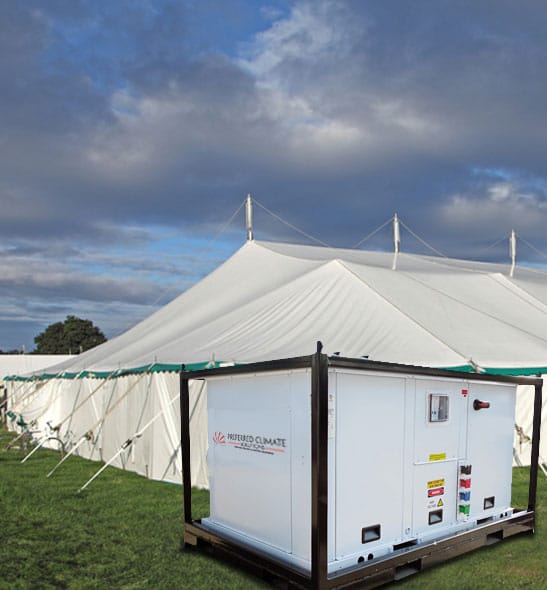
A cooling unit will always be the most expensive option for two reasons: first, they have a higher rental rate, and second, you need a tent with sidewalls to make efficient use of them. They are well worth the greater investment, however, since they are more compact, less noisy and cool tent interiors more efficiently and effectively than fans.
Misting Fans
Like an ordinary tent fan for the most part, misting fans are an excellent solution for hot weather events where your guests won’t mind a little added humidity. Cool water is periodically sprayed into the airflow and distributed through the tent interior, cooling everyone off.
The one drawback is guests are going to find themselves with slightly dampened clothes after a while. So long as everyone is okay with that, misting fans are an excellent and inexpensive way to keep a tent event cool.
Pro-Tip: Don’t Put Up Tents On Asphalt In Summer
Setting up a tent on the grass is cooler than setting up on asphalt by a factor of ten. In the winter time though, setting up a tent on asphalt later in the day is ideal. The heat trapped in the asphalt means you need less energy to keep your event warm with all that stored energy in the ground.
Pro-Tip: Plan Your Event For Later In The Day
Planning a tent event for midday may be a necessity for you depending on your booking, but summer tent events are always best scheduled during the latter half of the day. Not only do you catch the sunset, but you will also save significantly on your cooling costs.
Now that we have covered everything cooling related, let’s examine how tent heating solutions work.
Heating Systems
Renting a heating system for your tent event is a lot less complicated than renting a cooling solution. Your choices are propane or electrical depending on the venue. The only difference beyond energy source is how many or how large a heater you need for your tent event. Here are a few guidelines to help you out:
- Hang Tent Sidewalls
To control the temperature of any given space, it needs to be enclosed. To enclose a tent, you need to hang sidewall panels from the roof and leave no more than 10-20 feet of open space for entrances and exits. Where those 10-20 feet are depends on how you want foot traffic to flow and where you plan to place the heating units.
- Check Power Access Availability
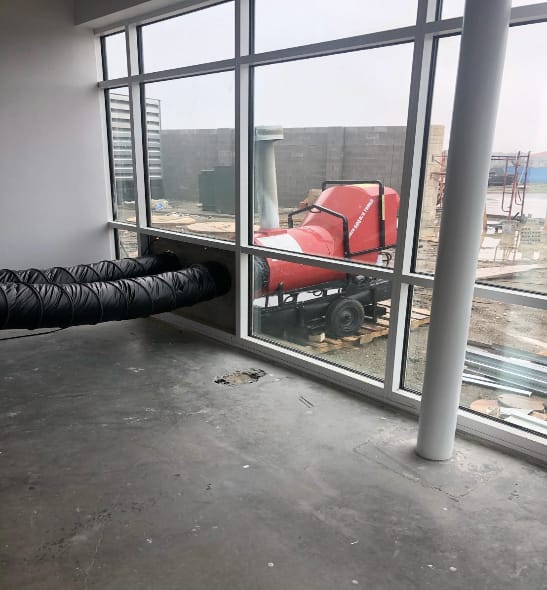
If you are running propane powered tent heaters, then access to electricity only concerns powering any equipment you may have inside the tent. All tent heating units are designed to run outside of the tent with a blower extended into the tent to maintain a comfortable temperature.
It is highly recommended you have your tent heaters installed by the rental company to prevent malfunctions or failure during your event. This also allows professionals to assess the power access availability and safely run any extension cords needed.
- Calculate the Size/Number of Tent Heaters
This is actually the easy part. You need answers to the following questions to make this calculation:
- What size is your event tent?
- What is your desired temperature for the thermostat?
- How long is the duration of your event?
- What is your estimated run time for the heaters?
- How many electrical outlets will you have access to on-site?
Give this information to your heating rental provider, and they will give you an estimate of how many heaters you need and for how long. Their technicians show up on the big day and ensure everything is configured and running properly before your start time.
Final Thoughts
Choosing a cooling or heating system for your tent event doesn’t have to be complicated. If you are a Houston local and planning a tent event for 2021, contact Preferred Climate Solutions today for a free estimate. Let us make the temperature the last thing on your mind at your next tent event.