Blog

Industrial Cooling Solutions
Blog

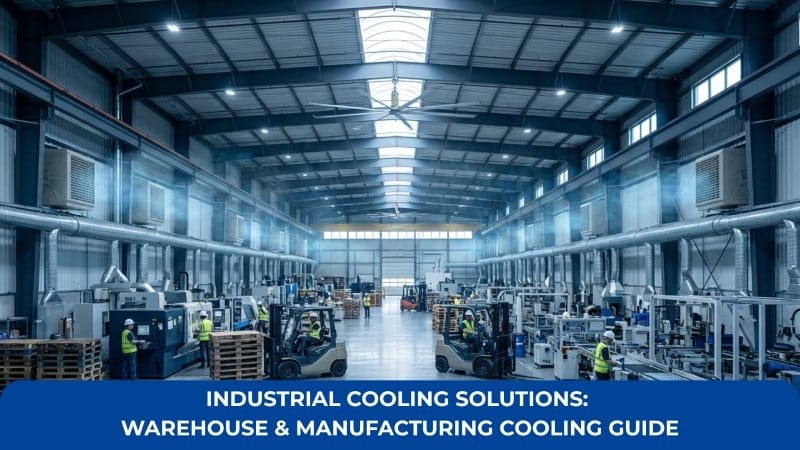
Excess heat inside warehouses, plants, and factories creates serious operational risks. High temperatures reduce worker productivity, strain equipment, and increase safety concerns, especially in demanding climates like Houston. For facility managers and operations leaders, temperature control directly impacts uptime, compliance, and overall efficiency.

Advanced industrial cooling solutions help stabilize indoor conditions, prevent downtime, and protect valuable machinery and inventory. Whether for seasonal demand or emergency support, choosing the right cooling approach ensures consistent performance and uninterrupted operations across industrial environments.

Why Industrial Cooling Solutions are a Business Critical Strategy

Extreme heat inside industrial facilities creates measurable operational risk, specifically during peak summer demand and production surges. Unlike office environments; warehouses and plants face unique challenges:

  • High ceilings that trap heat
  • Heat generated from machinery & production lines
  • Limited airflow in dense storage areas
  • Open loading docks allow hot air infiltration
  • Seasonal surges that strain permanent HVAC systems

Industrial cooling solutions help mitigate these risks by delivering scalable and targeted cooling exactly where and when it’s needed. For decision-makers, this means:

  • Reduced downtime
  • Higher workforce productivity
  • Fewer safety incidents
  • Protection of temperature-sensitive inventory
  • Compliance with safety standards

When cooling systems fail or simply can’t keep up, temporary deployments can prevent costly disruptions and maintain safe, productive working conditions.

How Does Poor Temperature Control Impact Industrial Operations?

Temperature instability in industrial facilities quickly affects productivity, safety, and profitability. What seems manageable can escalate into downtime, equipment strain, compliance risks, and rising operational costs in high-demand and high-heat operating conditions.

Reduced Workforce Productivity

High temperatures can cause fatigue, reduced focus, and slower physical performance. Even minor slowdowns across shifts can lower output, delay shipments, increase errors, impact morale, and reduce overall operational efficiency across departments.

Equipment Overheating

Machinery and electrical systems generate continuous heat during operations. Without adequate industrial cooling solutions, overheating can trigger shutdowns, damage sensitive components, reduce performance stability, shorten equipment lifespan, and lead to costly emergency repairs.

Inventory Damage

Temperature-sensitive products require stable environmental conditions. Poor warehouse cooling solutions can result in spoilage, material degradation, packaging damage, failed quality checks, compliance violations, and significant financial loss and reputational damage.

Safety & Compliance Risks

Excess heat increases the risk of heat stress, dehydration, and workplace accidents. Proper cooling supports worker safety, regulatory compliance, reduced liability exposure, improved alertness, and stronger overall workplace health standards.

For 24/7 facilities, these risks compound rapidly without a proactive cooling strategy and contingency strategy.

Common Industrial Cooling Solutions for Large-Scale Warehouses & Production Facilities

Different environments require different approaches. The most effective industrial cooling solutions are scalable, flexible, and engineered around actual heat load, airflow, and operational demands, not just square footage.

Spot Cooling for Localized Needs

When only specific zones require temperature control such as workstations, server rooms, electrical panels, or production cells, a spot cooler rental provides fast and targeted relief without overcooling the entire facility.

Spot coolers:

  • Deliver focused cold air directly to high-heat problem areas
  • Operate independently from existing HVAC systems
  • Require minimal installation & setup time
  • Help stabilize sensitive equipment or employee work zones
  • Provide immediate short-term cooling during peak heat or system failure

A spot cooler rental is ideal for emergency coverage, supplemental cooling, or temporary projects where installing permanent systems would be costly, time-consuming, or unnecessary.

Temporary Air Conditioning for Large Spaces

When broader facility coverage is required, temporary air conditioning rental systems deliver higher capacity and stronger airflow for open industrial areas.

These systems are commonly used to cool:

  • Large warehouse sections with heat buildup
  • Manufacturing & assembly lines
  • Industrial tents or temporary structures
  • Facilities undergoing HVAC repair or replacement

Temporary air-conditioning rental solutions are especially valuable during seasonal demand spikes, expansion phases, or unplanned outages, when permanent systems cannot efficiently manage rising heat loads.

Commercial Portable Systems

For facilities requiring heavy-duty cooling capacity, commercial air conditioners for rent provide powerful and scalable solutions designed for industrial performance standards.

These units:

  • Handle continuous & high-demand operational environments
  • Support extended runtimes for 24/7 facilities
  • Integrate with ducting systems for controlled airflow distribution
  • Cover larger square footage areas with consistent cooling output
  • Maintain stable temperatures in heat-intensive production zones

Commercial air conditioners for rent are commonly deployed during planned shutdowns, facility upgrades, seasonal overload, or emergency breakdowns, where operational continuity is critical.

Warehouse Cooling Challenges & Practical Temperature Control Solutions

Warehouse environments create temperature control issues that standard HVAC systems often cannot handle efficiently during peak operational demand.

Operational Cooling Challenges in Warehouses

  • High Ceilings & Heat Stratification: Heat rises and accumulates near ceilings, leaving workers below in stagnant warm air without proper circulation or destratification systems.
  • Loading Dock Exposure: Frequent dock door openings generate hot and humid air inside. It makes consistent temperature control difficult during busy shipping periods.
  • Machinery & Equipment Heat Output: Forklifts, conveyors, lighting, and charging stations continuously generate heat, gradually increasing internal temperatures and creating localized hot spots.

Practical Warehouse Cooling Solutions

Effective warehouse cooling solutions typically combine multiple approaches:

  • Targeted Cooling Zones: Designated cooling areas focus airflow where employees and equipment need it most to improve comfort and operational stability.
  • Portable Spot Systems: Spot cooler rental units provide immediate relief for high-heat zones without modifying permanent HVAC infrastructure.
  • Air Circulation Enhancements: Improved airflow reduces heat stratification, balances temperatures, and supports more consistent warehouse-wide cooling performance.
  • Scalable Rental Units During Peak Demand: Flexible rental systems expand cooling capacity during seasonal spikes, preventing overload of permanent equipment.

A spot cooler rental can quickly stabilize high-risk zones such as packing stations or equipment areas, while larger systems maintain consistent temperatures across broader warehouse sections.

Industrial Plant & Factory Cooling Requirements

Manufacturing plants and industrial factories operate within strict temperature tolerances where even minor fluctuations can disrupt processes, damage materials, or reduce precision. Heat affects not only workforce safety and comfort, but also machinery performance, product quality, and overall production efficiency.

Industrial cooling solutions in plant environments are designed to support:

  • Heat-intensive machinery that generates a continuous thermal load during operation.
  • Electrical control panels require stable temperatures to prevent malfunctions or shutdowns.
  • Production line stability where consistent climate conditions ensure product accuracy and quality.
  • Cleanrooms or specialty zones that demand controlled environments for compliance and performance.
  • 24/7 production schedules, where downtime can result in significant financial losses.

In high-demand facilities, temporary air conditioning rental helps prevent disruptions during maintenance or HVAC failures. For larger heat loads, commercial air conditioners for rent provide reliable, high-capacity cooling to maintain stable production conditions.

When Emergency Cooling Becomes Critical

Cooling failures can escalate quickly, especially in high-demand industrial environments. For decision-makers, the focus is not just restoring comfort; it’s protecting production, safety, and revenue. Therefore, they need emergency cooling solutions. 

Common Triggers for Emergency Cooling Needs

  • Unexpected HVAC system breakdown
  • Power instability or grid stress
  • Extreme heat waves exceeding system capacity
  • Weather-related disruptions are impacting facility infrastructure

Key Decision-Making Priorities

  • Minimize production downtime
  • Protect heat-sensitive equipment & materials
  • Maintain worker safety and compliance standards
  • Deploy solutions with minimal installation time
  • Ensure scalable capacity for larger facility areas

A rapid spot cooler rental can stabilize high-risk zones immediately, while a temporary air conditioning rental supports broader operational areas. Facilities that pre-plan access to commercial air conditioners for rent reduce response time and maintain continuity during peak demand periods.

How to Choose the Right Industrial Cooling Solution for Your Facility

Selecting the right system requires more than choosing equipment capacity. Facility managers must evaluate operational, environmental, and infrastructure factors to ensure reliable performance and cost efficiency.

  • Facility Size & Layout: Open warehouses, high ceilings, and wide floor plans require different airflow strategies than segmented production areas or enclosed process zones.
  • Heat Load Assessment: Evaluate machinery heat output, lighting, occupancy levels, and external heat exposure to determine total cooling capacity requirements.
  • Duration of Need: Define whether cooling is required for emergency response, seasonal demand, maintenance shutdowns, or long-term operational support.
  • Power Availability: Confirm that existing electrical infrastructure can support the required load without risking overload or performance instability.
  • Humidity Control Requirements: In high-humidity regions, cooling systems must manage both temperature and moisture to prevent condensation, corrosion, or product damage.
  • Deployment Speed & Accessibility: Emergency scenarios demand rapid setup with minimal disruption to operations and production flow.

For many industrial environments, combining warehouse cooling solutions with targeted spot cooler rental units creates a scalable and layered strategy that balances flexibility, efficiency, and operational continuity.

Proactive Planning vs. Reactive Cooling: What Industrial Facilities Should Know

Cooling strategy affects operational stability, costs, and overall risk. Facilities either plan or respond after failure. Understanding both approaches helps you make informed and risk-aware decisions.

Proactive Cooling Planning

A proactive approach integrates industrial cooling solutions into broader facility risk management and operational continuity planning.

Key Characteristics:

  • Seasonal cooling assessments before peak heat periods
  • Heat load evaluations across production zones
  • Pre-arranged temporary air conditioning rental agreements
  • Established vendor relationships for commercial air conditioners
  • Identified power access points & equipment placement zones
  • Monitoring of high-risk areas like control panels & server rooms

Operational Impact:

  • Reduced unplanned downtime
  • Faster deployment during emergencies
  • Predictable budgeting & cost control
  • Improved worker safety & morale
  • Greater equipment protection & lifespan

This strategy focuses on preparedness to minimize disruption before problems occur.

Reactive Cooling Response

A reactive approach activates cooling measures only after a system failure, or a heat-related disruption impacts operations.

Common Triggers:

  • Sudden HVAC breakdown
  • Extreme heat exceeding system capacity
  • Equipment overheating
  • Production stoppage due to unsafe conditions

Operational Consequences:

  • Increased downtime while sourcing equipment
  • Limited availability of rental systems during peak seasons
  • Higher emergency rental & logistics costs
  • Greater risk to production schedules
  • Elevated safety concerns during response delays

While reactive cooling can restore operations, it often involves higher stress, urgency, and financial impact.

Proactive Planning vs. Reactive Cooling: A Tabular Comparison

AspectProactive CoolingReactive Cooling
TimingPlanned before peak demand.Initiated after failure.
Cost StructureBudgeted and controlled.Often urgent and higher costs.
Downtime RiskMinimized.Increased.
Equipment AvailabilitySecured in advance.Dependent on availability.
Operational StabilityMaintained.Temporarily disrupted.
Decision PressureStrategic and measured.Time-sensitive and urgent.

How Industrial Facilities in Extreme Heat Benefit from Scalable Cooling

Facilities operating in high-temperature and high-humidity conditions face unique operational challenges. Extended heat waves, seasonal weather disruptions, and grid strain increase the risk of downtime, equipment failure, and workforce heat stress.

Scalable industrial cooling solutions provide the flexibility to:

  • Expand cooling capacity during peak demand periods.
  • Supplement permanent HVAC systems without overloading infrastructure.
  • Maintain operational stability during repairs or system maintenance.
  • Protect worker safety & health in critical areas.

Warehouse cooling solutions are particularly vital in logistics hubs, where consistent temperature control ensures rapid order fulfillment. 

How to Protect Industrial Productivity, Equipment, and Staff

Industrial cooling solutions go beyond comfort. They are essential operational safeguards. For facility managers, plant operators, and safety leaders, maintaining proper temperature control directly impacts:

  • Output Efficiency: Consistent temperatures help maintain production speed & quality.
  • Equipment Lifespan: Prevents overheating & reduces wear on machinery.
  • Compliance Standards: Supports safety & regulatory requirements.
  • Employee Retention: Comfortable work environments improve morale & reduce turnover.
  • Financial Performance: Minimizes downtime, emergency costs, and productivity losses.

Targeted industrial cooling solutions help manage heat in critical areas. 

  • Spot coolers provide quick relief during HVAC repairs. 
  • Temporary air conditioners handle peak demand periods. 
  • Commercial air conditioners support large-scale cooling during emergencies.

In industrial environments where downtime can cost thousands per hour, proactive cooling planning is one of the most effective risk mitigation strategies. Assess your facility today and implement scalable industrial cooling solutions to protect operations, people, and productivity. Get in touch to explore tailored cooling solutions for your facility.

Frequently Asked Questions (FAQs)

How do I determine the right industrial cooling capacity for my facility?

Start with a heat load assessment that includes machinery output, facility size, ceiling height, occupancy levels, and external climate exposure. An undersized system leads to inefficiency, while oversized equipment increases operational costs.

When should I choose temporary cooling instead of upgrading permanent HVAC?

Temporary cooling is ideal for seasonal demand spikes, emergency failures, maintenance shutdowns, or short-term projects. It provides flexibility without large capital investment or long installation timelines.

How quickly can emergency industrial cooling solutions be deployed?

Most portable and rental-based industrial cooling solutions can be deployed within hours, depending on site readiness and power availability. Pre-planned vendor agreements significantly reduce response time.

What risks should I consider if my facility operates without backup cooling?

Lack of backup cooling increases the risk of production downtime, equipment overheating, inventory damage, safety incidents, and compliance exposure, especially in high-heat regions.

How do I balance cost, efficiency, and reliability when selecting a cooling solution?

Focus on total operational impact rather than equipment cost alone. Consider downtime risk, scalability, energy efficiency, deployment speed, and long-term operational continuity when evaluating options.
Blog

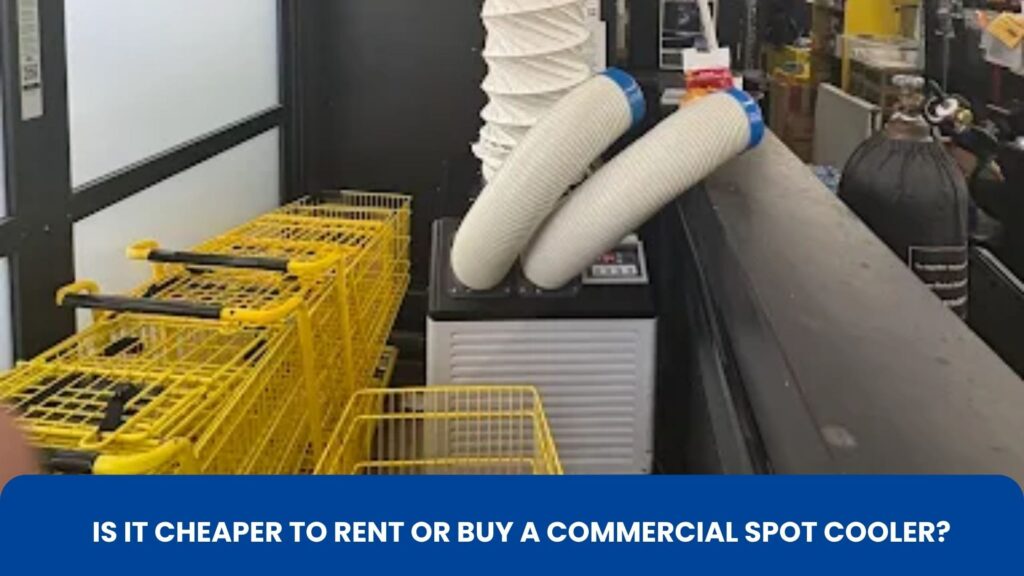
When a work area overheats, whether it’s a server room, a production line, or a temporary event, cooling isn’t a “nice to have.” It’s a safety issue and a cost-control issue. U.S. agencies like NIOSH (CDC) and OSHA urge employers to plan for heat hazards using engineering and administrative controls.

Portable cooling spot coolers and, in the right climates, evaporative coolers, are one of the fastest ways to reduce exposure and keep people and equipment within recommended conditions.

That urgency is what creates the classic dilemma: should you buy a unit (a capital expense) or rent one (an operating expense)?

On paper, buying looks like an asset you’ll own for years.

In practice, renting often delivers better cash flow, faster deployment, and most importantly, more control over risk during heat spikes and outages.

If you need immediate relief, a commercial AC rental is usually the fastest path from “we have a problem” to “we’re back on spec.”

The Case for Buying: Analyzing the Total Cost of Ownership

On the surface, buying seems logical. If you have a recurring need, why pay a rental fee over and over?

Buying the asset, however, means you are buying all of its associated costs, which go far beyond the initial sticker price. This is the Total Cost of Ownership, and it has several “hidden” layers.

The Obvious Cost vs. The Hidden Costs

The Obvious Cost: Upfront Capital Expenditure (CAPEX)

This is the number on the price tag.

A quality, commercial-grade portable air conditioner can cost anywhere from $2,000 to over $10,000, depending on its size (BTUs) and features. This is a significant, one-time capital expense that hits your budget immediately.

“Hidden” Cost 1: Energy & Utility Bills

This is the single biggest “gotcha” of owning a spot cooler. It’s the cost that keeps on costing every single month.

Your unit’s operating cost depends on two factors:

  1. Its Efficiency: Measured by an Energy Efficiency Ratio. The higher the EER, the more cooling (BTUs) you get for each watt of electricity.
  2. Your Local Electricity Rate: This is the massive variable. According to the U.S. Energy Information Administration (EIA), commercial electricity rates vary wildly by state, from as low as 9 to 10 ¢/kWh in some regions to as high as 29 ¢/kWh or more in others.

Let’s do some simple math. A 1-ton (12,000 BTU/h) spot cooler with a modest EER of 10 will consume about 1.2 kilowatts (12,000 / 10 = 1,200 watts).

  • In a low-cost state (10 ¢/kWh): That’s 12 cents per hour to run.
  • In a high-cost state (29 ¢/kWh): That’s nearly 35 cents per hour to run.

Now, imagine you run that unit 24/7 during a three-month (90-day) heatwave.

  • Low-cost state: 1.2 kW * 24 hours * 90 days * $0.10/kWh = $259.20
  • High-cost state: 1.2 kW * 24 hours * 90 days * $0.29/kWh = $751.68

That’s a $500 difference for just one unit over one season. When you buy, you are locked into that unit’s efficiency and are completely at the mercy of your local utility rates.

“Hidden” Cost 2: Maintenance, Service, and Repairs

A spot cooler is not a “set it and forget it” appliance. It’s a piece of heavy-duty machinery. As the owner, you are 100% responsible for:

  • Annual Maintenance: This includes cleaning evaporator and condenser coils (which get clogged with dust and dirt), checking refrigerant levels, clearing condensate drain lines, and testing all electrical components. This is a skilled-labor task.
  • Repairs & Parts: When a compressor fails, a fan motor burns out, or a control board fries, that’s your bill to pay. These repairs can easily cost hundreds or even thousands of dollars, often rivaling the cost of a new unit.
  • Downtime: What’s the cost to your business while the unit is broken and awaiting repair?
“Hidden” Cost 3: Storage & Logistics

A 5-ton spot cooler is a 400-pound bulky piece of equipment. Where does it go for the 6 to 8 months of the year you’re not using it?

  • Storage Cost: It sits in your valuable warehouse or facility space. That’s square footage you could be using for revenue-generating inventory or operations.
  • Logistics Cost: When you do need it, you are responsible for getting it out of storage, moving it to the location, and ensuring it’s set up, vented, and drained correctly.
“Hidden” Cost 4: Depreciation & Obsolescence

Like any piece of technology, that expensive cooler starts losing value the second you buy it. In 3 to 5 years, new, more energy-efficient models will be on the market, and your “asset” will be an aging, inefficient piece of legacy equipment.

When Does Buying Actually Win?

After all that, buying can still be the right choice in one specific scenario: If you have a constant, predictable, 9- to 12-month-per-year cooling need in a fixed location, AND you have the in-house maintenance staff and storage capacity to manage the asset. This might apply to a specific manufacturing process or a permanently problematic hot spot. For everyone else, the math gets complicated, and the hidden costs almost always outweigh the benefit of “owning” it.

The Case for Renting: Flexibility, Speed, & Risk Mitigation

Renting a spot cooler flips the entire financial model. It converts a large, unpredictable capital expense (CAPEX) into a simple, predictable operating expense (OPEX). This shift has profound benefits for your business’s finances and operations.

Financial & Operational Superiority

No Upfront Cost & Predictable OPEX

This is the most obvious benefit. You don’t spend thousands of dollars upfront. You pay a simple, predictable rental fee (daily, weekly, or monthly) only for the time you are using the unit.

This frees up your capital to be invested in other, revenue-generating parts of your business. It’s a CFO’s dream: turn a balance sheet liability into a simple line item on the P&L.

Zero Maintenance or Storage Worries

This is the operational dream.

  • Maintenance is Included: The rental provider handles 100% of the maintenance and service.
  • It Breaks? You Get a New One: If a rented unit fails in the middle of a heatwave, it’s not your problem. You make one phone call, and a replacement unit is dispatched. You have zero risk of repair bills or parts-sourcing headaches.
  • Storage is Not Your Problem: When the season is over, the rental company comes and picks up the unit. It occupies zero square feet of your valuable space.

This is one of the single greatest benefits of spot cooler rentals: You get all the cooling with none of the logistical burdens of ownership.

Total Scalability & The “Right Tool for the Job”

When you buy a spot cooler, you are locked into that specific size. But, what if your needs change?

  • A 1-ton unit is perfect for a 400 sq. ft. office.
  • A 5-ton unit is needed for a 2,000 sq. ft. event space.
  • A 12-ton unit is required for a large warehouse bay.

Renting gives you access to an entire fleet. You can get the exact unit you need, when you need it. This week, you might need a standard 1-ton spot cooler. Next month, for a high-ventilation warehouse, you might realize the job is better suited for evaporative coolers, which are far more energy-efficient in dry climates. A rental partner gives you that choice.

The “Risk Mitigation” Clincher: Speed

This brings us back to the NIOSH/OSHA risk. When you have an emergency, the clock is ticking. Worker safety is on the line. Server uptime is on the line.

  • If you own a unit: You have to find it in storage, hope it still works after 6 months, and get it deployed.
  • If you need to buy a unit: You have to start a multi-day procurement process, get quotes, get approval, and wait for shipping.

Renting is about speed. It’s a risk-mitigation tool. A quality rental partner provides 24/7 spot cooler rentals specifically for these moments.

You can have a unit on-site, installed, and running in a matter of hours, not weeks. You’re not just renting a cooler; you’re renting business continuity.

The Five-Minute Rule-of-Thumb Calculator (3-Year View)

Don’t just take our word for it. Do the 5-minute math for your own business. If you are trying to decide between buying and renting, run a simple 3-year cost estimate.

Two conversions you’ll use.

  • Cooling capacity: 1 ton = 12,000 BTU per hour (this is the DOE’s standard conversion.)
  • Efficiency: EER (or EER2) tells you how many BTUs per hour you get per watt; higher is better. You can back into watts by dividing BTU/h by EER (or EER2), then convert watts to kWh for your run-cost math.

Total Rental Cost (3 years)(Monthly Rate) × (Months Used per Year) × 3.

Total Ownership Cost (3 years) (Purchase Price) + (Annual Maintenance × 3) + (Storage × 3) + (Annual Energy × 3).

Where Annual Energy ≈ (Cooling load in BTU/h ÷ EER) × runtime hours per year ÷ 1000 × state $ per kWh (EIA Table 5.6.A).

Then, compare to your commercial AC rental quote. If you’re using a unit only a few months each year or as an emergency backstop, rental totals are very often lower because you avoid year-round energy, PM, storage, and repair exposure. For the electricity price, pull your exact state from the latest EIA Table 5.6.A so you’re not guessing.

Scenarios: What’s Usually Cheaper in the Real World?

#1 Emergency Cooling for Server Rooms and IT Spaces

Winner: Rent.

IT equipment is sensitive to temperature and humidity.

General Services Administration (GSA) policy requires federal data centers to keep server inlet temperatures between 18 and 27°C (64.4 and 80.6°F), consistent with ASHRAE guidance.

A spot cooler closes the gap quickly when a CRAC unit fails, when load surges, or during an installation.

Renting buys you time and compliance while you fix root causes.

#2 Seasonal Production or Events (3 to 4 Months a Year)

Winner: Rent.

Why own a unit for 12 months when your revenue window is a few months?

Rentals match cost to demand and let you upsize or downsize as projects change.

OSHA’s heat pages remind employers to plan ahead for indoor and outdoor heat; with rentals, “planning” can be as simple as scheduling deliveries for your known hot weeks and keeping a contingency on call for heat waves.

#3 Year-Round Manufacturing or Constant Heat Loads (9 to 12 Months a Year)

Winner: Buy (often).

If a process loads heat into the space most of the year, owning can be cost-effective, provided you can manage maintenance and store spares.

Even then, most facilities keep a rental partner ready for maintenance windows, unexpected failures, or extreme heat days because exposure control is a safety requirement, not a convenience. For ongoing or backup needs, AC rentals fill the gaps.

#4 Open Warehouses & Outdoor/High-Vent Areas (Dry Climates)

Winner: Neither. Consider Evaporative Coolers.

In low-humidity regions with abundant air exchange, evaporative coolers can stretch runtime dollars dramatically.

DOE notes they can use about one-quarter the energy of central AC and cool supply air by ~15 to 40°F. They do require water and regular maintenance, and their performance depends on climate, so they’re not a universal replacement for refrigeration-based AC.

If the conditions fit, evaporative cooler rentals are often the most economical tool for large, open areas

Practical Sizing and Setup (So You Don’t Over- or Under-Spec)

Start with the Load, then Confirm Power

Estimate the BTU/h you need based on floor area, internal gains (people, equipment, lighting), and envelope/solar gains.

Convert to tons with 1 ton = 12,000 BTU/h and check that your available circuits and plugs match your chosen unit’s requirements.

If you’re comparing models with different efficiencies, use EER or EER2 to sanity-check the expected electrical draw and your hourly kWh. Need help sizing or verifying power? Our team can do it with you. Get a fast quote and we’ll right-size the unit for the space.

Know Your Comfort and IT Setpoints

For offices and many commercial interiors, GSA’s typical summer comfort band is 74 to 78°F. For data centers, target the 18 to 27°C inlet range.

Spot coolers are effective as a bridge solution when a central system is offline or undersized, and they’re also a good “safety valve” during peak-load events.

Use Rentals as Engineered Controls

OSHA highlights engineering controls like air conditioning and increased ventilation as top-tier measures to reduce indoor heat exposure.

If you’re using administrative controls already (breaks, job rotation) and still bumping against unsafe conditions, adding a portable AC or evaporative unit is a direct way to cool the work environment itself.

Ownership Checklist (if You’re Leaning Toward Buying)

  • Energy math you can trust. Confirm the unit’s EER/EER2 and use your state-specific commercial price of electricity from EIA Table 5.6.A to forecast annual cost. If you operate in multiple states, do the math for each location as rates vary widely.
  • Preventive maintenance plan. Build a PM schedule (filters, coils, condensate management) and designate who’s responsible. Keep spares and cleaning supplies in stock. OSHA and NIOSH emphasize having a plan before high-heat days arrive.
  • Storage and material handling. Decide where the unit will live in the off-season, how you’ll move it safely, and how quickly you can deploy it to a hot zone.
  • Resilience strategy. Even if you own, line up 24/7 rental support for failures, maintenance windows, or weather extremes. The point of the plan is to keep conditions within safe limits every day, not most days.

Rental Checklist (if You’re Leaning Toward Renting)

  • Site access and timing. Confirm delivery windows, loading dock or ground-level access, and on-site contact for setup.
  • Power and circuits. Verify available voltage, amperage, and plug type in advance.
  • Air path and exhaust. Plan the duct run, discharge direction, and air changes so you actually remove heat from the space.
  • Condensate handling. Identify a drain location or request a condensate pump.
  • After-hours plan. Keep a contact list ready for weekend or overnight swaps.
    OSHA’s own model materials and heat planning guidance reinforce that preparation is half the battle; a rental plan lets you respond to heat spikes without delay.

Make the Smart Call for Your Business

So, is it cheaper to rent or buy? The answer is “it depends,” but the scales are heavily tipped toward renting for most businesses.

The Final Verdict:

  • You should BUY if: You have a permanent, 12-month-a-year, unchanging cooling need, you have a large capital budget, and you have the in-house staff and storage space to manage the unit’s full lifecycle.
  • You should RENT if: You need a fast solution for emergencies, you have seasonal or temporary needs, you want to avoid all maintenance and storage costs, or you want the flexibility to get the right size and right type of unit for every job.

For the vast majority of businesses, renting isn’t just a “cheaper” option; it’s the smarter one. It removes risk, provides unparalleled flexibility, and turns a complex capital nightmare into a simple, predictable operating cost.

Don’t get caught in the heat or stuck with a costly, idle asset. Talk to our team at Preferred Climate Solutions. We can help you analyze your specific cooling needs, review all your applications, and find the most cost-effective AC rental solution for your business today.

Blog

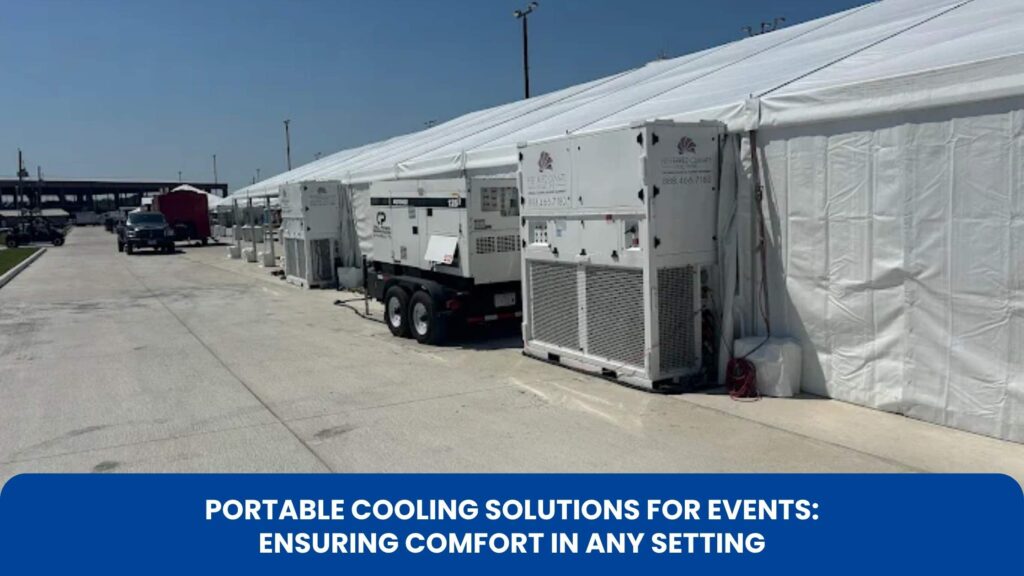
If you’ve ever watched an outdoor wedding wilt under a brutal sun or seen a trade-show crowd thin out as a tent turns muggy, you already know this: comfort can make or break an event. 

Heat doesn’t just chip away at the vibe, it shortens dwell time, sours reviews, stresses equipment, and, in extreme cases, threatens health. 

As heat waves have grown longer and more frequent across U.S. cities, planners are building cooling into their run-of-show just like catering and lighting.

In this guide, we’ll walk you through the portable cooling options that actually work, highlighting where each one excels and where it struggles, as well as how to select the right setup for your venue, crowd size, weather conditions, and power constraints. 

Along the way, you’ll find practical tips, current research, and a simple framework you can use on your next event. 

If you want hands-on help, Preferred Climate Solutions rents and supports everything from evaporative coolers to event-scale temporary AC, with turnkey service that keeps your guests comfortable and teams focused on the show anywhere in Texas. 

Why Event Cooling Solutions Are Essential

Overlooking ambient temperature is a critical error that can sabotage an event on multiple fronts, impacting everything from guest enjoyment to operational safety.

The Human Side (and Safety)

Heat drains energy, triggers fatigue, and raises risks, especially for older adults, kids, and people with medical conditions. 

CDC research shows the U.S. averaged ~702 heat-related deaths per year from 2004 – 2018. Emergency departments also report surges in heat-related illness during extreme heat periods.

Even if you’re not hosting in a Sun Belt city, the trend line is clear: in major U.S. cities, heat-wave season is longer, and heat waves themselves are more frequent than in the 1960s. 

That means more days each year when a venue that “usually runs warm” can tip into truly uncomfortable or unsafe territory.

The Planning Side (and Reputation)

Comfort translates into time on site, good moods, and better memories. Guests stay for the toasts instead of seeking shade. Exhibitors keep demoing. VIP lounges actually feel premium. 

For organizers, that payoff is worth the forethought of cooling, zoning, and power planning, especially when you can rent the right equipment for a weekend rather than own and maintain it year-round.

The Main Portable Cooling Options (and When to Use Each)

Different spaces need different equipment. Here’s a breakdown:

#1 Evaporative Coolers (“Swamp Coolers”)

Best suited for: Outdoor or semi-open venues in dry climates, shaded areas with good airflow, and breezy tents with open walls.

How they work: Fresh outside air is drawn across water-saturated pads; as water evaporates, the air temperature drops. In the right conditions, you can see ~15°F to 40°F reductions at the discharge without compressor-based refrigeration. That’s a huge comfort boost with modest power draw.

Strengths

  • Lower energy use than traditional AC in dry climates
  • Constant fresh-air exchange (good for perceived freshness)
  • Simpler mechanics and fast deployment

Trade-offs

  • Performance drops with high humidity or in sealed spaces
  • Needs a reliable water source (and pad maintenance during long runs)

Where they shine at events

  • Open-air receptions, breezeway lounges, shade structures, semi-open pavilions
  • “Cool zones” where guests can recover without leaving a footprint.

If your event fits that profile, you can rent evaporative coolers sized for guest areas, food courts, or VIP shade tents. Preferred Climate Solution’s evaporative cooler rentals are a practical way to cover wide, open areas without burning through power budgets.

#2 Portable Air Conditioners / Spot Coolers

Best suited for: Enclosed tents and indoor rooms, VIP lounges, production offices, green rooms, and breakout spaces.

How they work: These units use a standard refrigeration cycle to pull heat and moisture from the air, then reject that heat outside via ducted exhaust. Proper venting is everything; if exhaust leaks back into the space, performance tanks. (Think of it as “heat out, cool in.”) 

Strengths

  • Controllable temperature and dehumidification in enclosed volumes
  • Targeted “spot” comfort in sensitive areas (control booths, backstage, AV)
  • Wide range of sizes and ducting options

Trade-offs

  • Requires venting/exhaust routing and adequate power
  • Louder than permanent HVAC (placement and duct runs matter)
  • Higher energy use than evap in dry open-air settings

Where they shine at events

  • Fully or mostly enclosed tents (sidewalls down)
  • VIP lounges with soft goods and makeup stations (humidity control)
    On-site offices where staff needs to think clearly for hours

Need help deciding tonnage, duct runs, and power? We can supply the AC units, build the vent path, and balance the airflow so the space actually maintains a comfortable temperature without blasting guests.

#3 Event-Scale Temporary HVAC

Best suited for: Large, enclosed, or semi-enclosed buildings, high-end galas, multi-zone exhibition floors, and long-duration events.

What it is: Modular, higher-capacity systems (think packaged units, air handlers and ducting, sometimes chillers) designed to keep big footprints stable and comfortable. 

With proper zoning, you can deliver quieter supply air, tuck equipment outside for aesthetics, and maintain consistent temps across the floor. 

Guidance from rental/temporary HVAC playbooks emphasizes early sizing, generator planning, and duct layout to prevent hot spots. 

For multi-day shows, this route often proves the least stressful: one engineered plan, fewer emergency moves, and better guest experience. If that’s the route you’re leaning toward, we can blueprint a temporary event air conditioning system that fits your schedule and floor plan.

Choosing Quickly and Well: A Simple Framework

Use this table to narrow the field:

Checklist itemQuick rule of thumbWhy it matters
Venue & EnclosureOpen/semi-open & dry? Lean evaporative (great airflow, low energy). Enclosed or humid? Use a portable AC unit or temporary HVAC.Evaporative coolers work best in low-humidity settings and need a water supply; refrigerated AC is better for enclosed or muggy spaces.
Weather & HumidityEvap shines in low humidity; AC is more forgiving when it’s muggy. Plan for more hot days across the calendar.U.S. heat waves are more frequent and longer than past decades expect shoulder-season heat.
Headcount & Heat LoadMore people + lights + AV = more load – size up to AC/event HVAC sooner.Tent/event HVAC guides emphasize early load estimates to avoid undersizing.
Power & Exhaust PathPortable AC must be vented and have adequate amperage; under-venting is the #1 performance killer. If power is tight, evap may be the only practical option.Without proper exhaust, hot air recirculates and neutralizes cooling; venting is a universal manufacturer requirement.
Noise & AestheticsFor speeches/music/broadcast, remote equipment and ducted supply help; temporary HVAC can place the noisiest parts offstage.Ducted trailer/packaged units deliver quieter supply air where guests are.
Water Access (for Evap)Confirm a clean water source and plan pad checks on long runs.Evaporative systems require ongoing water and periodic maintenance to keep output consistent.
Crew SafetyProvide water, rest, shade and time to acclimatize; set a crew cool-down zone.These steps reduce heat illness risk for staff and vendors working long hours.

Best Practices That Save Your Events

These practices can help ensure event comfort, safety, and smooth operations even when the forecast isn’t on your side:

  • Do a site walk: Note wind direction, sun paths, and natural shade.
  • Over-spec a little: Loads spike when a cloud breaks and the sun returns. Having headroom keeps temps steady. Tent-cooling guides and rental handbooks consistently recommend sizing with margin.
  • Plan airflow, not just equipment: Cool air in, warm air out, create a path. For AC, that means reliable exhaust. For evap, it means open walls or vents so fresh air can move. 
  • Mind acoustics: Remove the noisiest equipment and use ducting to deliver supply air quietly near audience areas.
  • Build redundancy: Have a spare unit on site if failure would be catastrophic (VIP tent, control room, first-aid). Rental playbooks stress keeping a backup plan for long or high-stakes events. 
  • Take care of crews: Provide shade and water, rotate shifts during peak heat, and allow time for acclimatization, key OSHA recommendations. 
  • Know local rules: Temporary structures (tents, stages) have safety requirements on egress, anchorage, and heat-producing equipment. Loop in the venue and review your jurisdiction’s temporary-structure chapter.

Why Renting Your Cooling Solution Wins

For the vast majority of events, renting temporary air conditioning equipment is more practical and smarter than purchasing a fleet you’ll use a handful of times a year.

Financial Sense

Owning pro-grade cooling gear ties up capital and adds storage, maintenance, and depreciation. 

Renting converts a large, fixed outlay into a predictable event-by-event operating expense, which is exactly what most event teams need when usage is seasonal or sporadic. 

Small-business guidance notes that leasing/renting can be a better fit when equipment is expensive, upgraded frequently, or not used continuously.

Flexibility & Scalability

Every event is different, a spring retreat has different needs than a midsummer festival. Renting lets you dial in type, size, and quantity for each job, ensuring you never overbuy or struggle with inadequate equipment. 

Vendor playbooks and rental guides echo this advantage: the right tonnage and airflow for this footprint, not the last one.

Access to Pro-grade Gear (without owning it)

With rentals, you get current, well-maintained equipment, ranging from spot coolers for enclosed tents to event-scale temporary HVAC systems, supported by quick delivery and service. That translates directly to uptime and guest comfort on show day.

Invaluable Expertise and Support

The biggest win is the partnership. A professional rental team doesn’t just drop gear; they help with site walks, load calculations, duct/exhaust planning, delivery, installation, and on-call support. 

Those details prevent the most common performance failures, like poor venting on portable AC or under-sizing for peak hours.

Common Questions We Often Get About Portable Cooling Solutions

Do I need a permit (or fire inspection) for cooled tents and temporary structures?

Often yes. Many jurisdictions require permits and specific safety measures (e.g., egress widths, extinguishers, safe clearances) for tents exceeding certain sizes, commonly greater than 400 sq ft with sides or greater than 700 sq ft without sides, and they reference the International Fire Code (IFC) Chapter 31. Check with your local fire marshal early.

Where should generators or fuel-powered equipment go so fumes don’t drift into the venue?

Place generators outdoors and at least 20 ft from doors, windows, or vents and away from airflow paths into occupied areas. 

Carbon monoxide is odorless and dangerous; plan placement with wind and entrances in mind.

Will portable ACs leak or create puddles on my event floor?

All refrigeration-based units produce condensate. You’ll need a plan (condensate tank, gravity drain, or pump kit) and routine checks during the event especially in humid weather to prevent overflow and slip hazards.

Will evaporative coolers increase humidity and affect decor (linens, hair/makeup) or electronics?

Evaporative systems add moisture by design and work best in low-humidity environments. 

Use them in open/semi-open areas; avoid them in already-muggy or sealed spaces where they can raise RH and affect finishes/equipment.

Can cooling choices make my dance floor or polished surfaces slippery?

Yes. Humidity swings and condensation can reduce floor friction, especially on wood/vinyl systems or taped modular floors. Keep humidity in range, dry-mop between segments, and avoid directing cold discharge onto flooring.

How do I avoid hot spots or “cold blasts” on guests?

Use diffusers/duct socks and zone supply/returns to mix air evenly. 

Avoid pointing discharge directly at seating; balance supply with returns so cooled air doesn’t short-circuit or stall. (Your rental partner should model airflow during the walk-through.)

Don’t Let Comfort Be an Afterthought

It’s easy to obsess over decor, lighting, and catering. But the invisible foundation of a successful event is climate. 

In today’s conditions, where heat waves are more frequent, longer, and stretch further across the calendar, proactive, professional-grade cooling is not a luxury; it’s essential to a safe, memorable experience. 

The playbook is simple:

  • Understand your venue and enclosure. Evaporative cooling excels in low-humidity open or semi-open spaces; refrigerated portable AC/temporary HVAC is the move for enclosed or humid setups. 
  • Plan airflow and exhaust – cool air in, hot air out, and size with a little headroom to cover peak hours. Event guides stress early load estimates and redundancy.
  • Protect your crew with water, rest, and shade, OSHA’s baseline for preventing heat illness during long shifts.

You don’t need to be an HVAC expert to run a perfectly cooled event. The smart move is to partner with one like us at Preferred Climate Solutions, leveraging flexible rentals, modern equipment, and seasoned support so guests remember your event for all the right reasons.

If you’re ready to design a perfectly comfortable environment for your next event, start here:

Blog

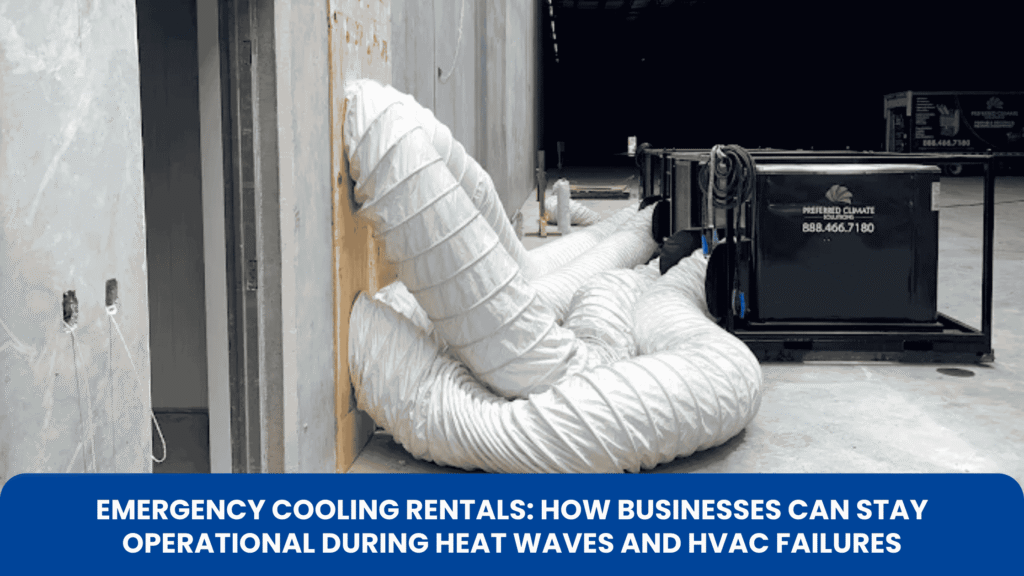
Your HVAC system just died on the hottest day of the year. Employees are sweating through their shirts, customers are walking out, and your server room temperature gauge is climbing into the danger zone. This scenario can be stressful, but it doesn’t need to shut you down.

When critical cooling systems fail, you need solutions that work immediately, not next week when the repair technician can squeeze you in.

Emergency cooling rentals have become the lifeline that keeps businesses operational when traditional cooling fails. 

Whether you’re dealing with equipment breakdowns, extreme weather, or temporary space needs, portable cooling solutions can mean the difference between losing thousands in downtime and maintaining normal operations.

Why Emergency Cooling Rentals Are Essential for Business Continuity

When your primary cooling system fails, the clock starts ticking immediately. Every hour of downtime costs money, productivity, and potentially customer relationships.

  • Server rooms and data centers face the most critical timeline. Without proper cooling, servers can overheat and crash within hours, leading to data loss and system failures that ripple through entire operations.
  • Manufacturing facilities can’t afford to shut down production lines during peak demand periods. Heat-sensitive processes, employee safety, and equipment integrity all depend on maintaining proper temperatures.
  • Retail environments see immediate customer impact. Shoppers won’t linger in uncomfortable conditions, and staff productivity plummets when working conditions become unbearable.
  • Healthcare facilities have zero tolerance for cooling failures. Patient comfort and safety, as well as the storage of medications and the handling of sensitive medical equipment, all require consistent temperature control.

Don’t get overwhelmed by the options available. The key is understanding that emergency cooling rentals provide immediate relief while permanent solutions are implemented. 

Types of Emergency Cooling Solutions Available

Emergency cooling rentals come in several configurations, each designed for specific business applications and space requirements.

Spot Cooler Rental Systems

Spot coolers deliver targeted cooling to specific areas or equipment. These portable units work exceptionally well in server rooms, small offices, or for critical equipment that requires immediate temperature control.

Most spot cooler rental units have a cooling capacity ranging from 1 to 5 tons. They’re designed to be wheeled into position quickly, plugged into standard electrical outlets, and operational within minutes of arrival.

Portable AC Rental for Businesses

Portable air conditioning units offer more substantial cooling capacity for larger spaces. These systems can cool entire floors, conference rooms, or retail areas while permanent repairs are underway.

Professional-grade portable AC rental units typically provide 3 to 20 tons of cooling capacity. They require minimal setup and can often be connected to existing ductwork for more efficient distribution.

Industrial Cooling Solutions

Large facilities need industrial-grade emergency cooling. These systems can provide cooling capacities ranging from 25 to 100+ tons, making them suitable for warehouses, manufacturing plants, and large commercial spaces.

Industrial cooling solutions often include trailer-mounted chillers, large air handlers, and temporary ductwork systems. While they require more setup time, they deliver the massive cooling capacity needed for major operations.

Temporary Air Conditioning Rental for Events

Temporary events, pop-up facilities, and seasonal operations often require immediate cooling solutions without the lead time for permanent installations.

These systems focus on quick deployment and reliable operation for defined periods, from days to months.

HVAC Rental Services: What to Expect

Professional HVAC rental services provide more than just equipment delivery. 

  • Rapid Response Deployment: The best services offer 24/7 emergency response with equipment delivery within hours, not days. During peak summer months, response times become critical as demand spikes.
  • Professional Installation Support: Emergencies aren’t the time for DIY installations. Quality rental services include professional setup, ensuring proper electrical connections, drainage, and safety protocols.
  • Ongoing Maintenance and Support: Rental agreements typically include routine maintenance, filter changes, and a prompt response to any immediate repair issues that may arise with the rented equipment.
  • Flexible Rental Terms: Look for services that offer daily, weekly, and monthly rental options without requiring long-term commitments upfront.

Heat Wave Emergency Cooling: Preparing for Extreme Weather

Climate data shows heat waves are becoming more frequent and intense. The 2023 heat dome over the Pacific Northwest broke temperature records and stressed cooling systems beyond their design limits.

Here’s how emergency cooling rentals fit into comprehensive heat wave preparation:

Pre-Season Planning

Identify critical areas that absolutely cannot lose cooling. Server rooms, data centers, and temperature-sensitive storage areas should be your first priority. Establish relationships with emergency cooling providers before you need them.

Capacity Assessment

Calculate the cooling load for essential areas. A 500-square-foot server room might need a 3-ton spot cooler, while a 5,000-square-foot retail space could require multiple portable units or a single large industrial evaporative system.

Power Requirements Planning

Emergency cooling equipment needs an adequate electrical supply. Coordinate with your electrical contractor to ensure sufficient power capacity and proper connections are available for emergency equipment.

Portable Cooling for Server Rooms: Mission-Critical Applications

Server rooms represent the highest-stakes emergency cooling scenarios. Equipment worth hundreds of thousands of dollars can be damaged within hours if temperatures climb above safe operating ranges.

Temperature Monitoring Integration

Modern spot cooler rentals can integrate with existing temperature monitoring systems, providing automated alerts and data logging during emergency cooling operations.

Redundancy Planning

Critical server environments should never rely on a single cooling source during emergencies. Rent backup units even if your primary emergency cooler seems adequate.

Precision Cooling Requirements

Server rooms need more than just cold air—they need precise temperature and humidity control. Ensure your emergency cooling provider understands data center requirements, not just general commercial cooling.

Disaster Recovery Cooling: Beyond Equipment Failures

Natural disasters, power outages, and infrastructure failures create complex cooling challenges that go beyond simple equipment replacement.

Flood Damage Recovery

When floods damage HVAC infrastructure, temporary cooling becomes essential for preventing mold growth and enabling restoration work to proceed.

Fire Damage Response

Smoke and fire damage often affects HVAC systems even when the primary cooling equipment survives. Emergency cooling maintains liveable conditions during cleanup and restoration.

Construction and Renovation Projects

Major renovations often require disabling permanent HVAC systems for extended periods. Temporary cooling keeps operations running during construction phases.

Cost Analysis: Emergency Cooling Investment vs. Downtime Losses

The mathematics of emergency cooling rentals becomes clear when compared to downtime costs.

Data Center Downtime Costs

Industry studies show data center downtime costs average $8,000-$15,000 per minute. A $2,000 daily rental for emergency server room cooling pays for itself if it prevents just minutes of server downtime.

Retail Revenue Impact

Retail environments can lose 30-50% of normal sales during periods of inadequate cooling. A $500 daily portable AC rental easily justifies itself if it maintains normal sales volumes.

Employee Productivity Factors

Studies show employee productivity drops 25% when workplace temperatures exceed 77°F. For a 50-employee office with an average hourly cost of $35 per employee, productivity losses can exceed $1,000 per day.

Insurance and Liability Considerations

Some business insurance policies require maintaining specific environmental conditions. Emergency cooling rentals help maintain coverage and prevent claim denials.

Choosing the Right Emergency Cooling Provider

Not all rental companies understand emergency response requirements. Here’s what separates professional emergency cooling services from basic equipment rental:

  • 24/7 Availability: True emergency services operate around the clock, including weekends and holidays. Verify response capabilities before you need them.
  • Geographic Coverage: Ensure your provider can deliver to all your business locations within acceptable timeframes. Heat waves and emergencies don’t respect business boundaries.
  • Equipment Inventory: Providers should maintain a substantial equipment inventory specifically for emergency deployment. Summer demand can quickly exhaust available units.
  • Technical Expertise: Emergency cooling often requires custom solutions and professional installation. Choose providers with qualified technicians, not just delivery drivers.

Implementation Best Practices for Emergency Cooling

Successful emergency cooling deployment requires advance planning and proper execution. 

These implementation steps can make the difference between a smooth emergency response and a chaotic situation that compounds your original problem.

Site Preparation:

Clear access paths for equipment delivery and installation. Large industrial units may require crane access or special handling equipment.

The biggest deployment delays happen when emergency cooling equipment arrives but can’t reach its intended location. Measure doorways, hallways, and stairwells before placing your rental order. 

Industrial cooling units often weigh 1,000+ pounds and measure 6-8 feet in height.

Remove obstacles like furniture and stored materials from delivery paths. For outdoor industrial systems, check ground conditions and verify level surfaces for trailer-mounted cooling systems.

Electrical Infrastructure

Verify adequate electrical capacity and proper connections before equipment arrival. Emergency electrician services may be necessary for large cooling systems.

Electrical requirements vary dramatically between cooling system types. Small spot coolers operate on standard 115V current, but larger portable units require 208V or 480V three-phase power. Industrial systems can demand 100+ amps of electrical service.

Check your building’s electrical panel capacity before ordering equipment. Many emergency cooling deployments fail because the electrical system can’t support the required load. Consider generator backup power if your primary HVAC system failed due to power issues.

Water Management

Most cooling systems generate condensate that must be properly drained. Plan drainage routes to prevent water damage during emergency operations.

A 5-ton portable AC unit can generate 10-15 gallons of water per day under normal conditions. Plan drainage routes before equipment installation—gravity drainage to floor drains works best when possible.

Protect floors and equipment with drip pans or plastic sheeting around cooling units. Monitor drainage systems daily, especially during initial operation when systems run at maximum capacity.

Airflow Optimization

Portable and temporary cooling systems work best with proper airflow management. Plan for supply and return air paths, especially in enclosed spaces.

Position supply outlets to distribute cool air throughout the space, not just near the equipment. Return air should come from the warmest areas to maximize cooling efficiency.

Avoid blocking air intakes or outlets with furniture or equipment. Consider temporary ductwork for better air distribution and seal air leaks with plastic barriers or weather stripping to prevent cool air from escaping.

Frequently Asked Questions About Emergency Cooling Rentals

Here are a few of the commonly asked questions about emergency cooling rentals. 

How quickly can emergency cooling equipment be delivered?

Professional services typically deliver within 2-4 hours for spot coolers and same-day for larger systems. Peak summer periods may extend response times.

What power requirements do emergency cooling units have?

Spot coolers often operate on standard 115V or 208V power. Larger portable units may require 480V three-phase power. Industrial systems typically need dedicated electrical service.

Can emergency cooling equipment operate outdoors?

Many industrial cooling solutions are designed for outdoor installation. However, electrical connections and control panels need weather protection.

How long can I rent emergency cooling equipment?

Rental periods range from daily to monthly, with longer terms typically offering better per-day rates. Emergencies often require flexible term adjustments.

Can temporary cooling systems integrate with existing HVAC controls?

Advanced portable systems can integrate with building management systems and existing thermostats. This integration improves efficiency and maintains consistent environmental control.

Planning Your Emergency Cooling Strategy

Don’t wait for your next HVAC crisis to start planning. Successful businesses prepare emergency cooling strategies before they’re needed.

  • Vendor Relationships: Establish relationships with 2-3 emergency cooling providers. Having multiple options prevents single points of failure during peak demand periods.
  • Emergency Protocols: Develop clear protocols for who authorizes emergency cooling rentals, what criteria trigger deployment, and how installations coordinate with normal operations.
  • Budget Authorization: Create pre-approved budget allocations for emergency cooling rentals. Crisis situations aren’t the time for lengthy approval processes.
  • Staff Training: Train key personnel on emergency cooling procedures, vendor contact information, and basic operational requirements.

The next heat wave or HVAC failure is coming, but emergency cooling rentals provide the immediate relief that keeps businesses operational when traditional cooling fails. 

From spot coolers that save server rooms to industrial coolers that maintain entire facilities, temporary cooling solutions offer the rapid response that modern businesses demand.
Contact Preferred Cooling Solutions and establish service agreements before you need them. When your cooling system fails at the worst possible moment, you’ll have the relationships and resources to maintain operations while permanent solutions are implemented.

Blog

When the temperatures climb, keeping guests, workers, or event-goers comfortable isn’t just about luxury—it’s about safety, productivity, and experience. 

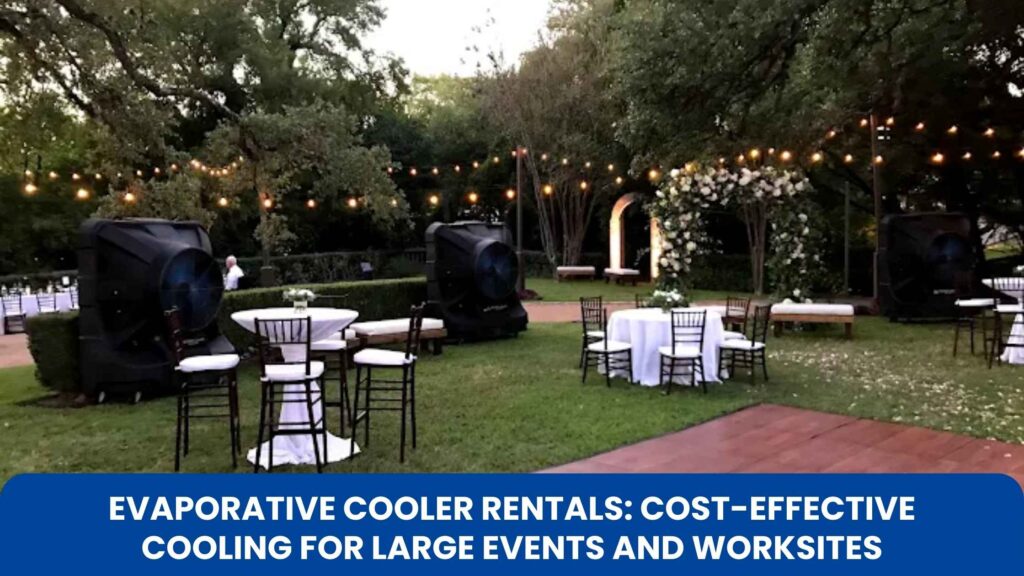
For large outdoor events and demanding worksites, traditional air conditioning often isn’t practical or cost-effective. That’s where evaporative cooler rentals come in.

Also known as swamp coolers, these machines use the natural process of water evaporation to reduce air temperature. They can deliver a refreshing breeze at a fraction of the cost of conventional cooling systems, and because they require less power, they’re also a more sustainable choice.

Whether you’re hosting a bustling outdoor festival, managing a construction crew in summer heat, or running a temporary work facility, renting an evaporative cooler provides a temporary cooling solution without the high upfront investment. 

In this guide, we’ll cover everything you need to know: from how they work, to rental costs, to choosing the right model. With that information, you can keep your space cool, your people comfortable, and your budget intact.

What is an Evaporative Cooler and How Does it Work?

An evaporative cooler is a device that lowers air temperature using the natural process of water evaporation. 

Unlike traditional air conditioning, which relies on refrigerants and compressors, these units draw in warm air, pass it over water-saturated pads, and use a powerful fan to push the cooled air back into the environment. The result is a steady stream of fresh, chilled air that feels much like a lakeside breeze.

They perform best in dry, low-humidity climates, where evaporation happens quickly and efficiently. 

In regions with higher humidity, they can still provide relief by increasing air movement, but temperature reduction will be more modest.

The term “swamp cooler” is simply a nickname for an evaporative cooler, often used interchangeably. While the name might conjure up images of muggy wetlands, the technology is most effective in the opposite conditions: arid, sunny environments where traditional AC may be less efficient and far more costly to operate.

By understanding how they function, you’ll be better equipped to choose the right portable, commercial, or industrial evaporative cooler rental for your specific event or worksite needs.

Why Rent an Evaporative Cooler Instead of Buying?

For many businesses and event organizers, renting an evaporative cooler makes far more sense than buying one outright—especially when the need is short-term or seasonal.

Cost Savings 

Purchasing a large commercial or industrial evaporative cooler can cost thousands of dollars. If you only need cooling for a weekend festival, a two-month construction project, or an occasional outdoor gathering, a swamp cooler rental delivers the same performance without the hefty price tag.

No Maintenance or Storage Hassles 

Owning equipment means upkeep, filter replacements, and finding a place to store it during off-season months. With rentals, the provider handles maintenance, cleaning, and storage, so you can focus on the event or project itself.

Access to Top-Tier Equipment 

Renting allows you to choose from the latest industrial and portable evaporative cooler rental options, often with higher capacity and better efficiency than an older, purchased unit.

Whether you’re cooling a construction site, a corporate event, or in an emergency, renting gives you flexibility, scalability, and cost efficiency—making it the smarter choice for most short-term needs.

Types of Evaporative Cooler Rentals Available

Evaporative coolers come in a variety of sizes and capacities, each suited to different environments and cooling needs. When you rent an evaporative cooler, you can select the right model for your specific event, workspace, or budget.

1. Portable Evaporative Cooler Rentals

  • Compact, easy to move, and ideal for smaller areas or spot cooling.
  • Perfect for vendor booths, patio seating, or localized work areas.

2. Industrial Evaporative Cooler Rentals

  • Heavy-duty units are designed for large warehouses, hangars, and open construction sites.
  • High airflow capacity (often 10,000+ CFM) to cool vast spaces effectively.

3. Commercial Evaporative Cooler Units

  • Mid-to-large capacity models for event spaces, server rooms, gyms, retail areas, and indoor/outdoor venues.
  • Balance of mobility and power for versatile use.

4. Outdoor Cooling Rentals

  • Weather-resistant designs built to handle direct sun and dust.
  • Popular for sporting events, music festivals, and wedding receptions.

When choosing your commercial or industrial evaporative cooler rental, consider airflow ratings, tank size, and intended use. The right unit ensures efficient coverage and a comfortable environment for guests or workers.

Cost of Evaporative Cooler Rentals

One of the biggest advantages of evaporative cooler rentals is their affordability compared to buying or running a traditional AC system. 

Costs vary depending on unit size, cooling capacity, and rental duration, but here’s roughly what to expect:

Typical Rental Pricing Ranges

  • Small Portable Units – $50–$100 per day
  • Mid-Size Commercial Units – $100–$200 per day
  • Large Industrial Units – $200–$400 per day

Factors Affecting Rental Rates

  • Size & Capacity – Higher CFM (cubic feet per minute) airflow increases rental cost.
  • Rental Duration – Daily, weekly, and monthly rates often decrease with longer commitments.
  • Delivery & Setup – Many companies offer delivery, setup, and pickup for an additional fee.
  • Season & Demand – Prices can rise in peak summer months when units are in high demand.

Rental vs. Purchase

Buying a high-capacity commercial unit can cost $1,500–$5,000 upfront—not including maintenance, repairs, and storage. For short-term or seasonal needs, renting a swamp cooler is almost always more budget-friendly.

With a general cost breakdown, you can select the most efficient and affordable temporary cooling solution for your event or worksite.

How to Choose the Right Evaporative Cooler for Your Needs

Choosing the right evaporative cooler can make the difference between a comfortable space and one that still feels stifling. 

Whether you’re renting for a weekend festival, a month-long construction project, or an emergency shelter, taking the time to assess your needs will ensure you get the most value for your money.

Step 1: Understand Your Cooling Requirements

Start by measuring the area you need to cool. Evaporative coolers are rated by CFM (cubic feet per minute)—a measure of how much air they move.

  • Small spaces (vendor booth, patio seating): Look for 1,000–3,000 CFM.
  • Medium areas (indoor event space, gym, workshop): Aim for 3,000–8,000 CFM.
  • Large open environments (warehouse, airplane hangar, concert venue): You’ll likely need 8,000+ CFM or multiple units working together.

As a general guideline, multiply your square footage by two to estimate the CFM you’ll need. 

For example, a 2,500 sq. ft. space × 2 = 5,000 CFM.

Step 2: Match the Unit Type to Your Use Case

  • Portable evaporative cooler rentals are ideal for small or mobile cooling needs, such as rotating through different work zones.
  • Commercial units strike a balance between power and portability, making them a good fit for weddings, conferences, and retail spaces.
  • Industrial evaporative cooler rentals are built for extreme output and durability, suited for harsh job site conditions.

Step 3: Consider Water Supply Options

Evaporative coolers need a steady water source.

Built-in tank: Convenient for mobile setups but requires refilling every few hours.

Continuous hookup: Connects directly to a water line for uninterrupted operation—ideal for long events or high-demand situations.

Step 4: Think About Noise Levels

If you’re renting for an outdoor concert, noise won’t be a concern. But for indoor events like seminars or weddings, look for models with quiet operation to avoid disrupting the atmosphere.

Step 5: Factor in Climate Conditions

Evaporative coolers work best in dry climates where humidity is low. In humid areas, they still improve comfort by circulating fresh air, but the temperature drop may be smaller.

Step 6: Plan for Placement

Ensure the cooler has good airflow by placing it near a doorway, an open window, or a tent flap. This helps exhaust warm air and draw in fresh air. For very large spaces, you may need multiple units positioned strategically to cover the area evenly.

By examining all these factors before you rent an evaporative cooler, you’ll avoid underpowered equipment, overspending, or operational headaches. After all, the right match will keep your guests, staff, or crew comfortable while making the most of your budget.

Environmental Benefits of Evaporative Cooler Rentals

Beyond cost savings and convenience, evaporative cooler rentals offer significant environmental advantages compared to traditional air conditioning. For event organizers and worksites conscious of energy use, these benefits can be a key selling point.

Lower Energy Consumption

Evaporative coolers consume far less electricity than standard AC units. 

While a central air system may draw 3,000–5,000 watts, a commercial or industrial portable evaporative cooler rental often runs on just 100–400 watts, depending on the model. This translates to lower utility costs and reduced carbon emissions throughout your rental.

No Harmful Refrigerants

Traditional AC systems rely on chemical refrigerants, which can contribute to ozone depletion or climate change if leaked. Evaporative coolers use only water to cool the air, making temporary cooling solutions eco-friendly by design.

Sustainable for Large Events & Worksites

For large-scale applications like festivals, weddings, or construction sites, multiple air conditioners can strain local power grids and create high energy waste. 

By renting large event cooling rentals or industrial evaporative units instead, you reduce the environmental impact while still keeping spaces comfortably cool.

Reusable & Shared Equipment

Rental units are reused by multiple customers over their lifespan, reducing the need for every venue or site to purchase and store its own equipment. This shared-use model makes commercial evaporative cooler rentals inherently more sustainable.

Evaporative cooler rentals protect your budget and ensure comfort, while making a small (but meaningful) contribution to sustainability and greener operations.

Frequently Asked Questions (FAQs)

Here are answers to some commonly asked questions about evaporative cooler rentals. 

What’s the difference between an evaporative cooler and a swamp cooler?

There’s no functional difference, as a swamp cooler is simply another name for an evaporative cooler. Both use water evaporation to reduce air temperature and increase comfort.

Can evaporative coolers be used indoors?

Yes, especially in well-ventilated spaces. For indoor use, consider a portable evaporative cooler rental or a mid-size commercial evaporative cooler to ensure adequate airflow.

How much water do these units use?

Water usage varies by model and size. Small portable units may use 1–2 gallons per hour, while industrial units can use 10+ gallons per hour. Some units allow continuous hose connection for temporary cooling solutions.

Do evaporative coolers work in humid climates?

They’re most effective in dry environments. In high humidity, cooling will be less dramatic, but airflow and comfort can still improve.

How loud are evaporative coolers?

Noise depends on the model. Outdoor units or industrial evaporative cooler rentals are louder, while portable and commercial units often have quieter operation suitable for events.

What is a downside of evaporative cooling?

Evaporative coolers work best in dry climates, so in very humid areas, the temperature drop may be modest. They also require a water source and occasional maintenance of pads and tanks.

Do evaporative coolers actually cool a room?

Yes, they lower the air temperature through evaporation while increasing airflow, making rooms or open spaces feel cooler. For large areas, multiple large event cooling rentals or industrial units may be needed to achieve consistent comfort.

Conclusion 

For large events, construction sites, and temporary workspaces, evaporative cooler rentals offer a cost-effective, energy-efficient, and reliable solution to beat the heat. 

Whether you need a portable evaporative cooler rental for a small area, a commercial evaporative cooler for a mid-size venue, or an industrial evaporative cooler rental for a sprawling worksite, renting provides flexibility without the upfront cost of purchasing equipment.

These units not only deliver comfort but also reduce energy consumption, avoid harmful refrigerants, and offer a greener alternative to traditional air conditioning. 

When paired with proper placement, adequate water supply, and routine maintenance, a temporary cooling solution can keep your space cool and safe all day long.

If you’re planning a large event cooling rental or need to ensure your team stays comfortable on a construction site, don’t wait until the heat becomes a problem. 

Contact Preferred Climate Solutions today to explore our range of evaporative cooler rentals, find the perfect unit for your needs, and get expert guidance on setup, maintenance, and delivery. Stay cool, comfortable, and worry-free without breaking your budget.

Blog

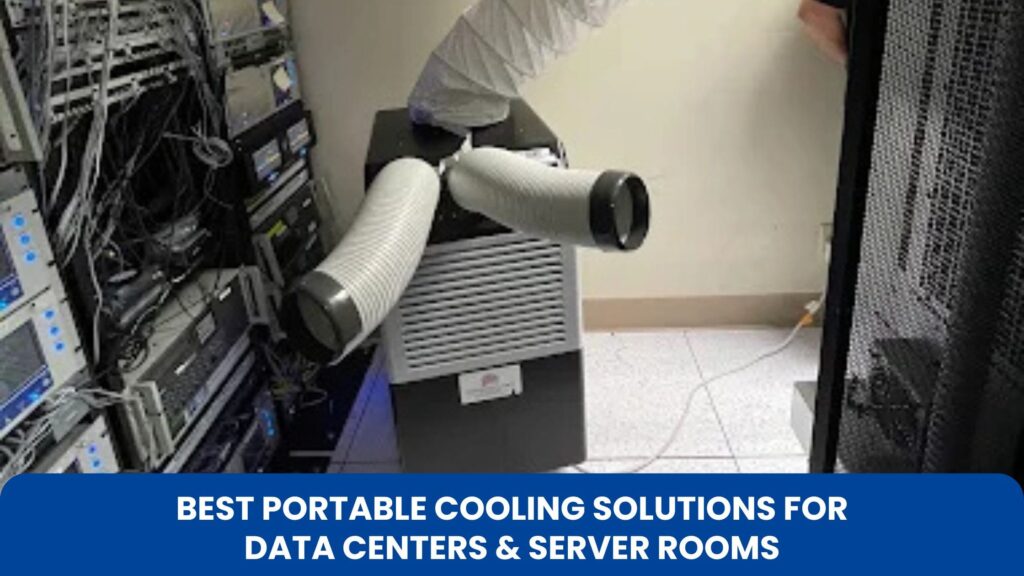
Data centers and server rooms run nonstop. Racks packed with servers, switches, and power supplies create concentrated heat. Without direct cooling, heat buildup damages hardware, slows performance, and risks shutdowns.

A portable cooler for data centers & server rooms offers fast, targeted relief. Unlike fixed HVAC systems, portable units move easily, install quickly, and serve zones with fluctuating temperatures or airflow issues. Operators use them during maintenance, emergencies, expansions, or to support overloaded systems.

Demand for portable solutions has increased. Facilities want to cut downtime and avoid thermal failure without overspending on permanent infrastructure. Spot cooler rentals, evaporative cooler rentals, and event air conditioning provide flexibility based on room size, climate, and server density.

Why Portable Cooling Matters

Servers generate heat every second they operate. High-performance processors, dense rack layouts, and nonstop workloads push internal temperatures past safe limits. A sudden cooling failure or even a minor airflow issue can lead to equipment throttling or full shutdowns.

Data shows how serious the impact can be. Uptime Institute reported that thermal issues contributed to over 55% of data center outages, with downtime lasting hours or more. Even short disruptions damage uptime records, reduce hardware lifespan, and raise operating costs.

Permanent HVAC systems often fail to cover edge cases. Hotspots form behind server stacks. Airflow can’t always reach far corners or dense rack clusters. New hardware installations or layout changes create new heat zones.

Portable coolers solve that gap. They offer targeted relief. Operators can place them exactly where heat rises, whether it’s a single rack or a full hot aisle. Rentals allow immediate access during outages, maintenance, or facility upgrades.

Not every space needs a full overhaul. Sometimes, it just needs a well-placed, high-BTU portable unit.

Types of Portable Coolers for Data Centers & Server Rooms

Portable cooling options fall into three main categories based on how they operate and the size of the area they support.

Spot Cooler Rentals

Spot coolers provide direct, high-capacity airflow to specific areas. These units focus on a single hotspot or small zone. Most models roll on casters, plug into standard outlets, and vent warm air through a flexible exhaust hose.

Use cases:

  • Cooling a server rack in a hot aisle
  • Emergency backup for failed HVAC zones
  • Short-term relief during maintenance

Specs and performance:

  • Cooling range: 9,000 to 60,000+ BTU/hour
  • Covers 200–1,000 sq ft, depending on insulation and equipment density
  • Some models include built-in condensate tanks or auto-pump drainage

Example: A 1.5-ton spot cooler (18,000 BTU) can cool a 300–500 sq ft server room with moderate rack density.

Advantages:

  • Fast setup
  • Easy to relocate
  • Operates independently from central HVAC

Evaporative Cooler Rentals

Evaporative coolers pull warm air through water-saturated pads, then push cooler air into the room. These units do not use refrigerants. Instead, they rely on airflow and water evaporation.

Use cases:

  • Data centers in dry regions
  • Rooms with open airflow and minimal humidity concerns
  • Support cooling in loading bays or access points

Specs and performance:

  • Cooling output: 3,000–15,000 CFM (not rated in BTU)
  • Works best where humidity stays below 50%
  • Water usage varies between 1–10 gallons/hour

Limitations:

  • Adds humidity to the air
  • Not suitable for sealed server rooms or high-sensitivity equipment zones

Advantages:

  • Low energy consumption
  • No need for refrigerant handling
  • Minimal installation time

Event Air Conditioning Units

Event air conditioning units are large-capacity portable coolers. Originally designed for temporary structures and large events, they work well during HVAC upgrades, power outages, or major hardware deployments in data centers.

Use cases:

  • Cooling large server rooms during peak activity
  • Emergency response to HVAC failure
  • Weekend maintenance projects

Specs and performance:

  • Range: 30,000 to 60,000+ BTU/hour
  • Covers 1,000–2,000+ sq ft
  • Often includes ducting kits and power adapters

Advantages:

  • High-volume airflow
  • Short lead times from rental providers
  • Scalable, multiple units can run in tandem

Operators turn to event ACs when spot or evaporative systems can’t handle the total heat load. These units handle bigger spaces, higher rack densities, and temporary spikes in server activity.

Comparing Cooling Options

Each type of portable cooler serves a different purpose. Use the chart below to compare them side by side and match the right system to your server room’s needs.

FeatureSpot Cooler RentalsEvaporative Cooler RentalsEvent Air Conditioning Units
Cooling Capacity9,000-60,000+ BTUNot rated in BTU (3,000-15,000 CFM)30,000-60,000+ BTU
Ideal UseTargeted rack or zoneDry, open spacesFull-room emergency cooling
Power SourceStandard 120V or 208VStandard outletMay require 208V or higher
Humidity ControlYesNo (adds humidity)Yes
Setup TimeUnder 30 minutesUnder 15 minutes1-2 hours (including ducting)
Noise LevelModerateLowHigh
PortabilityHighMediumMedium
Climate RestrictionsNoneNeeds dry airNone

Use this comparison to narrow your options. High humidity, large rooms, or 24/7 server loads each demand a different cooling plan.

Spot coolers work best in high-density areas that overheat fast. If a single rack or hot aisle runs hotter than the rest of the room, a spot cooler can direct airflow right where it’s needed without affecting the full HVAC load.

Evaporative coolers are particularly useful in dry regions or open server environments where moisture control isn’t a concern. Facilities with good natural ventilation or non-critical equipment use these to lower air temperatures with minimal energy use.

Event AC units come into play when full-room coverage is needed fast. During HVAC outages, system upgrades, or temporary server deployments, these units handle large loads and provide reliable cooling across wide areas.

When to Rent Instead of Buy

Rentals make sense when cooling needs change often or last for a limited time. Many data center operators prefer renting over buying to avoid long-term commitments or capital expenses.

Common Scenarios for Rentals

Rentals solve short-term problems without long-term commitments. Operators turn to them during outages, upgrades, or when existing systems can’t handle added heat.

  • Emergency cooling after HVAC failure
  • Temporary server deployments for projects or events
  • Equipment upgrades that raise heat output
  • Seasonal spikes in temperature
  • Cooling during construction or retrofits

Advantages of Rentals

Rentals give access to commercial-grade equipment without the cost of ownership. Teams stay focused on uptime while the provider handles setup, service, and removal.

  • No upfront equipment cost
  • Access to high-capacity units on short notice
  • Technical support from the rental provider
  • Easy replacement or upgrade if a shift is needed
  • No maintenance or storage responsibility

Renting a portable cooler for data centers & server rooms gives flexibility without the long-term risk. It solves heat issues quickly, giving operators time to plan permanent solutions later.

Cost Overview

Rental costs vary based on unit size, duration, and setup complexity. Smaller spot coolers cost less to rent and run, while large event AC units require more power and handling. Evaporative coolers usually fall in the lower range unless used at scale.

What Affects Cost

  • Cooling Capacity: Higher BTU units cost more to rent and operate.
  • Rental Period: Weekly rentals offer flexibility. Longer rentals bring down daily costs.
  • Setup Needs: Some units need special power access or drainage. That may increase installation effort.
  • Delivery & Removal: Logistics add to the total, especially for large equipment or remote sites.
  • Power Usage: Larger units draw more electricity. This adds to the facility’s energy bills during operation.

Operators should plan for equipment, power, and support costs in the total project estimate. Clear sizing and proper planning reduce overuse and avoid waste.

How to Choose the Right Portable Cooler

Start by measuring the room and checking heat sources. Cooling needs depend on square footage, ceiling height, equipment density, and local climate.

Key Factors to Evaluate

Choosing the right unit starts with understanding the space and its demands. Accurate sizing, airflow planning, and climate awareness reduce risk and prevent cooling failures. A mismatched unit wastes time, energy, and budget.

  • Room Size: Match BTU capacity to square footage. Example: A 500 sq ft room with high rack density may need at least 24,000 BTU.
  • Rack Load: Denser racks generate more heat. More servers = more cooling.
  • Airflow Layout: Make sure warm air can vent. Spot coolers need clear exhaust paths.
  • Humidity Needs: Avoid evaporative coolers near high-sensitivity hardware.
  • Noise Level: Some models run louder. Use quiet models in close quarters.
  • Power Supply: Confirm available voltage and outlet types. Higher-capacity units may require 208V or higher.

Choosing the right portable cooler for data centers & server rooms protects uptime, prevents hardware stress, and avoids wasted cost. Keep the solution tailored to the room, not just the equipment.

How to Choose the Right Portable Cooler

Start with the layout and load. Cooling needs depend on room size, rack density, and airflow restrictions. A small room with a high server load may need more cooling than a larger room with low-density racks.

Key Factors to Consider

Every data center has different demands. Selecting the right cooler depends on how heat builds up, where it collects, and how quickly the system can respond. Matching the unit to real conditions avoids overload and keeps systems stable.

  • Room Dimensions: Measure square footage and ceiling height. Cooling requirements increase with volume, not just floor space.
  • Heat Output: Check the number and type of servers. Dense racks and active workloads raise internal temperatures fast.
  • Airflow Path: Portable coolers need space to exhaust warm air. Without it, the room traps heat.
  • Humidity Sensitivity: If the equipment reacts poorly to moisture, avoid evaporative coolers. Go with spot coolers or closed-loop AC units.
  • Noise Limits: Choose quieter models in rooms with nearby workstations or open ceilings.
  • Power Access: Match the unit’s power draw to your available circuits. High-capacity models may need dedicated lines or transformers.

A portable cooler for data centers & server rooms only works if it matches the space and the load. Oversized units waste energy. Undersized units cause heat buildup. Get the specs right before installation.

Frequently Asked Questions

Here are a few of the common questions about portable coolers for data centers & server rooms. 

1. How many BTUs does a server room need?

That depends on the size of the room, ceiling height, number of servers, and airflow. A rough estimate is 3,000–5,000 BTUs per server rack, but that number increases with higher workloads or limited ventilation.

2. Are spot coolers safe for 24/7 use around servers?

Yes. Spot coolers are built for continuous operation. Most models include overload protection and temperature controls to maintain safe conditions.

3. Can I use an evaporative cooler near sensitive equipment?

Use caution. Evaporative coolers increase humidity. In dry climates and open areas, they work well. In sealed or humidity-sensitive environments, avoid them.

4. How fast can a portable unit be delivered and installed?

Some vendors offer same-day delivery. Most standard setups take less than two hours from arrival to operation, depending on the unit size and exhaust path.

5. What size cooler do I need for a 500 sq ft server room?

For moderate rack density, a unit with 18,000 to 24,000 BTU should work. High-density racks or poor ventilation may require up to 30,000 BTU.

6. What’s the difference between portable and permanent AC systems in server rooms?

Permanent systems integrate with the building’s HVAC. Portable units offer targeted, temporary cooling and move easily without construction or ducting.

7. How much power does a portable AC use?

Smaller models use around 1.5–2 kW per hour. Larger systems can exceed 5 kW. Check circuit capacity before installation.

Conclusion

Server rooms and data centers need reliable cooling to protect uptime and hardware. Portable coolers offer fast, flexible solutions without major installation or capital cost. Spot coolers target hot zones. Evaporative units work in dry, open areas. Event AC units handle large spaces and emergency loads.

Before choosing a system, measure the room, calculate the heat load, and check power access. Rental options give operators flexibility to scale cooling without long-term risk.
For accurate sizing or short-term cooling plans, consult a provider with experience in server environments like Preferred Climate Solutions. Contact us to help you find the right cooler, right placement, and the right result.

Blog

HVAC systems control temperature, humidity, and air quality in buildings. Most homes and businesses in the U.S. rely on them every day, but many operate with outdated models that use more energy than necessary.

Energy costs have continued to climb. According to the U.S. Energy Information Administration (EIA), average residential electricity prices rose 5% in 2022. That puts pressure on monthly budgets, especially during peak seasons.

Old or poorly maintained systems waste energy. Many run longer than needed or rely on single-speed motors that operate inefficiently. Over time, that leads to high utility bills, inconsistent comfort, and wear on system parts.

Newer systems use smarter technology and better components. Investing in an energy-efficient HVAC system isn’t just about saving money. It also increases comfort, improves indoor air quality, and reduces environmental impact.

Before choosing a system or deciding between renting and buying, looking at efficiency ratings, system types, and real-world benefits makes sense. Small differences in system design or usage can lead to large differences in long-term cost.

Understanding Energy Efficiency in HVAC

Energy-efficient systems don’t just use less electricity—they perform better over time. Knowing how to read efficiency ratings can help you confidently compare systems and avoid costly mistakes.

Why Efficiency Ratings Matter

HVAC systems use more energy than most other appliances. Efficiency ratings help compare different models and understand how much energy each one consumes during use. 

SEER, EER, and AFUE: What They Mean

SEER (Seasonal Energy Efficiency Ratio): Measures cooling efficiency over a full season. A higher SEER means better performance. For example, a system with a SEER rating of 16 uses about 30% less energy than one with a SEER of 10.

  • EER (Energy Efficiency Ratio): Measures a unit’s efficiency at a specific outdoor temperature (usually 95°F). Good for comparing systems in hot climates where air conditioning is used consistently.
  • AFUE (Annual Fuel Utilization Efficiency): Applies to furnaces. It shows how efficiently the furnace converts fuel into heat. 

Each of these numbers affects operating costs. Small changes in HVAC design and control can greatly impact utility costs. Understanding how these features work helps select a system that fits actual usage without wasting energy.

The Long-Term Value of High-Efficiency HVAC Systems

Energy-efficient HVAC systems cost more up front, but their long-term impact outweighs that initial investment. Over time, the savings on energy, maintenance, and repairs can add up quickly.

Lower Monthly Operating Costs

Efficient systems use less energy to deliver the same level of comfort. According to the U.S. Department of Energy, homeowners can save up to 30% on their energy bills by switching to Energy Star-certified systems. 

Systems with variable-speed motors or two-stage compressors run only when needed. This lowers energy demand during off-peak times and prevents overworking the unit. Smart thermostats and zoning features also reduce run time without sacrificing comfort.

Extended Equipment Lifespan

Efficient HVAC systems run smoother and experience less wear. The motors, compressors, and fans last longer because they don’t turn on and off as frequently. That steady performance helps avoid breakdowns and extends the system’s life by several years.

Improved Indoor Air Quality and Comfort

Modern systems often include better filtration options, humidity control, and consistent airflow. Indoor air quality matters for both health and comfort. 

Poor ventilation or clogged filters can cause respiratory issues or worsen allergies. Efficient systems reduce those risks by cycling air more effectively.

Increased Property Value and Incentives

Buyers and tenants now look at long-term operating costs when evaluating a property. An HVAC system with a high SEER or AFUE rating signals lower monthly bills and fewer maintenance issues. That adds market value.

Investing in efficiency isn’t just about comfort—it’s a financial decision that pays off year after year.

When Renting HVAC Equipment Makes Sense

Buying a full HVAC system doesn’t fit every situation. Sometimes, renting makes more financial and practical sense—especially for short-term use, emergencies, or seasonal needs.

Situations Where Renting Works Better

Temporary needs don’t require permanent solutions. Projects like renovations, construction, and events often need heating or cooling for only a few days or weeks.

  • Construction Sites: Portable cooling & heating equipment keep workers safe and equipment functioning in extreme weather. These setups are easy to install and remove.
  • Events and Temporary Setups: Outdoor events, festivals, and pop-up retail spaces often use AC rental or heater rental to maintain comfort without long-term commitments.
  • Disaster Response or Emergencies: Power outages, wildfires, or HVAC system failures create immediate needs for climate control. Rental units can be delivered quickly and offer fast relief while permanent solutions are arranged.

Cost Control and Flexibility

Renting avoids the high upfront cost of buying equipment that may go unused for most of the year. That’s especially useful for businesses operating seasonally or in different locations.

Instead of paying thousands upfront, users pay only for the period the equipment is needed. Some providers also include service and maintenance in rental agreements, reducing the risk of downtime.

Why Air Scrubbers Often Go with Rentals

Many rentals include or recommend air scrubbers. These filter out dust, fumes, and airborne particles during construction or renovation. In wildfire-prone areas, scrubbers paired with HVAC systems help improve indoor air quality fast.

Short-term needs don’t always justify a permanent install. Renting gives you control, reduces capital expense, and provides the equipment needed for the job without a long-term burden.

How to Identify the Best HVAC System For You

Not all HVAC systems deliver the same performance. The best HVAC system for one building might be inefficient or oversized for another. Choosing the right setup depends on matching features to actual needs.

Match System Capacity to Square Footage

Too large, the system short-cycles, turning on and off too often. Too small, and it struggles to keep up, wasting energy while wearing out faster. HVAC contractors use Manual J calculations to measure square footage, insulation levels, and window exposure. 

Focus on Energy Efficiency Ratings

Look for high SEER, EER, or AFUE values, but match them to your climate zone and usage. For example:

  • SEER 16–18 offers a good balance of cost and performance in moderate climates.
  • AFUE ratings above 90% in colder regions deliver solid returns on heating costs.

Also, check for ENERGY STAR certification. These models meet higher standards for energy use and often qualify for rebates or incentives.

Low-Maintenance and Durable Components

Good systems require less upkeep and hold up under consistent use. Key features to look for:

  • Rust-resistant coils and cabinets
  • Washable filters
  • Accessible components for easy servicing
  • Multi-stage compressors or variable-speed motors for smooth operation
  • Spending less time and money on repairs adds long-term value.

Add-On Compatibility Matters

Top systems integrate well with:

  • Air scrubbers for better filtration
  • Dehumidifiers in damp climates
  • Smart thermostats and zoning systems

Compatibility prevents upgrade headaches and allows full use of newer technologies.

Warranty and Support Coverage

A strong manufacturer warranty of 10 years or longer indicates system quality. Make sure local technicians can service the brand, and ask about included maintenance agreements from the provider.

Finding the best HVAC system isn’t about picking the most expensive; it’s about matching features to function, climate, and usage.

Choosing Between Buying and Renting

Not every project or space needs a permanent HVAC system. Deciding between buying and renting depends on how long the system will be used and how often it needs to perform.

When Buying Makes Sense

Buying works best for:

  • Long-term property ownership
  • Buildings with consistent year-round occupancy
  • Spaces that need permanent, reliable heating and cooling

Property owners benefit most from the lower operating costs of energy-efficient systems. Over time, those savings offset the higher upfront price. New systems also increase resale value, improve indoor comfort, and may qualify for tax credits or rebates.

When Renting Is the Smarter Option

Renting fits short-term or specialized needs. AC rental and heater rental work well for:

  • Seasonal retail operations
  • Construction or renovation
  • Emergency backup during outages or failures
  • Temporary housing or commercial spaces

Rentals avoid capital expense. You pay only for the time used, and many services include setup, removal, and on-call support. That makes it easier to control budgets, especially for projects with tight timelines.

How to Evaluate a Provider

Before renting or buying, consult with a provider like Preferred Climate Solutions to ask about:

  • Maintenance and support response time
  • Replacement policies for equipment failure
  • Compatibility with add-ons like air scrubbers
  • Installation services and system setup

Every situation has different requirements. Some need a long-term solution; others only need short-term coverage. The right decision comes from knowing how the system will be used, how long it will be needed, and what kind of support is available.

How to Choose the Right Energy-Efficient HVAC System for Your Home

Selecting the best HVAC system means more than just picking a brand or model. To reduce long-term energy costs, choosing a system that’s both properly sized and energy efficient is essential.

Prioritize Efficiency Ratings

Look for:

  • SEER 16 or higher for cooling in warm climates
  • AFUE 90% or more for heating in colder zones

These ratings reflect how much energy the system uses under typical conditions. The higher the number, the lower your monthly bill.

ENERGY STAR-certified units provide a reliable benchmark. These systems meet strict energy use guidelines and often qualify for local or federal incentives.

Consider System Features That Support Efficiency

Efficient HVAC systems often include:

  • Variable-speed motors
  • Smart thermostat compatibility
  • Zoned temperature control
  • Add-on options like air scrubbers for cleaner airflow

These features help fine-tune performance and reduce wasted energy in unoccupied rooms.

Installation Quality Matters

Even the best system performs poorly if installed wrong. Ensure technicians are certified, follow manufacturer specs, and thoroughly test the system after setup. Leaky ductwork or bad wiring can cancel out energy savings.

Choosing the right energy-efficient HVAC system involves more than comparing labels. It means evaluating your home’s needs, system design, and the installer’s qualifications.

What to Do Before You Invest or Rent

Before buying or renting an HVAC system, take a few specific steps to avoid long-term costs and performance issues.

Checklist for Homeowners and Businesses

  • Audit your current energy usage: Look at past utility bills. Spot trends during summer and winter months.
  • Request a load calculation: Don’t rely on square footage alone. Make sure your system is sized based on actual building conditions.
  • Compare SEER, EER, and AFUE ratings: Higher ratings mean lower long-term energy costs. Match ratings to your climate zone.
  • Get quotes for both purchase and rental: Evaluate total costs over time, including maintenance, installation, and support.
  • Ask about incentives: Check if your system qualifies for tax credits or rebates under programs like the Inflation Reduction Act.
  • Evaluate the business offering the equipment: Ask about warranty, service agreements, emergency support, and included maintenance.

Taking these steps helps avoid overspending and sets you up with a system that fits your actual needs.

FAQs

Here are a few of the frequently asked questions about HVAC systems.

What is a SEER rating and why does it matter?

SEER (Seasonal Energy Efficiency Ratio) measures how efficiently an air conditioner cools over a season. Higher SEER means lower energy use and reduced cooling costs.

Do energy-efficient HVAC systems actually save money?

Yes. According to Energy Star, replacing an older unit with a high-efficiency system can cut heating and cooling bills by 20% to 40%, depending on the region and usage.

Is renting HVAC equipment reliable during emergencies?

Reputable AC rental and heater rental providers offer same-day service, setup, and support. For emergencies or short-term needs, rentals are fast and dependable.

How often should HVAC systems be serviced?

Twice a year—once before cooling season, once before heating. Regular maintenance keeps systems efficient and prevents major repairs.

What role do air scrubbers play in HVAC use?

Air scrubbers remove airborne contaminants. They work well during construction, renovations, or poor air quality events and can be paired with both permanent and rental systems.

Conclusion

An energy-efficient HVAC system isn’t just a utility upgrade—it’s a long-term financial decision. Whether you own a home or manage a commercial space, cutting energy waste can lower monthly bills, extend system life, and improve air quality.

Buying makes sense when long-term use is guaranteed. Renting fits short-term or emergency needs. Either way, system efficiency, proper sizing, and support services matter more than the price.

Start by reviewing your current setup, asking the right questions, and comparing both options. A better-performing system begins with smarter planning.
For details on HVAC system installation, AC rental, heater rental, or air scrubbers, visit Preferred Climate Solutions to get expert advice and explore the best options for your needs.

Blog

Cost-Effective Portable Heat Pump Solutions for Any Space

Heating and cooling costs continue to rise. Businesses and homeowners now look for lower-cost options that don’t require permanent installation. Portable heat pumps offer a practical answer. 

These systems deliver heating and cooling; many can run on a standard electrical outlet. Rentals eliminate high upfront costs and suit projects where permanent systems make no sense.

Contractors, event managers, and building operators use portable heating and cooling air conditioners to meet changing space needs without overspending. 

Portable heat pumps for rent have grown in demand across commercial buildings, server rooms, temporary job sites, and residential properties needing seasonal temperature control.

What Are Portable Heat Pumps?

Portable heat pumps are mobile systems that use electricity to move heat rather than generate it. In cooling mode, the system removes heat from inside and expels it outside. In heating mode, it reverses the process. 

These machines operate on the same principle as standard air conditioners or refrigerators, but in a two-way cycle.

Key features:

  • Dual Function: Heats in winter, cools in summer
  • Self-contained: No permanent installation required
  • Mobility: Built-in wheels and compact design
  • Plug-and-play: Often uses a 110V or 220V outlet

Most models include exhaust hoses to vent warm air outside a window or wall. Some use built-in condensate pumps for humidity control. Portable units require minimal setup and no ductwork compared to central HVAC systems.

Compared to traditional systems, portable heat pumps provide better flexibility and faster setup at a lower price. Commercial portable heater rental services supply units by the day, week, or month, giving users tight control over cost and capacity.

Applications Across Different Spaces

Portable heat pumps adapt to different settings without the need for major modifications. Here’s how they serve key environments:

Residential

  • Apartments and condos: Ideal for tenants who can’t alter HVAC systems
  • Home additions or renovations: Temporary heating or cooling without tapping into existing ductwork
  • Seasonal needs: Supplemental heating during winter or cooling during summer

Commercial

  • Retail stores: Maintain comfort for customers during HVAC maintenance or system failure
  • Offices: Provide zone-based temperature control for specific departments or floors
  • Medical clinics: Keep patient rooms or vaccine storage at stable temperatures

Industrial

  • Warehouses and manufacturing plants: Regulate temperature for sensitive equipment or materials
  • Server rooms: Ensure reliable cooling to prevent system downtime
  • Construction trailers: Temporary climate control in job site offices

Events and Temporary Use

  • Tents and pavilions: Manage the climate during weddings, conferences, or exhibits
  • Film sets: Support controlled temperatures for the crew and equipment
  • Emergency response: Temporary shelters or medical sites during disasters

Each of these uses highlights the value of portable heating and cooling air conditioners in non-permanent, fast-moving situations.

Why Rent Instead of Buy?

Renting a portable heat pump reduces cost and increases flexibility. Permanent systems require permits, installation time, and thousands in upfront investment. Rentals avoid those steps.

Five reasons to rent:

  • No upfront capital: Avoid buying an expensive unit for short-term needs
  • Scalable: Rent as many units as needed, for as long as needed
  • Quick turnaround: Delivery and setup often happen within 24–48 hours
  • Maintenance included: Most rental services handle support and repairs
  • No storage: Return the unit when it’s no longer needed

Commercial space heater rental options allow project managers to meet heating demands without buying oversized permanent systems. Commercial portable heater rental services often provide on-site assessments to match BTU output with the environment.

Renting works best for:

  • Seasonal or emergency heating
  • Projects with a changing climate needs
  • Short-term jobs where equipment must be returned after use

Cost control and flexibility give rental portable heat pumps a financial edge in most temporary-use cases.

Comparing Portable Heating and Cooling Air Conditioners

Portable systems vary in power, energy use, and design. Choosing the right model depends on room size, noise limits, and energy goals. Here’s how to compare models effectively:

Top specs:

  • Heating Capacity (BTU): Higher BTUs heat larger areas. A 10,000 BTU unit heats around 300 sq. ft., while a 25,000 BTU model handles 1,000+ sq. ft.
  • Cooling Efficiency (SEER Rating): A Higher SEER means lower electricity use. Look for ratings of 13 or higher.
  • Noise Level (dB): Offices or quiet environments may need models under 55 dB.
  • Energy Usage (Watts per Hour): Efficiency matters. A 12,000 BTU unit may use around 900 watts per hour, but inverter models cut that by 25–40%.

Common Features:

  • Digital thermostats
  • Programmable timers
  • Remote control operation
  • Dehumidifier settings
  • Dual-hose ventilation for faster heat exchange

Performance Comparison Table:

BTU RatingRoom Size (sq. ft.)Typical Power Use (Watts)SEER RatingNoise (dB)
10,000300-4001,000-1,20013-1550-55
14,000500-6001,400-1,60014-1652-57
18,000700-8001,800-2,20015-1755-60

Use this table to match the system to your space and power capacity. Commercial portable heater rental services usually provide equipment based on these metrics.

Commercial Portable Heater Rental Benefits

Businesses rent portable systems to fill heating gaps fast. These units keep operations running during HVAC failures or building renovations.

Main Advantages:

  • Scalable Heating: Add or remove units as conditions change
  • Fast Delivery: Many providers deliver and install within hours
  • Low Downtime: Keep employees, customers, or equipment safe without system interruption
  • No Maintenance Overhead: Rental agreements include repairs and inspections

Example Use Cases:

  • Retail Chains: Temporary heating during remodels or equipment changeovers
  • Construction Sites: Climate control in trailers or enclosed work zones
  • Hospitals and Labs: Maintain temperature for patient safety or chemical stability
  • Events: Heaters keep guests comfortable without disrupting the venue

Commercial space heater rental services help avoid permanent system upgrades. They also reduce the risk of overcommitting on capacity.

Companies often underestimate the complexity of permanent heating systems. Portable heat pumps for rent remove that complexity while keeping total project costs low.

Real Cost Comparisons and ROI

Upfront purchase prices for permanent HVAC systems often run into thousands, not including installation. Portable heat pumps, especially rentals, allow users to avoid those costs. Renting a unit for a week or a month costs significantly less than buying one, and there’s no long-term storage or maintenance to worry about. 

A 14,000 BTU portable heat pump may cost between $600 to $1,000 to purchase, but rental rates range from $80 to $150 per week, depending on the size, power, and duration.

Energy usage affects return on investment. High-efficiency units with a SEER rating above 14 often lower electricity costs by 20–30% compared to older systems. 

Over a three-month rental period, this efficiency can translate into savings of hundreds of dollars on utility bills, especially in larger spaces. 

Companies that use portable systems only when needed avoid the overhead of year-round HVAC operation. That alone improves cost-effectiveness.

ROI increases in situations like renovations, short-term leases, pop-up locations, or temporary facility expansions. 

In those cases, permanent systems either don’t make sense or are not allowed due to property restrictions. 

Businesses using commercial portable heater rentals can switch units as heating demands change, without repurchasing or reconfiguring anything. That agility brings down costs across labor, energy, and equipment investment.

Why Portable Heat Pump Rentals Make Financial Sense for Business

For businesses managing operating costs and facility uptime, renting portable heat pumps offers more control than permanent systems. Ownership means long-term investment, fixed capacity, and high maintenance responsibility. 

On the other hand, rentals match heating or cooling output to current needs—nothing more, nothing less.

Many businesses face seasonal spikes in energy use. Buying unused equipment for most of the year doesn’t add up. Rentals solve that problem. 

Instead of spending thousands upfront, companies pay only when they need the equipment. That frees up capital for other priorities while keeping facilities covered.

Flexibility also helps during renovations, expansions, or unplanned outages. Permanent HVAC changes take weeks or months. A portable system can be delivered in a day and returned once no longer needed. 

That keeps internal teams focused on operations instead of chasing down installation contractors or waiting on permits.

Renting also reduces internal labor and risk. Most providers handle delivery, setup, and service. If a unit breaks, they replace it. 

That means fewer calls to HVAC techs and less time managing equipment. Portable heat pumps for rent offer short-term coverage without locking companies into systems that may become obsolete or oversized over time.

This model creates a clear cost structure for financial teams and building managers – no depreciation, no surprise repair bills, and no long-term storage. That simplicity supports better forecasting and leaner operations without sacrificing comfort or compliance.

Choosing the Right Portable Heat Pump

Selecting the correct portable heat pump depends on room size, power availability, and the system’s running time. Units too small won’t keep up with demand, while oversized models waste energy and inflate rental costs. 

To make an informed decision, first calculate the square footage of the space. A general rule is 20 BTUs per square foot, but that number increases if the space includes high ceilings, poor insulation, or many windows.

Power Supply and Noise

Power supply is another factor. Most smaller units operate on a standard 110V outlet, suitable for homes or small offices. Larger commercial models may need 220V or three-phase power, common in industrial buildings but not in residential properties. 

Noise tolerance should also be considered. Some models operate under 55 dB, quiet enough for medical offices or classrooms, while others run louder and may suit construction trailers or mechanical rooms.

Providers

Rental providers typically help with sizing and placement. Commercial portable heater rental services often begin with a site assessment, checking access, power supply, and airflow patterns. 

They may also offer load calculations to match the unit’s BTU rating with real-world conditions, such as open doors or foot traffic. 

Maintenance access should also be reviewed, since clogged filters or blocked exhaust hoses reduce performance. Keeping the unit near a window or vent path improves airflow and speeds up temperature control.

Tips and Tricks

Start by measuring the space where you plan to use the portable heat pump. Multiply the room length by width to get square footage, and use that number to estimate the required BTU capacity. Add 10% more power for sunlit rooms or high-traffic areas. 

  • Confirm what type of power outlets are available and match them with the unit’s plug and voltage needs.
  • Contact a provider that specializes in portable heat pumps for rent. Ask if they offer flexible rental durations, delivery and pickup, and on-site support. 
  • Request recent models that meet current energy efficiency standards. Older units may cost less, but will increase power bills over time.
  • Before setup, clear the area where the unit will sit and make sure windows or vents are available for exhaust. Keep hoses straight and filters clean during use to avoid performance drops. 
  • If the rental lasts over a few weeks, schedule a service check halfway through the term to catch any airflow or moisture buildup problems early.
  • Renting a portable heat pump can meet heating and cooling needs without the cost and hassle of permanent systems. 

Success depends on accurate sizing, proper placement, and proactive maintenance during use. That reduces energy use, increases comfort, and avoids unexpected interruptions.

Frequently Asked Questions

Here are a few answers to common questions about portable heat pumps.

How long can I rent a portable heat pump?

Rental terms vary by provider, but most offer daily, weekly, and monthly rates. Long-term rentals often come with discounted pricing and scheduled maintenance.

Can I use a portable heat pump in a space without windows?

Units that use exhaust hoses need a way to release hot air. You’ll need a ceiling tile vent or duct access if no window exists. Discuss options with your rental provider before delivery.

Do portable heat pumps require professional installation?

Most smaller units are plug-and-play and need no special setup. Larger commercial models may require a professional setup to ensure safety and efficiency.

What happens if the unit stops working during the rental period?

Reputable commercial portable heater rental providers include maintenance in the agreement. Most will send a technician or replacement unit within 24 hours.

Conclusion

Portable heat pumps solve heating and cooling problems without the cost of a permanent system. Rentals reduce upfront investment, deliver flexibility, and give users fast access to reliable equipment. 

If you’re heating a workspace, securing temperature-sensitive inventory, or keeping a temporary site comfortable, renting portable systems keeps costs predictable and operations stable.
For more rental options and model availability, visit Preferred Climate Solutions, heater rental, or portable heat pumps pages.

Why Renting Is the Best Option for Your Portable Cooling Needs
Blog

Portable AC rental helps businesses, facility managers, and event planners cool down spaces without the cost or commitment of buying equipment. Whether it’s an HVAC breakdown, a summer event, or a temporary workspace, rentals offer flexibility without the overhead.

From spot cooler rentals for server rooms to evaporative cooler rentals for outdoor events, companies now expect fast access and round-the-clock support.

24/7 spot cooler rentals keep operations moving during emergencies, while scheduled setups help maintain comfort during high-traffic events.

Renting portable cooling solves short-term needs without adding storage, repair costs, or maintenance downtime. This guide covers why it works, when to use it, and what to look for in a rental provider.

Benefits of Portable AC Rental vs. Buying

Owning AC equipment may seem practical, but rentals make more sense for short-term or changing needs. Portable AC rental eliminates many costs and risks tied to equipment ownership.

Lower Upfront Costs and No Long-Term Commitment

Renting avoids capital expenses. Buying industrial-grade AC units can cost thousands.

For a three-month warehouse project, renting a $7,000 unit might cost only $1,200–$1,800, including service.

Why this matters:

  • No storage or insurance needed
  • No depreciation or resale hassle
  • Budget stays predictable month-to-month

There’s no need to purchase $3,000–$10,000 units for a temporary issue. Portable AC rental gives you access to commercial-grade cooling at a fixed rate without tying up your budget.

Short-term operations benefit most:

  • Pop-up shops during summer months
  • Backup cooling for retail or office remodels
  • Equipment protection during extreme heat

Seasonal businesses use portable AC rentals to maintain comfort only when needed—and avoid paying for downtime the rest of the year.

Some businesses rent portable units during peak months and return them when temperatures drop.

This avoids needing off-season storage, annual servicing, or replacement costs. Rental agreements are flexible, making extending use or upgrading units mid-season easy.

Easy Upgrades and Fast Replacements

Rental providers maintain current, serviced equipment. You can switch without additional purchase costs when a better model is available.

If a unit fails, providers dispatch a replacement—often within hours.

Ownership means delays and unplanned costs when repairs are needed. Rentals reduce that risk by including swap-outs, inspections, and replacements as part of the contract.

Some providers offer upgrade options mid-contract. If your cooling load increases, you can switch to a higher-capacity unit without re-signing a new contract.

This is especially helpful for events or job sites that expand after the initial rental is placed.

Scalable Cooling for Any Location

Rentals can scale based on space size, heat level, or headcount. Spot cooler rentals work best in enclosed indoor areas like server rooms, offices, or retail zones. Evaporative cooler rentals serve large, open-air environments like loading docks or outdoor events.

Industry examples:

  • Tech: Server rooms need 24/7 temperature control to prevent outages.
  • Events: Weddings and festivals use portable units for tents and green rooms.
  • Construction: Cooling zones keep crews safe during high-heat projects.

You can rent as few or as many units as needed. There’s no need to overspend or under-prepare.

Businesses with shifting needs often benefit from mixing different types of units across zones. For example, a warehouse may use evaporative coolers in loading bays while running spot coolers in admin offices. Rentals allow this kind of tailored setup without overbuying equipment.

How Portable AC Rentals Work

Portable AC rental gives businesses fast access to cooling without long contracts or lead times. The process is simple, and most providers offer flexible terms to match the job.

On-Demand Setup and Fast Delivery

Most rental companies offer same-day or next-day delivery.

You can book over the phone or online and get equipment on-site quickly—ideal for emergencies or urgent maintenance work.

Common features of portable AC rental services:

  • 24/7 spot cooler rentals for emergency us
  • Daily, weekly, or monthly rental options
  • Delivery, setup, and removal included
  • On-site inspections for large installs

If a system goes down overnight, 24/7 spot cooler rentals can restore cooling before business hours. That keeps operations stable and avoids downtime.

Some companies specialize in 24/7 spot cooler rentals for emergencies. This ensures business continuity during HVAC breakdowns, outages, or weather spikes.

Providers may also offer remote consultations or site walkthroughs. During these, a technician helps determine unit size, placement, power access, and ventilation to avoid wrong-size rentals or performance issues.

Delivery crews usually include certified techs who can test the unit, handle hookups, and demonstrate how to operate basic functions. For large facilities, the setup might include ductwork routing or multiple-zone configurations.

Types of Cooling Units Available

Not all portable cooling units work the same. Choosing the right one depends on your space, airflow, and application.

The most common options include:

  • Spot cooler rentals: Direct cool air to a specific zone or equipment
  • Evaporative cooler rentals: Lower temperatures using water and airflow; best for well-ventilated or open areas
  • Ducted temporary AC systems: Used for larger indoor areas or when venting is needed

Larger systems may require dedicated power sources or extension kits. Always ask the provider if electrical access or water supply is needed before delivery.

Some rental companies also offer combo packages.

These might include multiple units, power cables, and backup options to ensure continuous cooling during events or long shifts.

A provider can find a rental that matches your square footage, building layout, and cooling goals. They’ll usually assess the site or offer specs over the phone.

When to Use a Portable AC Rental

Simply put, timing matters. Portable AC rental fits best when cooling needs are short-term, unexpected, or hard to cover with permanent HVAC.

During HVAC System Failures or Maintenance

When a central system fails, temperatures rise fast—especially in server rooms, offices, and retail spaces. Spot cooler rentals fill the gap while repairs take place.

Portable AC rental is ideal when:

  • HVAC units are under maintenance
  • Replacement parts are delayed.
  • Buildings need temporary relief in extreme weather.

24/7 spot cooler rentals work around the clock. They’re compact, quiet, and easy to position near heat-sensitive areas.

Temporary Events and Pop-Up Venues

Outdoor events, weddings, exhibits, and film sets often need climate control for guests or gear. Rentals provide targeted cooling without permanent installs or extra load on generators.

Why rentals work for events:

  • Fast setup, no permits
  • Easy removal post-event
  • Blend into the layout without disrupting space

Evaporative cooler rentals work well here, especially in open-air tents or pavilions with high airflow, and AC units can’t be ducted easily.

Construction Sites and Warehouses

Portable units protect both workers and equipment in high-heat environments. Unlike fixed HVAC, spot cooler rentals can move as the worksite shifts.

Benefits on job sites:

  • Easy relocation between floors or buildings
  • Plug-and-play setup without ductwork
  • Keeps teams productive during summer months

Evaporative cooler rentals are often used in large loading areas, mechanical shops, or areas without proper insulation.

Planning for Seasonal Demand

Early booking matters for summer rentals.

Portable AC rental demand spikes during hot weather. Businesses that wait too long often face limited inventory or slower delivery times. Booking in advance secures your equipment before peak season starts.

It also gives you time to review power needs, placement, and delivery logistics.

If your business runs seasonal events or facilities, work with providers that offer long-term seasonal rental rates.

Some will even schedule recurring deliveries and pickups. Early planning ensures uninterrupted cooling when it matters most.

Choosing the Right Rental Provider

Not all rental services offer the same speed, equipment, or support. Choosing the right partner helps avoid delays and ensures the cooling equipment performs as needed.

Equipment Availability and Delivery Speed

If a unit isn’t available when you need it, the rental doesn’t help. Look for providers with a large fleet and proven ability to dispatch gear quickly.

What to look for:

  • Real-time stock availability
  • Same-day or next-day delivery
  • On-site setup and removal
  • 24/7 spot cooler rentals for emergencies

Ask how quickly they can get units to your location, especially if downtime affects your business. Reliable providers often have local inventory and teams ready to move.

Maintenance, Support, and Contract Flexibility

Portable AC rentals should include more than just the unit. Support matters—especially if equipment fails during use. Strong rental services include tech support, swap-outs, and flexible contract terms.

Key features to ask for:

  • Scheduled maintenance or inspections
  • On-call technical support
  • Option to upgrade or extend terms
  • Clear pricing with no hidden fees

Spot cooler rentals should include cables, venting, and manuals. Evaporative cooler rentals may require water hookups or refills; just ask what’s included in the delivery and service.

Matching Equipment to Industry Needs

Each industry has different requirements when it comes to portable AC rentals. Healthcare facilities focus on temperature-sensitive environments. Retailers prioritize customer comfort. Data centers need continuous cooling to protect equipment.

Construction crews benefit from high-output evaporative coolers that can move air across wide-open zones. Event planners need compact, quiet models that can blend into the background. Matching the right equipment to the use case saves money and improves performance.

Safety Considerations for Temporary Cooling

Portable units are simple to use, but safety matters. Always place spot coolers away from high-traffic paths to avoid tipping. Use grounded power sources and confirm power draw before plugging into shared circuits.

Evaporative cooler rentals need regular water refills if used continuously. Make sure units are drained before moving to avoid leaks. Confirm that ventilation paths are open and clear for units that expel warm air.

Some facilities require safety inspections before temporary cooling units go live. Ask your provider if they offer documentation or assistance for compliance checks.

Final Thoughts

Portable AC rental gives businesses fast, flexible cooling without the burden of ownership. For short-term needs or seasonal use, it makes more sense than buying.

Rentals eliminate storage concerns and reduce repair risk. You get equipment that fits the job, when and where you need it. Spot cooler rentals help stabilize temperatures in sensitive environments. Evaporative cooler rentals handle airflow in open spaces. 24/7 spot cooler rentals cover emergencies without delays.

When needs change, rentals adapt fast. Renting a portable AC from Preferred Climate Solutions is practical and affordable for facility managers, project leads, and anyone handling unexpected cooling issues.

Frequently Asked Questions

Here are answers to some of the most common questions about portable AC rentals.

1. What’s the difference between a spot cooler and an evaporative cooler?

A spot cooler uses refrigerant-based cooling and directs cold air to a specific area. It works well in enclosed or climate-sensitive spaces like server rooms or offices.

An evaporative cooler uses water and airflow to lower temperature, making it better suited for open or ventilated areas such as warehouses or outdoor events. Spot cooler rentals offer more precision, while evaporative cooler rentals cover larger, less-insulated zones.

2. How fast can I get a portable AC rental in an emergency?

Most providers offer 24/7 spot cooler rentals with same-day or next-day delivery. Emergency response depends on location, inventory, and time of day, but many companies can dispatch units within hours.

Some services include setup so cooling starts quickly. Working with a provider that keeps local inventory and offers after-hours support is best. Speed matters most when dealing with HVAC failure, overheating equipment, or heat-sensitive operations.

3. Is a portable AC rental cost-effective for long-term projects?

Yes—especially when you factor in maintenance, service, and storage. Portable AC rental gives you fixed monthly costs and access to updated equipment without a long-term commitment. For projects that last weeks or months, rentals prevent large capital outlays.

You can switch units without buying new gear if conditions or space needs change. That flexibility often makes renting more affordable over time than owning equipment that may sit unused later.

4. What types of businesses use spot cooler rentals most often?

Spot cooler rentals are common in data centers, healthcare facilities, retail stores, and offices. Any business that relies on temperature-sensitive equipment or customer comfort may need portable cooling during HVAC failure or maintenance.

They’re also used in construction sites, schools, temporary office trailers, and seasonal events. Industries with compliance standards like labs or food storage often use rentals to avoid downtime and meet safety requirements.

,
Title How to Choose the Right Portable AC Unit for Your Space
Blog

Selecting the right portable air conditioning unit keeps your space cool, but it also optimizes comfort and efficiency without committing to a permanent installation.

Whether it’s for your home, office, or a special event, the right portable AC can make all the difference in maintaining a pleasant environment.

In this guide, we’ll navigate the process of choosing a portable AC unit that fits your space and the best way to meet your cooling needs.

Portable AC Units: Exploring the Basics

Portable air conditioners offer a flexible and efficient solution to your temporary cooling needs. Let’s explore how these units operate and the different types available to ensure you find one that matches your specific requirements.

Definition and Basic Functions

A portable air conditioner is a self-contained portable system ideal for cooling single rooms. They typically stand on the floor and come with an installation kit for quick setup. Most models have wheels, making them easy to move from room to room.

Unlike window units, portable air conditioners do not require permanent installation, and they work by pulling warm air from the room, cooling it by running it through a refrigeration cycle, and exhausting the air outside through a window or duct system.

Types of Portable AC Units

There are several types of portable air conditioners, each serving different needs and spaces:

  • Single Hose Units: These air conditioners have one hose that serves as both the intake and the exhaust for air. They are typically better suited for smaller rooms as they can struggle with larger spaces due to the way they balance air pressure.
  • Dual Hose Units: These models have two separate hoses, one for air intake and one for air exhaust, which makes them more efficient than single-hose models. They can cool larger spaces more effectively and stabilize air pressure more easily, preventing any vacuum effect in the room.
  • Ventless Units: Also known as evaporative air coolers, these do not require a hose but instead use a water reservoir to cool the air through evaporation. While not true air conditioners, they are more environmentally friendly and best used in dry climates with low humidity.

Each type of portable AC rental has advantages and limitations, and your choice will depend largely on your specific needs, such as the size of the space to cool, the climate in your area, and mobility requirements.

Top 4 Factors to Consider Before Renting a Portable AC

Choosing the right portable AC involves more than just picking any unit off the shelf. Here are some crucial considerations to ensure you select the best unit for your space and needs:

  • Calculate Space Requirements: To determine the appropriate cooling capacity for your room, you’ll need to calculate the required BTUs (British Thermal Units). As a general rule, an area of about 150 square feet needs approximately 5,000 BTUs. Larger spaces will require more powerful units.
  • Understand Ventilation Needs: Portable ACs need to vent hot air outside. Ensure your space has a window or a vent through which the exhaust hose can expel the hot air. Proper ventilation is essential for the unit to function effectively and efficiently.
  • Evaluate Energy Efficiency: Look for units with a high Energy Efficiency Ratio (EER). An EER of 10 or above is considered efficient. Higher EER ratings indicate more efficient units that can save you money on energy bills in the long run.
  • Consider Local Climate: Choosing a unit that operates effectively under your local weather conditions is crucial. For instance, some models are equipped with features that perform well in humid environments by helping to pull moisture out of the air, while others might be optimized for quicker cooling in particularly hot climates.

While a portable AC is perfect for temporary setups, consider your long-term cooling needs. If your situation requires prolonged cooling solutions, discuss with rental providers the options for extended rentals or potential discounts for long-term use, which can balance flexibility and cost-effectiveness.

Incorporating these additional considerations ensures that you are well informed about the many benefits of renting and the critical factors that influence the selection of the appropriate portable AC unit for your needs.

Advantages of Renting Over Buying

Renting a portable AC unit or commercial heater offers several benefits over purchasing one, especially if your cooling or heating needs are temporary or seasonal.

Flexibility and Mobility

Rental units provide flexibility as you can choose a model that suits your current needs without the long-term commitment of a purchase. Additionally, since these units are designed to be moved, you can easily relocate them across different rooms or venues.

Cost Analysis

Renting can be more cost-effective for short-term use. It eliminates the upfront cost of purchasing a unit and the ongoing maintenance expenses. Rental companies typically handle maintenance and repairs of coolers and heaters, which reduces your responsibility and potential additional costs.

Maintenance Benefits

When you rent, the service provider often includes maintenance as part of the rental agreement. This means you won’t have to worry about the unit’s upkeep or any unexpected breakdowns, as the rental company will likely take care of these issues promptly.

Additionally, renters benefit from the latest technology. As part of regular maintenance, rental companies frequently update their inventory with the newest models that offer better efficiency and features. This means you can always have access to the most advanced equipment without bearing the cost of upgrading every few years.

Trial Period

Renting a portable AC unit provides flexibility and allows for a trial of various models to determine which best suits your needs without the financial commitment of a purchase.

This can be particularly advantageous for businesses that require temporary solutions during peak seasons or events, as it avoids the capital expenditure on equipment that won’t be used year-round.

Choosing the Right Rental Service

Selecting a dependable rental service when renting a portable AC unit. Here are key aspects to consider:

  • Reputation and Reviews: Start by researching potential rental companies. Online reviews and testimonials can provide insight into the reliability and quality of service the rental company offers. A provider with positive feedback and a strong reputation in the industry is more likely to deliver satisfactory service and support.
  • Service Terms: Look for clear terms regarding the rental duration, costs, maintenance responsibilities, and cancellation policies. Ensure no hidden fees or unclear clauses could lead to unexpected costs.
  • 24/7 Availability: Especially in regions like Dallas, where temperatures can soar unexpectedly, choosing a rental service that offers 24/7 support and can provide units at short notice is important. This ensures that you can rely on your provider to meet your cooling needs whenever they arise, day or night.

Choosing a rental service that matches these criteria can significantly enhance your experience by providing peace of mind and ensuring that your cooling needs are met promptly and efficiently.

When to Choose a Spot Cooler

Spot coolers are a specific type of portable air conditioner designed for versatility and targeted cooling. Here’s when a spot cooler makes sense:

Specific Scenarios

Spot coolers are ideal for situations where targeted, adaptable cooling is required.

  • Server rooms: Precise temperature control is crucial to prevent overheating server equipment.
  • Hospitals: Benefit from spot coolers to maintain optimal conditions in critical areas such as operating rooms and patient wards.
  • Large office spaces: Coolers provide relief in densely populated or heat-prone areas without overcooling less affected parts of the building.
  • Outdoor events: From weddings to corporate gatherings, spot coolers ensure guest comfort, regardless of the ambient outdoor temperatures.

Spot coolers’ ability to focus cooling on specific areas makes them perfect for environments where traditional AC systems might not reach or be effective, ensuring efficient and effective climate control across diverse settings.

Benefits of Spot Coolers

One of the main advantages of spot coolers is their efficiency in directing cool air precisely where it is needed most. They are quick to set up and easy to move, making them ideal for emergency cooling situations or during planned HVAC system maintenance.

Additionally, spot coolers can be more energy-efficient, reducing costs and environmental impact.

Choosing a 24/7 spot cooler rental can be a strategic decision for businesses and individuals who need flexible and efficient cooling solutions. Their use in diverse settings highlights their adaptability and capability to provide immediate relief in targeted areas.

Installation and Maintenance Tips

Proper installation and regular maintenance are essential for maximizing the efficiency and longevity of your rented portable AC unit. Here are some tips to ensure optimal performance:

Proper Installation Guide

Place your portable AC unit near an appropriate window or vent to install it effectively. Use the window kit provided to fit the exhaust hose securely.

A secure fit will help minimize the warm air re-entry and maximize cooling efficiency. Ensure the unit is on a stable surface to avoid any potential water damage from condensation.

Maintenance Advice

Even though the rental agreement often covers maintenance, performing basic upkeep is beneficial.

These proactive steps can help maintain the performance of the portable AC and prevent common issues, ensuring that the unit functions effectively throughout the rental period.

Regular maintenance will enhance cooling efficiency and extend the unit’s lifespan, making it a reliable choice during its rental term.

Checklist for Potential Renters

Before finalizing your portable AC unit rental, here are some critical points to consider that will help ensure you choose the right unit for your needs:

  • Assess the Room Size: Calculate the square footage of the space you need to cool to determine the right size of the AC unit in BTUs.
  • Check Ventilation Options: Make sure there is a suitable place for venting the hot air out of the room, such as a window or a sliding door.
  • Understand the Rental Agreement: Review the terms of the rental agreement closely, paying special attention to the duration, pricing, maintenance responsibilities, and cancellation policy.
  • Consider the Unit’s Noise Level: Some portable AC units can be loud. Check the noise level specifications to ensure it’s acceptable for your environment, especially for a bedroom or a quiet office.
  • Evaluate Energy Efficiency: Opt for units with higher Energy Efficiency Ratios (EER) to reduce energy consumption and save on electricity bills.

This checklist will help guide you through the rental process, ensuring you select a portable AC unit that effectively and efficiently meets all your requirements.

The Right Spot Cooler For You

Choosing the right portable air conditioner involves careful consideration of your specific needs, from understanding the size of your space to recognizing the type of unit that best suits your environment.

Remember, the right portable AC can enhance your experience during the hot season or any heat-sensitive events, providing relief and convenience when you need it most.

Don’t wait for the heat or cold to become unbearable. Act now to ensure your comfort and the comfort of your guests during the warmer months or any upcoming events.

Contact Preferred Climate Solutions today for top-quality portable AC rentals, including 24/7 spot cooler rentals for Dallas. Let us help you find the perfect cooling solution for your needs.

Frequently Asked Questions (FAQ)

Here are some of the frequently asked questions about 24/7 spot cooler rentals.

What is the best type of portable AC unit for large rooms?

For large rooms, dual-hose portable AC units are typically the best choice. They are more efficient at cooling larger spaces as they can expel hot air more effectively and balance the air pressure inside the room, preventing negative pressure, which can hinder performance.

How often should I service a rented portable AC unit?

It’s advisable to check and clean the air filters every two weeks, especially during heavy use.

For other servicing, such as checking refrigerant levels or inspecting electrical components, follow the guidelines provided by your rental company. Typically, comprehensive servicing is recommended at least once per season.

Can I install a portable AC unit without professional help?

Yes, most portable AC units are designed for easy setup and can be installed without professional help.

Installation generally involves attaching the exhaust hose to a window using a window kit and making sure the unit is positioned near an electrical outlet. Always refer to the manufacturer’s instructions for specific setup guidelines.

Scroll to Top