
February 22, 2021

heatpump slide1
Blog

Texas weather is extreme and unpredictable at the best of times. Searing heat in the summer and deep cold snaps in winter are both a regular part of life in the Lone Star State each year. Commercial and industrial spaces can quickly discover their existing heating and cooling is insufficient to keep workspaces comfortable during hot summers and frigid winters. 

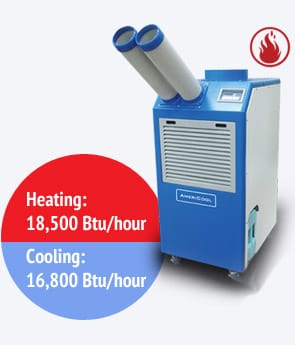
Many businesses choose to rent a heating or cooling solution during harsh weather conditions to keep workers comfortable and preserve raw materials/product inventory. One  of the best potential solutions for smaller spaces is a portable heat pump. Whether it’s the right fit for your business is a matter of weighing the pros and cons and deciding if you need more or less heating/cooling capability, and what type of power source is available. Unsure if a portable heat pump is right for your commercial or industrial space? Here’s a brief overview of the pros and cons of portable heat pumps, and what types of spaces most suitable.

Pros of Portable Heat Pumps

Size

Portable heat pumps are among the smallest heating/cooling systems you can rent or buy for industrial and commercial spaces. Most weigh significantly less than many portable air conditioning systems, and they typically run on standard 120V AC power. 

Ease of Installation

So long as there is a window space or other exterior access point, portable heat pumps can be installed anywhere. All you have to do is roll the unit into place, set up the intake/exhaust hose, plug it in and power it on. Air temperature control is now available at the touch of a button.

Convenience

Heating and cooling in one portable unit is significantly more convenient than renting or installing an HVAC system. Most have underside-mounted casters, so they can be rolled to where they are needed. Additionally, they can run on AC power or small generator power in an emergency. Best of all, they require little maintenance and storage space when they aren’t in use.

Mobility

Many portable heating and cooling solutions are cumbersome and bulky. If they don’t have an integrated generator or power supply, they also require a heavy generator to keep them running. Portable heat pumps have minimal power requirements, and they are far lighter than other portable heaters or air conditioners. More importantly, they provide both heating and cooling for small spaces, allowing facility managers and owners to keep things warm or cool with a single unit

Energy Efficiency

The power draw involved in operating a portable heat pump is significantly lower than running separate air conditioning and heating systems. This means lower energy costs during extreme weather conditions, too. 

Cons of Portable Heat Pumps

Cost Of Dual Vs. Single Pumps

Dual pumps use a two hose system to draw and expel air where the unit is placed for more efficient heating and cooling. The drawback here is the higher cost of dual portable heat pumps. Single hose pumps are less expensive, but also less effective and possess a smaller coverage area.

Limited Coverage Area

While portable heat pumps are excellent at heating and cooling small spaces, they do have a much more limited coverage area than other portable HVAC solutions. In small spaces and homes, they work well. In larger warehouses or shops, portable heat pumps may prove less effective or even insufficient to keep conditions comfortable in the workplace. Many owners and property managers often find the unit needs to be unplugged and rolled to a different location throughout the day to keep conditions comfortable.

Effect Of External Conditions

Extreme heat or extreme cold outdoors directly affects the performance of portable heat pumps. Since they draw air from outside and process it through the pump, effectiveness is directly impacted by the prevailing weather. If it’s too hot or too cold outdoors, portable heat pumps are far less effective. 

Placement Complications

If there isn’t an access point for the single or dual hose system, placing a portable heat pump can be difficult and inconvenient. For smaller shops and spaces this isn’t an issue, but it is a consideration that sometimes eliminates portable heat pumps as a viable solution.

Noise

Unlike central or outdoor heating and cooling systems, all machinery processes take place inside the portable heat pump itself. That means that all the noise of an air conditioning unit is inside the room instead of outside and muffled by the exterior walls and windows. In machine shops or manufacturing spaces it probably won’t be noticeable, but in commercial and office spaces it can create an irritatingly noisy environment.

Final Thoughts 

Ultimately, the space to be heated or cooled determines whether a portable heat pump is a viable option for a commercial or industrial space. Buying a unit outright and keeping it for those searing hot or freezing cold days or weeks can require a hefty up-front investment, and that also carries the risk that the unit will be less effective than other, more powerful and expensive portable HVAC solutions. 

For these reasons, many businesses choose to rent portable heat pumps as needed throughout the year as a means of controlling costs and preserving storage space. Rentals also carry the benefit of upgrades should a portable heat pump prove insufficient for the space where it’s needed due to placement complications or an insufficient coverage area. 

It may be that a portable heat pump is perfect for the needs of a commercial or industrial space, or it may not. Better to rent and discover the effectiveness of the solution rather than invest in a portable heat pump and have it come up short.

Are you a Texas-based business considering a portable heat pump for your commercial or industrial workspace? Preferred Climate Solutions has an excellent selection of single and dual portable heat pumps available for rental at competitive rates. Moreover, they have the expertise to determine if a portable heat pump is the best heating and cooling solution for your workspace. Contact us today for a consultation and estimate.
indirect fired heaters
Blog

Choosing the right heating solution for your industrial space isn’t an especially difficult choice: Most heaters are either direct-fired or indirect-fired, and they will generate as much heat as their maximum factory specifications will allow. 

That being said, there are certain benefits to choosing an indirect-fired heater over a direct-fired heater that most business owners may not be aware of when installing a new system. Here’s an overview of why indirect-fired heaters are the smart choice for your industrial space and the unique benefits they offer.

Direct-Fired vs. Indirect-Fired: What’s The Difference?

Direct-Fired Heating

It’s all in the name: direct-fired heaters heat up air by burning combustible fuel. To distribute heat throughout a structure, air is forced over the open flame and vented out via internal components. There’s no need for heating ducts unless the hot air needs to travel a long distance, and even if you do have ductwork there’s only minimal risk that air will carry fumes or exhaust. 

The drawback of a direct-fired heating unit is they aren’t suitable for tightly sealed spaces or for use near flammable materials. The open flame, exhaust and fumes produced by direct-fired heaters can pose both an air quality and fire safety hazard. Furthermore, direct-fired heating spaces require an air exchange system or and/or an exterior door/window that can be opened to vent the space in an emergency. 

While the likelihood is small, there is still a risk that fumes or exhaust could be leaked into the ventilation system. Finally, direct-fired heaters produce warm, dry air, but they aren’t suitable for maintaining specific humidity in an enclosed space when exterior humidity is high. 

Indirect-Fired Heating

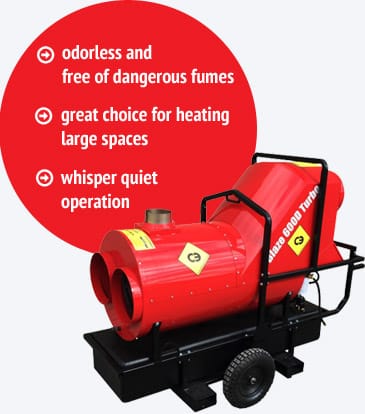
Like oil or gas-burning home furnaces that use a chimney, indirect-fired heaters use a flame in a burn chamber to increase the temperature of a heat exchanger. The indirect-fired heating system draws in cool air via two different chambers, passing it over and around the heat exchanger to raise air temperature without ever coming into contact with the open flame or fumes. This warm air is then pushed out into the ventilation system to maintain consistent temperature and humidity. 

Like direct-fired heaters, indirect-fired heating has its drawbacks, too. The units tend to be a slightly more expensive to maintain due to the added complexity of the heat exchange system, and they do take up more space. It’s also worth noting while they run cleaner than direct-fired heaters,  indirect-fired heaters need an exhaust hose vented to the outside from the burn chamber if they are oil or gas powered. That being said, the benefits far outweigh the disadvantages for industrial spaces.

Benefits of Indirect-Fired Heaters

High Quality, Safer Air

Thanks to the heat exchange system, indirect-fired heating produces clean air pulled from an outside source. When paired with a high-quality filtration and ventilation system, there is zero risk of exposure to pollutants, combustion by products or fumes within the space or building you are heating. Choosing indirect-fired heating is always going to be the best option where you deal with combustible materials or areas that require air-tight seals with pollutant and contaminant free air. Moreover, they are also easier to integrate with existing HVAC systems.

Humidity Control

The ability to manage or eliminate moisture in a building or space is essential to many commercial and manufacturing facilities. Direct-fired heaters do not allow for complete humidity control because they pass exterior intake air directly over the heat source and out into the workspace. The heater may dry the air out completely, but if especially humid weather conditions are at play, excess moisture may be pulled in with the hot air. 

Indirect-fired systems can completely eliminate all humidity thanks to their heat exchange system, allowing facilities to maintain zero humidity or controlled humidity environments. In spaces like warehouses or manufacturing storage areas where materials need to be kept at a constant temperature and humidity, indirect-fired heating is always going to be the best choice.

Energy Flexibility and Savings

Direct-fired heaters are dependent on oil or gas to increase air temperature. Not only does this increase the carbon footprint of a workspace or facility, but it also means heating is only possible if fuel is readily available. It also puts businesses at the mercy of the fossil fuel market and the weather, making it difficult to budget for energy costs each year.

Conversely, indirect-fired systems can run on oil, gas or electricity. There are even systems designed to run primarily on electricity with a fuel oil or propane backup system in the event of a power outage. Combined with an alternative energy source like wind or solar power, you can easily maintain temperature and humidity all year long in any weather. 

Why Indirect-Fired Heating Is Ideal For Industrial Spaces

No matter the type of raw material used or the product produced, maintaining consistent temperature and humidity at all times is critical to any industrial process. Direct-fired systems are limited to spaces that can be easily ventilated and must be kept well away from combustible materials. While they have a few advantages like better fuel efficiency and lower operating temperatures, they are unsuitable for many industrial spaces due to their ventilation and proximity safety requirements.

Using indirect-fired heating is always going to be the ideal choice because of its energy versatility, heat exchange system, and superior humidity control. There are some drawbacks:  indirect-fired heating carries the potential for up to a 20% energy loss in the thermal exchange between the heating chamber and the heat exchange system. Additionally, the unit must be installed in a location where a ventilation hose can be run to vent the exhaust from the combustion chamber. Despite these minor mitigating factors, indirect-fired heating remains the best option for heating industrial spaces.

Final Thoughts

All in all, choosing the best heating solution for your industrial space isn’t a complicated process. That being said, the benefits of choosing indirect-fired heating over direct-fired heating for industrial spaces are clear: better air quality, better energy flexibility, and better environmental control for enclosed spaces. 

Are you a Texas-based industrial facility owner or manager needing a temporary heating system? Preferred Climate Solutions has the resources and expertise to help you choose the perfect portable indirect-fired heating system for your industrial operation. Contact us today for a free consultation and estimate.

Scroll to Top