
October 18, 2022

hp quipment portable heating
Blog

Not every home uses central heating and air, so many renters and homeowners have to invest in another way to get comfortable during winter. A portable heat pump may be perfect for your needs if you live in a home without central heating, a fireplace, or any other heating type.

The affordability of portable heat pumps means anyone can buy one, and if you aren’t interested in purchasing one just yet, you can also look into a heat pump rental.

The good news is that portable heat pumps are powerful enough to heat large portions of your home or apartment efficiently.

Still, many other reasons exist to invest in a portable heat pump. When considering a portable heat pump, there are many factors to consider.

Multi-Room Usage

You can use a portable heat pump in multiple locations. Sometimes, parts of your home are less susceptible to central air. For example, places like garages or basements may not have stable temperatures.

If you spend time working in your garage or workshop, you know it can get pretty cold during the winter. But with a portable heat pump, you can keep those areas nice and warm.

If you work from home, you know that it can be challenging to maintain a comfortable temperature in your home office. But with a portable heat pump, you can keep your home office at a comfortable temperature all year.

You can even use your portable heat pump outside in an RV or a tent if you are camping. Just be forewarned that the area must be well-ventilated.

Even a sunroom or bonus room can achieve comfortable temperatures with one of these devices.

Whether you need to heat or cool a small space or want the ability to move the heat pump from one room to another, portability is a key selling point.

More Energy Efficient Than Window Units

Portable heat pumps are typically more energy efficient than window units. These units are very efficient, so you can reduce overall energy costs.

When shopping for a portable heat pump, look for models that have earned the Energy Star rating. Energy Star-qualified portable heat pumps are at least 15 percent more efficient than standard models and can save you hundreds of dollars on your energy bills over the unit’s life.

Imagine buying one of these units and saving enough money on energy costs to have the unit pay for itself!

Many Features and Settings

If you want to customize your portable heat pump to meet your specific needs, you’ll be able to find a unit that offers a wide range of features. For example, you can find a perfect heat pump for your home with different fan speeds and heating and cooling settings.

All portable heat pumps have a thermostat that you can use to set the desired temperature for your home. Most units also have high and low settings for heating or cooling the area.

Most portable heat pumps also have an airflow direction setting that allows you to direct the airflow up, down, or side.

If you seek a unit with a timer, you are in luck. Many portable units come equipped with a timer you can use to set the amount of time the heat pump will run. A timer is excellent if you want the heat pump to turn on before you get home from work or turn off after you go to bed.

Ease of Use

A portable heat pump is an excellent option if you’re not handy with tools or want to avoid dealing with the hassle of installation. These units are relatively easy to use, so that you can get up and running quickly.

Without the need for installation, users can immediately take the unit out of the box and get it working to heat or cool their space. Many units also come with a remote control or can be set up for use with smart home devices such as Amazon’s Echo, Google’s Nest, or Apple’s Siri.

An Affordable Value

As we mentioned earlier in this article, portable heat pumps are affordable. For their features and benefits, portable heat pumps are of great value. You can find a quality unit reasonably priced to get the most for your money.

As with any appliance, the cost of a portable heat pump will vary depending on the brand, model, and features. However, you can expect to pay anywhere from $500 to $1,500 for a quality portable heat pump.

If you’re on a budget, you can do a few things to save money on your purchase. First, consider buying a used portable heat pump. You can find good deals on used heat pumps if you shop around.

Another option is to buy a portable heat pump that’s Energy Star certified. These models are more energy efficient, saving you money on your energy bills.

Finally, shop for the best deal on your portable heat pump. Check out a few different retailers to see who has the best prices.

Several Size Options

Portable heat pumps come in various sizes, so it’s essential to choose one that’s appropriate for the size of your home or the area you are trying to keep comfortable temperature-wise.

The size of the unit will also directly impact how many BTUs, or British Thermal Units, the heat pump produces.

Most portable heat pumps have a BTU rating of around 10,000, enough to heat a small space. However, if you need to heat a larger area, you may need a pump with a higher BTU rating.

When shopping for a portable heat pump, ask about the BTU rating. The higher the BTU rating, the more expensive the pump will be. However, it is worth the investment if you need to heat a large space.

Conclusion

When you’re considering a portable heat pump, there are many factors to keep in mind. However, these are just a few key reasons to invest in a portable heat pump. With so many benefits, it’s easy to see why these units are an excellent option for any home.
mosebach PortElecHeaterHX60 sm
Blog

It’s important to keep your workplace warm and dry. And proper heating is necessary depending on your needs and the project you’re working on. The best solutions for heating your workspace are direct and indirect-fired heaters.

But what are the differences between direct and indirect-fired heaters, and which one should you use for your workspace environment? This guide will help you determine which one is the best for your needs.

Direct Fired Heaters

You may already be familiar with direct-fired heaters since they resemble gas stoves and grills. These heating units force air directly through the flame to warm the air. They are primarily used in construction sites, outdoor areas, and warehouses since they produce more heat.

Direct Heater Advantages

Direct-fired heaters are more efficient and easy to transport. On average, they are more affordable to rent or purchase and easier to maintain, and their redundant safety features make them safe for unsupervised usage. But with any machine, there are a few drawbacks to using direct-fired heaters.

Direct Heater Disadvantages

Direct-fired heaters need plenty of ventilation to maintain a safe workspace. If you put one in a tightly sealed structure, you will need some way to ventilate the area (windows, doors, etc.). You should also take care to use them only when needed since these heaters put a lot of moisture and carbon monoxide in the air.

Best Used In

These heaters have an exposed flame, which makes ventilation an important part of using one. You will generally find direct-fired heaters in one of these industries:

• Construction
• Food industry
• Petrochemical industry
• Mining industry
• Warehouses

Outside of these industries and locations, you may need to look into alternative options. As such, this is where indirect-fired heaters can come in handy.

Indirect-Fired Heaters

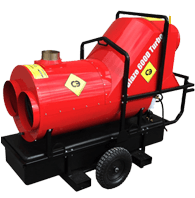
If you have ever had a gas or oil-burning furnace with a chimney in your home, then you are likely familiar with the concept of an indirect-fired heater. These heating units contain the flame in a burn chamber which warms a “heat exchanger.” Then, warm air is created when cool air passes over and around the heat exchanger.

They are mainly used in indoor workplaces that either lack proper ventilation or don’t already have a heating system.

Indirect Heater Advantages

These heaters produce 100% clean, dry air since contact is never made directly between the air and the flame. And since they don’t release carbon dioxide into the air, indirect-fired heaters work well in tightly sealed spaces. Most units also have built-in thermostats to make temperature control easier.

Indirect Heater Disadvantages

On the other hand, indirect-fired heaters are more expensive than rent or purchase. They are also less efficient, which doesn’t make them ideal for outdoor settings. You will also need to ventilate the heater’s exhaust as it can be toxic to breathe in. In addition, make sure that it has an outlet nearby to have power. And since indirect-fired heaters are much larger, they are harder to move around and transport.

Best Used In

Since these heaters don’t have an exposed flame, they’re ideal for indoor workplaces. However, they have their use in other industries as well. You will typically find indirect-fired heaters in these spaces:

• Chemical production industry
• Construction sites
• Hospital and healthcare facilities
• Retail industry
• University buildings

You may have to look into other options outside these industries and spaces. A direct-fired heater may be the best option in these cases.

Temporary Heater Rentals

Depending on where you and your employees need to work and how long you will be working in that space, an indirect heater rental is your best option to warm your workplace. You can establish how long you’ll need to use the heater and work with your rental company to find the best solution for your workspace.

Thinking about renting a heater for your workplace? If you aren’t sure what type of heater you should choose, you can contact your local heater rental store to find the right fit for your needs. Preferred Climate Solutions has the experience and knowledge to help you find the right choice for your workplace.

Which One is For You?

The bottom line is that if your workspace has a lot of ventilation, your best bet is to use a direct-fired heater. On the other hand, if the workspace is sealed-off with little ventilation, you should look into renting an indirect-fired heater.

Preferred Climate Solutions can provide 24/7 support for renting and setting up heaters where you need them. Contact us today to learn more about our services!

Related Questions

Here are a few commonly asked questions regarding direct and indirect heaters.

What are the benefits of fired heaters?

Fired heaters are more efficient than oil and water heaters because they allow you to control the temperature better.

Can a heater be 100% efficient?

No heater can ever be 100% efficient, but electric heaters come close because you can customize the temperature and timer settings. However, because they turn all electricity to heat, they can be expensive to keep running.

How long do heat exchangers last?

On average, heat exchangers last between 10 and 20 years. Though poor maintenance, design, or installation can severely reduce this time.

What causes a heat exchanger to fail?

Heat exchangers will primarily fail because of a dirty or clogged air filter. If you purchase a direct or indirect-fired heater, you will need to schedule routine maintenance inspections to ensure your heater lasts for years.

Are indirect heaters safe?

Indirect-fired heaters are designed to keep harmful byproducts like carbon monoxide, carbon dioxide, and nitrogen dioxide out of the air once it’s produced. If you have a chimney stack or other outlet, these fumes will get rerouted out of the building for workers’ safety.

Like all heaters, you cannot have a completely safe heater as they pose a fire risk if they are used unattended or are placed near flammable materials. Therefore, monitor where and when you use the heater to avoid any accidents in your workspace.

Scroll to Top