
March 27, 2023

Comprehensive Guide
Blog

Summers can be brutal, and staying cool is not just a matter of comfort but also essential for health. A portable air conditioner (PAC) is perfect for anyone looking to cool down without installing a permanent unit. This guide will cover everything you need to know about choosing and using a portable air conditioner.

What is a Portable Air Conditioner?

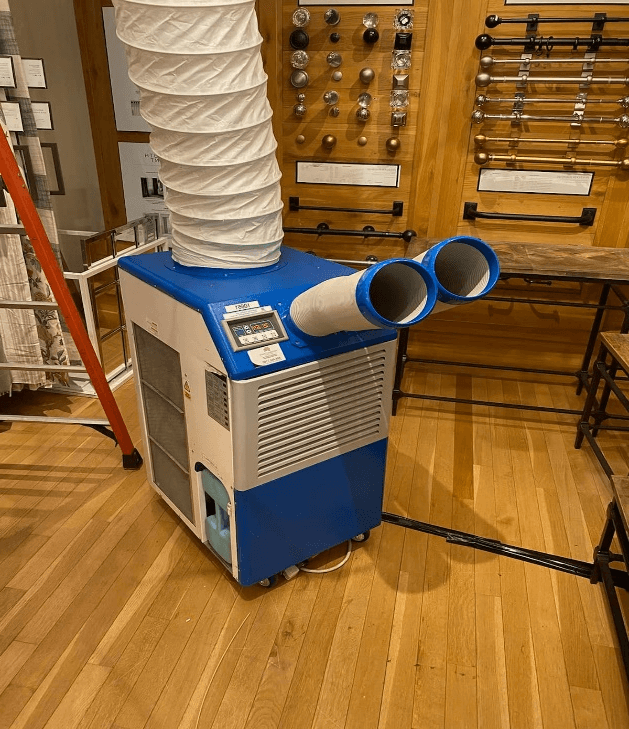
A portable air conditioner is a standalone unit that can be moved from room to room. It is an excellent option for people needing central air conditioning or wanting to cool specific rooms without using a window unit. 

Portable AC comes in various sizes, from small units that can cool a small bedroom to larger units that can cool a living room, open-concept space, or any event. They work by drawing in hot air, cooling it through refrigeration, and then releasing the cooled air back into the room.

How to Choose the Right Portable Air Conditioner

When choosing a portable air conditioner, there are several factors to consider.

  • BTU Capacity

A PAC’s BTU (British Thermal Unit) capacity measures its cooling power. The higher the BTU, the more significant the unit’s cooling capacity. When choosing a PAC, consider the room size you want to cool. A general rule of thumb is to have 8,000 BTUs for every 200 square feet of living space. You may need a higher BTU unit if you have a larger room or open-concept living area.

  • Energy Efficiency

Energy efficiency is another crucial factor to consider when choosing a PAC. Look for units with a high SEER (Seasonal Energy Efficiency Ratio) rating, which measures the cooling output per unit of energy consumed. The higher the SEER rating, the more energy-efficient the unit.

  • Noise Level

PACs can be noisy, so consider the noise level when choosing a unit. Look for units with a lower decibel rating, producing less noise while operating. Some units also have a “sleep mode” that reduces the noise level while you sleep.

  • Portability and Size

Consider the size and weight of the unit when choosing a portable air conditioner. Look for units with built-in wheels and handles for more effortless mobility. Make sure the unit’s size suits the room you plan to use it in and that it will fit through doorways and windows.

  • Price

Finally, consider the price of the unit when choosing a PAC. Prices vary widely, with higher BTU units and more energy-efficient units typically costing more. Determine your budget and look for a team that meets your needs within that budget.

Portable Air Conditioner Sizing Guide

Portable air conditioner sizing ensures the unit can effectively cool its intended room. A portable ac’s BTU capacity should match the room’s square footage. However, larger rooms or those with high ceilings may require more BTUs.

The table below provides a sizing guide for portable air conditioners based on room size:

Room Size (Square Feet) BTU Capacity Needed
100-150 5,000
150-250 6,000-7,000
250-350 8,000-10,000
350-450 10,000-12,000
450-550 12,000-14,000
550-700 14,000-16,000

It is essential to note that other factors, such as the number of people in the room, the amount of sunlight that enters the room, and the room’s insulation, can also affect the required BTU capacity. Therefore, it is always best to consult a professional to ensure you choose the correct size portable air conditioner.

How to Use a Portable Air Conditioner

Portable air conditioners are a convenient way to cool specific rooms or areas without the expense and hassle of installing a central air conditioning system. However, it is crucial to use them correctly to ensure optimal performance and energy efficiency. 

Once you have chosen a portable air conditioner, here are some tips for using it effectively.

  • Placement

Place the unit where it can quickly vent hot air outside. Most PACs come with a flexible hose that can be installed in a window or a sliding glass door. Ensure the unit is level and stable to prevent it from tipping over.

  • Temperature Setting

Set the temperature to a comfortable level. It is best to set the unit to a slightly cooler temperature than the room’s current temperature rather than trying to cool it down quickly by setting it too low. 

  • Fan Speed

Adjust the fan speed based on your comfort level. A higher fan speed will help cool the room faster, while a lower fan speed will be quieter and use less energy.

  • Maintenance

Proper maintenance is crucial to ensure optimal performance and longevity. Regular cleaning of the air filter is essential. A clogged filter can reduce airflow and make the unit work harder, increasing energy consumption and potential damage. It is also vital to empty the water reservoir or attach a drain hose to prevent water overflow and possible damage to floors or carpets. 

Are Portable Air Conditioners Any Good?

  • Potable air conditioners can be an excellent solution for cooling specific rooms, outdoor events, or spaces without installing a permanent unit.
  • Portable air conditioners are relatively easy to install and do not require any significant modifications to your home or apartment.
  • They can be more energy-efficient than central air conditioning or window units, as they only cool the space you need rather than an entire house or apartment.
  • Portable air conditioners can be moved from room to room, providing flexibility in their use.
  • Ultimately, the effectiveness of a portable air conditioner will depend on several factors, such as the size of the unit, the size of the room, and the room’s insulation. Choosing the right size unit and following best practices is essential to ensure optimal performance.
  • Renting a portable air conditioner can be a cost-effective solution for those who only need it for a short period or do not want to invest in a unit. 

Money-Saving Features of Portable Air Conditioners

  • Energy-saving modes
  • Programmable timer and sleep settings
  • Eco-friendly refrigerants
  • Dehumidifier
  • Reverse cycle
  • Self-evaporator

Working With Preferred Climate Solutions

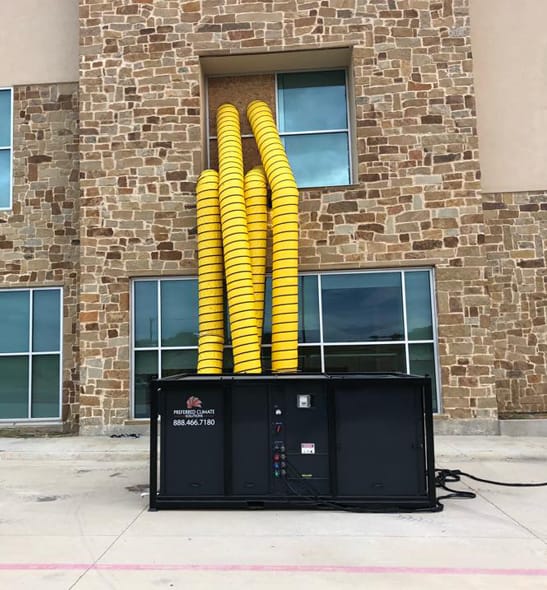
portable ac rental in Austin is a wise solution when you need extra cooling. Our cooling and heating rental is a quick & affordable solution. We provide an array of portable cooling and heating rental solutions 24/7. 
Application Pic 1
Blog

In recent times, the importance of indoor air quality has become increasingly evident. With concerns about exposure to pathogens and the effects of natural disasters like wildfires and floods, it is no surprise that homeowners and business owners are paying closer attention they breathe indoors to the air. 

Luckily, solutions, such as air scrubbers, can help improve indoor air quality. These portable devices draw air in and pass it through filters, effectively removing harmful contaminants and pollutants. 

Air scrubbers are essential devices used in construction sites, laboratories, and other industries to remove harmful particles from the air. If you want to rent an air scrubber, it is crucial to understand the basics of these machines and the various factors to consider before making your rental decision. 

This ultimate guide will give you everything you need to know before renting an air scrubber.

What is an Air Scrubber?

An air scrubber purifies air in a given space by removing harmful particles and contaminants. The device draws air through filters that trap and remove particles, such as dust, smoke, mold spores, bacteria, viruses, and other pollutants. The filtered air is then released back into the room, providing cleaner and healthier air for the occupants.

Working on Air Scrubber

Air scrubbers draw in air from the surrounding environment and pass it through a series of filters to remove contaminants. The first filtration stage usually involves a pre-filter that captures larger particles such as dust and pet hair. 

The second filtration stage typically involves a HEPA or activated carbon filter, depending on the air scrubber used. Some air scrubbers also have additional filters to capture volatile organic compounds (VOCs) and other pollutants.

As air is drawn into the air scrubber, it passes through these filters, which trap the contaminants, leaving clean air to be released back into the environment. The purified air is then circulated back into the room or space, improving the overall air quality. 

Types of Air Scrubbers

Various types of air scrubbers are available, each designed for specific applications. The main types of air scrubbers are:

  1. A Dry Scrubber: It removes pollutants from a gas stream using a dry chemical process with a HEPA. Dry scrubbers use solid or powdered sorbent materials to react with and chemically remove contaminants from the air.
  2. A Wet Scrubber: An air scrubber uses a liquid to remove contaminants from the air. The liquid is sprayed into the air, traps, and absorbs pollutants before being collected and disposed of. Wet scrubbers are commonly used in industrial settings to control emissions from factories and power plants.
  3. Integrated Scrubber: Theair scrubber is built directly into a building’s HVAC system. Rather than being a standalone device, an integrated scrubber is designed to work alongside the existing heating and cooling system to improve indoor air quality. These scrubbers are especially useful in more significant buildings, where portable air scrubbers may need to be more practical and effective. Integrated scrubbers typically use a combination of filters and ionizers to remove pollutants from the air. 

The Various Uses of an Air Scrubber

  • To promote a healthier living and working environment by reducing the risk of exposure to harmful airborne particles
  • To control odors caused by smoke, cooking, pets, and other sources
  • To remove volatile organic compounds (VOCs) and other types of pollutants from the air, which can cause health problems and unpleasant odors
  • To assist in disaster recovery efforts by removing smoke, soot, and other contaminants following a fire or flood
  • To improve the air quality in industrial settings by removing dust, fumes, and other hazardous particles from the air
  • To help prevent the spread of airborne illnesses, such as influenza or COVID-19, by removing virus particles from the air.

Factors to Consider When Renting an Air Scrubber

Before renting an air scrubber, there are various factors that you should consider. These include:

  • Size of the Area – The area where the air scrubber will be used is an essential factor to consider. You will need to rent an appropriate air scrubber for the size of the site to ensure it is effective.
  • Type of Contaminants – If you are dealing with mold, bacteria, and viruses, a HEPA air scrubber is the best choice. If you are dealing with odors and chemicals, an activated carbon air scrubber is the best choice.
  • Airflow Rate – The airflow rate of the air scrubber is another critical factor to consider. This is measured in cubic feet per minute (CFM). You will need to ensure that the air scrubber you rent has a reasonable airflow rate to effectively clean the air in the area.
  • Power Source – Some air scrubbers run on electricity, while others are battery-powered. Choosing an appropriate air scrubber for the power source available at your location would be best.

Renting an Air Scrubber

Before renting an air scrubber, it is essential to understand the different models available. Some air scrubbers are designed for larger spaces with a higher airflow rate. These air scrubbers are ideal for industrial settings or more significant buildings. 

On the other hand, more portable air scrubbers are better suited for smaller rooms or spaces in a home or building. These models are easier to move and typically have a smaller footprint, making them an excellent choice for residential settings. 

Understanding air scrubbers’ different features and capabilities can help you choose the suitable model. Contacting a rental representative can also help you decide which air scrubber suits your particular situation.

For more information about air scrubber rental for your requirement, contact Preferred Climate Solutions!

What we offer

DEFENDAIR HEPA 500 PCS-2000 Hepacart™ HC55U-L and HC74U-L Standard
  • high-efficiency unit
  • 3-stage filtration
  • 250-500 CFM
  • 2,000 CFM
  • Runs on 115 volts, 15 Amp current.
  • 3-stage system with true HEPA 
  • 1000 CFM
  • Runs on 115 volts
  • Come up with an embedded Negative Air Machine
Scroll to Top