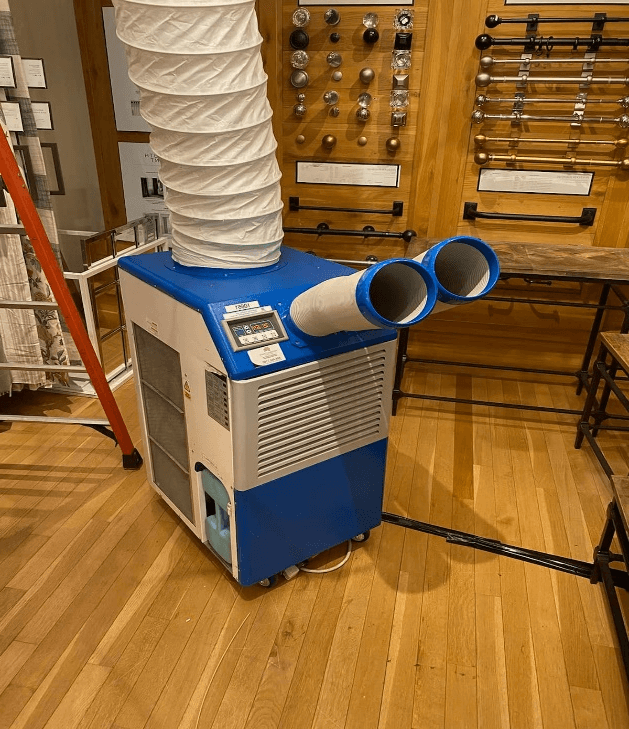
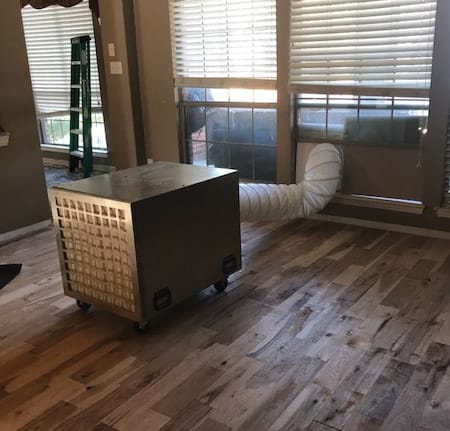
When comparing the performances of different commercial AC solutions, one of the key specs to look at is the cooling capacity.
You’ll often see this spec expressed in tons of cooling. Here’s what this spec means and how to figure out how many tons of cooling per square foot you need in a commercial setting.
What Are Tons of Cooling?
A ton of refrigeration is a unit of power that indicates the capacity of an AC system to extract heat from the air. A ton is equal to 12,000 BTU per hour.
A BTU, or British Thermal Unit, is the equivalent of the amount of energy it takes to heat a pound of water by a Fahrenheit degree. In the context of cooling, a BTU is equal to lowering the temperature by one degree in the space of 55 cubic feet.
An AC unit with a rating of a ton or 12,000 BTU can lower the temperature by 10 degrees over 66,000 cubic feet.
When looking at commercial AC equipment, you’ll often see manufacturers indicate refrigeration in tons rather than BTUs since it’s a more convenient unit when dealing with powerful systems.
Determining How Much Cooling You Need
There are a few things to consider when choosing a commercial AC solution.
The Size of the Building
A commercial AC system needs to be powerful enough to remove heat from the interior of your commercial building. The larger the building is, the more refrigeration you’ll need.
Square feet aren’t an accurate way to determine the size of your building since these dimensions fail to capture how high the ceiling is.
Instead, you should multiply the length, depth, and height of the structure to obtain its volume in cubic feet. This measure will accurately reflect how much air the building holds.
Heat Gain
Another factor to consider is how quickly the indoor air inside your commercial building heats up. A building with high heat gains calls for a more performing AC unit.
Here are the main factors influencing heat gain in commercial settings:
- The climate. Hot weather and high humidity levels are a combination that results in warm air seeping in from the outside.
- The building envelope. A building with good insulation will keep cool air inside and limit heat gain from the outside.
- The activity levels. A busy building with multiple employees, machinery, and computers can feel warm due to internal heat generation.
Assessing heat gain for a commercial building can be complex. If you need precise results, your best option is to work with a building heat load calculation expert.
More On Heat Gain and Air Exchange
The ideal amount of refrigeration can vary a lot from one commercial space to another because not all buildings have the same rate of air exchange with the outside.
The thickness and quality of the insulation are major factors that influence how much hot air from the outside gets in and how much cool air the building loses. An energy-efficient building with properly sealed vents and windows will require a commercial AC solution with less refrigeration power.
On the other hand, an old building or a temporary event tent will need more refrigeration due to the increased air exchange.
Building materials can also influence heat exchange with the outside. Some materials perform better than others. For instance, foam ceramic and silica aerogel blankets tend to limit heat exchange while closed-cell polystyrene can absorb a lot of heat from the outside, especially if humidity levels are high.
You’ll also have to consider how much traffic your commercial building is getting. A busy building where patrons are coming in and out will have a higher rate of heat exchange due to the doors opening and closing.
Are All Commercial Cooling Solutions the Same?
Some AC solutions are more effective than others, and it’s acceptable to opt for a lower BTU rating if you’re investing in a cooling solution that will do a better job of removing heat from the air.
In many instances, evaporative or swamp coolers can maintain a comfortable temperature in commercial buildings while reducing energy usage.
Traditional AC units use a closed system. They take air from the outside, absorb heat through coils, and blow the heat generated by this process outside.
The cool air keeps circulating in your building, and the AC unit maintains a comfortable temperature by continuously removing heat introduced by heat exchange from the outside.
Evaporative coolers use an open system instead. They also introduce humidity into the air rather than removing it.
Evaporative or swamp coolers use a sponge-like media saturated with water to introduce humidity to your indoor air. As hot air passes over this media, the system uses energy from the air to get the water to evaporate.
This approach can cool a commercial building more effectively while using less electricity, and you might be able to invest in an evaporative cooler with a lower BTU rating as long as your building has enough open space to balance out the humidity levels.
How Many Tons of Cooling Do You Need?
A good rule of thumb is to aim for a ton of refrigeration for 500 square feet. However, you’ll need to adjust this rule based on different factors:
- Consider the total volume of your building and increase the amount of refrigeration if you have high ceilings.
- Increase the amount of refrigeration in hot weather and high humidity conditions.
- You’ll need a more performing AC solution in buildings with high traffic, machinery, or limited insulation.
- Tents and other temporary structures require more refrigeration.
Conclusion
Assessing the amount of cooling you need for your commercial space is crucial because an AC unit that is not performing enough will draw a lot of electricity while failing to maintain a comfortable temperature.
Investing in an AC unit with more refrigeration power than needed also means the unit will not run effectively, and you’ll see your energy bills go up.
Get help from our team of experts at Preferred Climate Solutions to figure out the right amount of cooling and the best AC solution for your commercial space. Tell us more about your space or event by filling out our contact form, and we’ll get back to you.