Is the scorching summer sun getting under your skin? Looking for a smart way to stay cool and keep those bills in check? If the answer’s yes, you’re probably wondering whether to go with an evaporative cooler or an air conditioner.
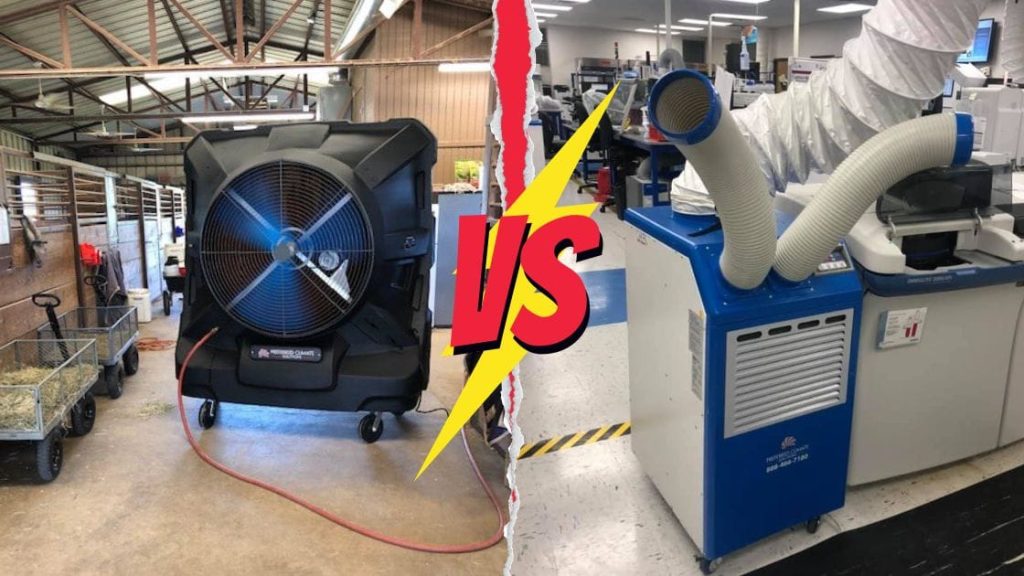
Each option has its perks and quirks, and which one you lean toward depends on a few factors. In this article, we’re taking a good look into the showdown between evaporative coolers and air conditioners. We’ll weigh them up based on their cooling techniques, energy efficiency, compatibility with your climate, maintenance demands, and noise levels.
And hey, if you’re on the hunt for a portable evaporative cooler or an air conditioner, we’ve got you covered with some tips on renting one from the cooling gurus at Preferred Climate Solutions. So, when you reach the end of this article, you’ll have a solid grip on which cooling path is your perfect match.
The Science Behind Evaporative Coolers and Air Conditioners
When it comes to chilling out, evaporative coolers and air conditioners take different routes.
Evaporative coolers ride the water wave. They suck in the hot, parched air from outdoors and shuttle it through wet filters or pads. The water does a magic trick – it evaporates, cool-ifying and humidifying the air. A fan then pumps this refreshing breeze into your space.
Air conditioners, on the other hand, play with refrigerants. They draw in the warm, sticky air from inside, running it over refrigerant-filled coils. The refrigerant gets all cozy with the heat, zapping it away and throwing in some dehumidification. The fan gets in on the action by dispersing this chilled breeze into your surroundings.
The main difference? Evaporative coolers add moisture to the air, while air conditioners do the opposite. This twist affects energy efficiency, climate match-ups, and maintenance needs.
Energy Efficiency
In the battle of energy efficiency, evaporative coolers come out on top. They gobble up around 80% less electricity than traditional air conditioners, as reported by Energy.gov. Why? Because evaporative coolers only use power for their fan and water pump. In contrast, air conditioners drag the compressor, fan, and other components into the electricity party.
Oh, and here’s the deal sealer: you can save serious bucks by siding with evaporative coolers.
And it gets greener! Evaporative coolers are kind to the environment. No refrigerants messing with the ozone layer, no contribution to global warming. They’re also off the hook for belching greenhouse gasses and other nasties that mess with air quality.
So, if you’re after wallet-friendly and planet-loving cooling, evaporative coolers could be your champions.
Climate Suitability
Evaporative coolers and air conditioners come with their climate buddies.
Evaporative coolers thrive in hot and dry climates where humidity takes a vacation. They love evaporation, and it thrives in dry air. When humidity is high, the evaporation dance loses its groove, and the cooler might not chill things down enough.
Energy.gov breaks it down – evaporative coolers shine when humidity levels sit below 60%. Ideal haunts include regions like the Southwest, the Rocky Mountains, the Great Plains, and the Midwest.
Air conditioners are cool with any climate – yes, even humid ones. They’re not in the evaporation game, so they work their magic regardless of the great outdoors’ mood. High humidity? No biggie for these AC wizards.
Energy Star says air conditioners work their mojo when humidity levels go beyond 60%. Perfect locales are found in the Southeast, the Northeast, the Pacific Northwest, and sunny Hawaii.
Rule of thumb? Know your climate before picking your cooling sidekick. Evaporative coolers are the stars in dry lands, while air conditioners shine anywhere.
Maintenance Duel: Who Wants More Attention?
When it comes to TLC, evaporative coolers are the divas. Blame it on the water, which can lead to mineral buildup, mold parties, and corrosion if you’re not on top of the cleaning game.
Evaporative coolers need the following care:
- Changing or cleaning the pads/filters each month
- Seasonal water tank draining and scrubbing
- Weekly water level and flow check
- Annual motor and fan bearing lubrication
Air conditioners are the low-maintenance cousins in this family. Refrigerants are their gig, and they don’t demand the same cleaning frequency as water does.
Energy.gov’s maintenance list for air conditioners includes:
- Monthly air filter replacement or cleaning
- Yearly evaporator and condenser coil cleaning
- Checking and sealing ducts every few years
- Occasional refrigerant recharge
Professional servicing is a must for both coolers and conditioners every few years. But here’s the kicker – DIY upkeep for evaporative coolers is more hands-on than air conditioners. Something to chew on if you’re low on time or patience.
Noise Levels
Hush or hubbub – that’s the noise showdown.
Evaporative coolers take the tranquility crown. Their fan and water pump generate less noise than the compressor and fan symphony of air conditioners.
Consumer Reports spills the beans – evaporative coolers purr at around 50 decibels (dB), the equivalent of a cozy chat. Air conditioners chime in at 60 dB, which is more like your everyday conversation.
Keep in mind, these noise levels could vary based on size, model, and placement. But as a rule, evaporative coolers are your quiet pals compared to air conditioners’ chatter.
Wrapping Up
Choosing between evaporative coolers and air conditioners isn’t a breeze. They both come with their advantages and challenges, and your perfect match hinges on a few variables.
For a quick recap, here’s what you need to know:
- Evaporative coolers roll with water, while air conditioners rock refrigerants.
- Evaporative coolers win on energy efficiency, cost-effectiveness, and eco-friendliness.
- Evaporative coolers love the dry heat, while air conditioners conquer any climate.
- Evaporative coolers demand more maintenance, while air conditioners play it cool.
- Evaporative coolers hush it up, while air conditioners hold a regular conversation.
Feeling a bit on the fence? Why not give Preferred Climate Solutions a shot? They’ve got the goods on top-notch evaporative coolers and portable air conditioners rental that’ll have you chilled and comfy no matter the weather.
Don’t let the heat get the better of your summer. Reach out to Preferred Climate Solutions today for a free quote on renting the cooler or conditioner that suits your style and budget. You’ll be patting yourself on the back when you’re kicking back in the cool zone.