
October 26, 2023

Air cooled Vs Water cooled Chillers  Which Is Best For Warehouses min
Blog

In the intricate world of warehouse management, temperature control isn’t just a luxury; it’s an absolute necessity. The choice between air-cooled and water-cooled chillers can be pivotal, affecting operational efficiency, energy consumption, preservation capabilities, and much more.

In this article, we’ll take a closer look at air-cooled vs water-cooled chillers, helping you make an informed decision tailored to your warehouse’s unique demands.

The Difference Between Air-cooled and Water-cooled Chillers

Chiller systems are mechanisms designed to remove heat from a liquid circulated through a heat exchanger to cool air or equipment.

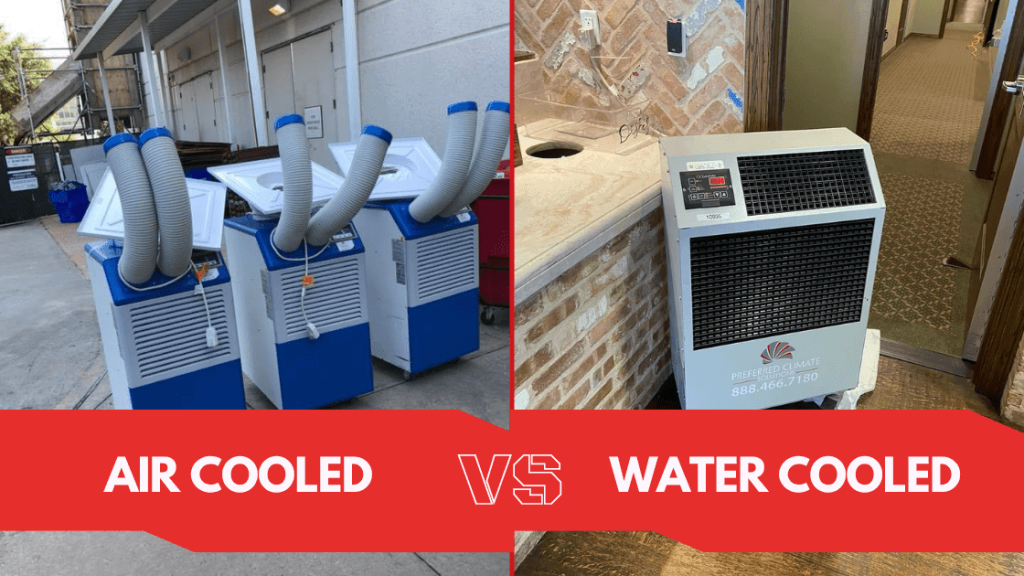
As the name suggests, air-cooled chillers expel heat away from the liquid into the air. They are typically installed outside and do not require a cooling tower.

On the other hand, water-cooled chillers rely on a secondary cooling method, usually involving water from a cooling tower, to disperse the heat.

How Chiller Systems are Rated

The performance of chiller systems is often rated by their Coefficient of Performance (COP). This metric evaluates the ratio of cooling or heating provided by the system to the energy consumed. A higher COP signifies greater efficiency.

While factors such as installation, maintenance, and operational environment can influence the COP, understanding this rating aids in selecting a system aligned with the warehouse’s energy efficiency targets.

Advantages and Disadvantages of Air-cooled vs Water-cooled Chillers

The comparative analysis of air-cooled and water-cooled chillers pivots on various factors, each echoing the unique operational dynamics, environmental implications, and energy efficiency paradigms these systems embrace.

Cooling Method

Air-cooled chillers are revered for their simplicity and ease of installation. They rely on air to remove heat, negating the need for complex water systems. However, they can be less efficient in hotter climates with high ambient air temperatures.

Water-cooled systems, meanwhile, are known for their efficiency, especially in confined or indoor spaces. They use water in a condenser loop to expel heat, but this also means they necessitate a consistent water supply, raising potential concerns about water usage and conservation.

Capacity Range

Water-cooled chillers have greater capacity. They are generally more energy-efficient and suitable for large-scale operations demanding extensive cooling.

Air-cooled chillers are typically more appropriate for smaller to medium-scale applications. They’re more flexible and easier to install but might not offer the same efficiency and cooling capacity as their water-cooled counterparts, especially in extensive, high-demand environments.

Environment and Location Considerations

Air-cooled chillers don’t consume water, making them a sustainable choice in regions where water conservation is a priority. They are also less prone to the risks associated with water quality issues and are generally easier and cheaper to maintain.

Though more efficient, water-cooled chillers require a consistent and quality water supply and involve more complex maintenance protocols due to the intricate water systems they incorporate.

Equipment Longevity

Air-cooled chillers are generally more robust, with fewer moving parts and a lower susceptibility to wear and tear. They often boast a longer lifespan, reduced maintenance, and are less prone to corrosion since they don’t rely on water.

Water-cooled chillers, though offering optimal performance, can be subject to water quality issues, corrosion, and scaling, potentially impacting their longevity if not meticulously maintained.

Chiller Efficiency

Water-cooled chillers are often more efficient than their air-cooled counterparts, especially in large-scale or high-heat environments. They are adept at maintaining optimal performance even during high ambient temperatures.

Air-cooled chillers, though still efficient, might experience reduced performance efficiency under intense heat, making them more suited for moderate climates or smaller-scale operations.

Noise Level

Air-cooled chillers, with fans operating in open air, can sometimes be noisier. This makes their placement critical to avoid disruptions.

Water-cooled chillers are generally quieter, an attribute that can be pivotal in environments where noise reduction is a priority or where regulations around noise emissions are stringent.

Choosing the Right Chiller for Your Warehouse

Navigating the intricate terrains of chiller selection echoes the bespoke operational, spatial, and environmental dynamics each warehouse encapsulates.

Factors to Consider

Key considerations pivot around the scale of operation, ambient temperatures, and the specific cooling needs of the stored goods. The spatial dynamics, including the availability of outdoor space, access to water sources, and noise restrictions, also play a crucial role.

Furthermore, maintenance requirements, energy efficiency goals, and environmental impact considerations are integral to the selection process, ensuring the chosen chiller aligns with operational difficulties and sustainability ethos.

Cost Considerations

Air-cooled chillers often allure with lower initial installation costs and reduced maintenance expenditures. However, their operational costs can be higher, especially in hot climates.

Water-cooled chillers, though potentially more expensive upfront and demanding in terms of maintenance, often compensate with enhanced efficiency and reduced operational costs, painting a holistic economic picture that transcends the initial investment.

Renting a chiller is often an excellent alternative to purchasing units outright. With rented cooling systems, a business only pays for equipment when it’s needed. Plus, renters avoid maintenance fees, as maintenance isn’t their responsibility. Even if a warehouse has an existing AC system, rentable spot coolers can provide temporary assistance during hot temperatures or storage overflow.

The Final Rundown

In the contest between air-cooled chillers vs water-cooled chillers, which is the winner?

Truthfully, there’s no one correct answer. Instead, you’ll need to look at your organization’s specific needs, whether you’re purchasing or renting a chiller.

Air-cooled chillers stand out for their ease of installation and reduced maintenance requirements, making them a cost-effective choice for warehouse owners prioritizing straightforward operation. Water-cooled chillers offer superior energy efficiency and can be a smart choice for businesses aiming to minimize their long-term operational costs.

Choosing the correct chiller will help reduce operational costs, increase product quality, boost worker comfort, and provide many other benefits for your warehouse and business.
, , ,
Blog

Clean, fresh, and breathable air is a necessity.

It is especially crucial in settings where air quality can be compromised, such as construction sites or areas affected by natural disasters. Air scrubbers and negative air machines have emerged as pivotal allies in these situations, each offering a unique approach to air purification.

Are you considering a negative air machine or air scrubber rental? While both machines accomplish the same goal, they’re not interchangeable, so it’s important to understand their specifics. Here’s everything you need to know!

Understanding Air Scrubbers and Negative Air Machines

Though distinct, these two pieces of equipment are designed to improve air quality significantly. However, their operational dynamics and applications set them apart.

What They Are

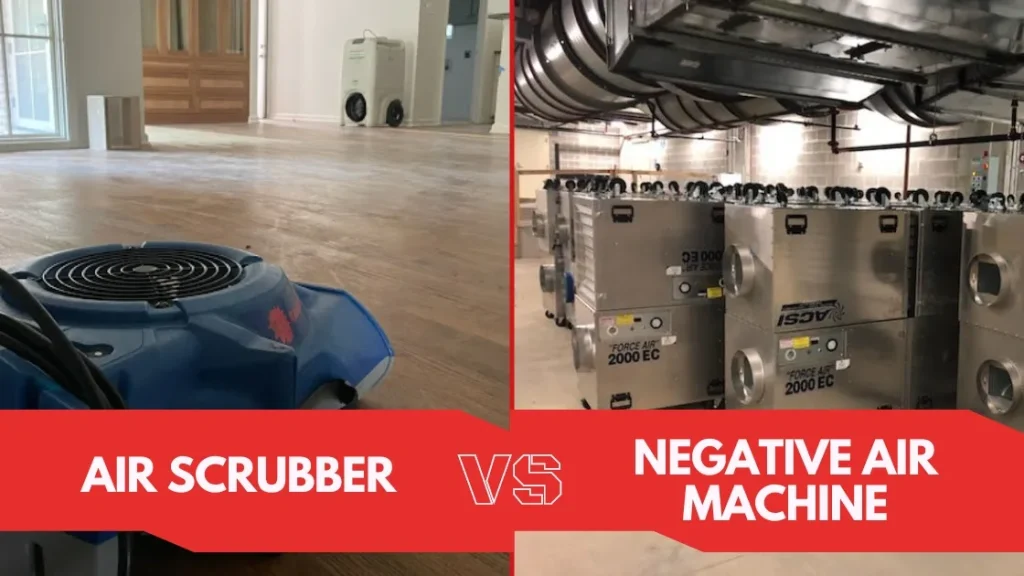
An air scrubber is a portable filtration system that removes particles, gasses, or chemicals from the air within a given area. They are instrumental in environments requiring pollutants removal to ensure the air remains clean and safe.

On the other hand, a negative air machine is a device that creates negative air pressure to prevent contaminated air from escaping a containment area. It sucks in polluted air and filters it before releasing it, ensuring that contaminants are contained.

How They Work

Air scrubbers utilize a series of filters to trap and eliminate pollutants from the air. These machines pull in air, pass it through filters that capture particles, and then release the cleaned air into the environment.

Negative air machines create a vacuum effect; they draw in the contaminated air, filter it, and then exhaust the clean air, often to the exterior of a building or containment area to ensure that the pollutants are effectively isolated.

The Differences between Air Scrubbers and Negative Air Machines

Both machines are powerful allies in the quest for clean air, but they come with distinct features and functionalities that make them suitable for different scenarios.

Uses

Air scrubbers are often employed when there’s a need to constantly purify the air from contaminants, making them ideal for places like homes, offices, and construction sites where dust and particles are a concern.

Negative air machines, in contrast, are usually deployed in more severe situations like mold remediation, restoration jobs, or hospitals where creating a containment area to control and eliminate air pollutants is essential.

Size and Capacity

Air scrubbers are compact and designed for mobility and ease of use, making them a convenient option for various settings. They effectively clean the air in smaller spaces but can also be used in tandem for larger areas.

Negative air machines are generally more substantial and have a higher capacity for air filtration. They are engineered to handle more severe levels of air contamination and are often used in specialized industrial applications.

Best for Large or Small Spaces

Air scrubbers are ideal for smaller to medium-sized spaces where portability and ease of installation are key. They can be quickly moved and set up, providing immediate improvement in air quality.

Negative air machines are suited for larger, often commercial or industrial spaces, where the level of air contamination is significant and there’s a need to create a negative air pressure environment to contain and eliminate pollutants effectively.

The choice between an air scrubber and a negative air machine boils down to the specific needs of your space and the level of air contamination you are dealing with. Evaluate the size of the area, the type and level of pollutants present, and the required air cleaning efficiency to make an informed decision that ensures a safe, clean, and breathable environment for all occupants.

Benefits of Using Each Type of Equipment

Navigating the corridors of air purification often leads to a crossroads where the air scrubber and negative air machine stand as formidable contenders. While both are engineered with a core mandate to purify and optimize air quality, they each bear distinct attributes and benefits that make them suitable for varied scenarios.

Improved Air Quality

Air scrubbers are quintessential for spaces where air quality enhancement is a prerequisite. The finesse of these machines lies in their meticulous filtration systems that diligently sift through the air, capturing particles and pollutants with impressive precision. Homes and offices, where ambient air purity is a cornerstone for comfort and health, find a reliable ally in air scrubbers. Air scrubbers can also effectively dehumidify an area.

Conversely, negative air machines step into the arena where contamination levels are heightened. In environments ravaged by pollutants, these machines unflinchingly draw in contaminated air, subjecting it to rigorous filtration processes. The outcome is air that isn’t just clean but is rendered a sanctuary of purity, even amidst surrounding contamination.

Removal of Smoke Particles

In scenarios where smoke is the adversary, the air scrubber emerges as a machine and a sentinel of purity. Its filtration intricacies are tailored to trap smoke particles with unmatched adeptness, rendering air that is smoke-free and a testament to breathable excellence.

The negative air machine takes this a notch higher, especially in intense smoke contamination. It employs a containment strategy, where the trapped smoke particles are neutralized and isolated, ensuring the ambient air remains uncontaminated. It’s a machine that doesn’t just clean the air but fortifies it against smoke particles’ infiltration.

Versatility

Versatility is the silent song of air scrubbers. Their design, compact yet efficient, renders them adaptable to diverse settings. Whether it’s the silent corners of a home or the bustling environment of an office, the air scrubber sits in unassuming elegance, purifying the air with silent diligence.

Though more robust, negative air machines are crafted for scenarios demanding intensive air purification. Where contamination is not just present but is intense, these machines stand as unwavering bastions of purification. While air scrubbers for mold rentals are effective, negative air machines are often the preferred mold removal option for hospitals and mold remediation sites.

Choosing the Right Option for Your Needs

The journey to choosing between an air scrubber and a negative air machine rental is one of introspection, echoing your space’s unique needs and dynamics.

Assessing Your Space

The first step is a thorough assessment of your space. Understand the levels and types of pollutants you’re dealing with, the size of the space, and the specific air quality needs. This foundational assessment paves the way for a choice that’s not just informed but tailored to your space’s unique demands.

Consulting with Professionals

Don’t walk this journey alone. Engaging professionals who understand the intricate dynamics of air quality management is pivotal. They bring expertise and insights that transform the selection process from a game of chance to a strategic choice, echoing your space’s technical and operational demands.

Renting vs. Purchasing

The financial investment in air quality equipment is as pivotal as the operational considerations. Renting air scrubber and negative air machine equipment offers flexibility and is often a cost-effective option for short-term needs.

How much is rental for an air scrubber? The exact prices will depend on the type of equipment needed and the size and condition of the environment. However, air scrubber and negative air machine rental is often less expensive than buying, as you’re not responsible for maintenance costs.

In contrast, purchasing can be a strategic investment for long-term air quality management, especially in spaces where air contamination is a persistent challenge.

Conclusion

When choosing between negative air machine or air scrubber rentals, you’ll want to consider the air condition, room sizes, and your long-term air cleaning needs. While both machines offer excellent air purification capabilities, you’ll want to determine which works best for your specific situation.

Air scrubbers and negative air machines play a valuable role in cleaning hazardous areas such as construction sites, and by using the guide above, you can find the perfect option!

, , ,
Scroll to Top