
Author name: pcsadmin

swamp coolers stablel
Blog

Factory and warehouse owners need to have a majority of their property cooled. You are likely aware of spot coolers, but they may not cover the area you require. For a greater means of commercial cooling, there are evaporative coolers, also known as swamp coolers, that building owners should consider buying or renting.

How Does An Evaporative Cooler Work?

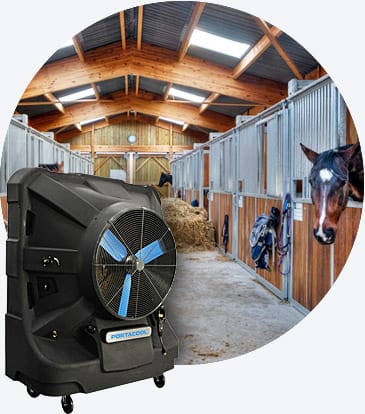
Evaporative coolers work by evaporating moisture and absorbing heat. These coolers draw outside air into a pair of proprietary, hydrated pads, where air evaporates and gets cooled. This air later gets circulated throughout the building. It is like how an air conditioner draws in hot air into icy-cold coils and disperses it through a room, but evaporative coolers draw in air from outdoors and cool this air in a different and simpler way.

Evaporative coolers generally work well in hot weather, but they work best when there are high temperatures but low humidity. That isn’t to say that evaporative coolers don’t work in humid buildings, but hot and especially dry conditions can be best answered with cool, moist air that an evaporative cooler can provide.

There are many kinds of evaporative coolers available to rent or buy, ranging from smaller models for the home to industrial coolers that work in junction with a building’s ventilation systems for wall-to-wall complete cooling.

Examples of businesses and locations that use evaporative coolers include:

  • Workshops
  • Warehouses
  • Commercial kitchens
  • Industrial plants
  • Laundromats
  • Construction sites
  • Sporting events
  • Farms and greenhouses
  • Outdoor pools
  • And more.

From goods to machinery to human beings, almost everything inside a workplace benefits from air that is no longer warm or hot. When all these things are exposed to hot air, they do not work their best.

What Happens When An Evaporative Cooler Runs?

Evaporative coolers are very simple when it comes to performance. They come with low-power motors designed to pump water from the bottom of the cooler’s body to two or more sponge-like filter pads. Another motor operates a fan from inside the cooler that pulls outside air inwards. This air travels through the cooler and back out into the room.

The cooling effect is created when air passes through cool water, thus evaporating it. Water evaporation is a simple and natural process that becomes more effective when a powerful fan moves the evaporation throughout the space. It’s only a mere fan and pump that could help a hot and sticky building become cool.

With an evaporative cooler, the air inside your building can be reduced by 30 degrees Fahrenheit. If your building currently suffers from 100-degree heat all the time, an evaporative cooler can help reduce the heat to room temperature.

But not only does an evaporative cooler make the air inside a building colder, but it also makes the air moister. If your building is already moist from being sweaty, an evaporative cooler won’t make the air drier, but it will definitely feel more pleasant by being cooler.

How Does An Evaporative Cooler Compare To An Air Conditioner?

Unlike evaporative coolers, air conditioners do make the air drier in addition to cooler. This is because there is no evaporation of water or moisture involved when the air conditioner provides a space with cooler air.

There are many drawbacks to air conditioners when compared to evaporative coolers that many building owners overlook. The first downside is that they can use over four times the power as an evaporative cooler to run, thus making them more expensive. Thus, evaporative coolers can be used to replace air conditioners in the facility as a cost-cutting measure.

Air conditioners also require more rigorous installation and maintenance, making the evaporative cooler easier to manage. Air conditioners require careful attention and must be taken care of often to ensure that they run well without any trouble. Evaporative coolers can be looked after less frequently.

Finally, air conditioners do not draw in any new air from outside. It circulates and cools the same air over and over again. If you do not have any means to draw in the new air, the air quality in your building will decline. But because evaporative coolers continuously draw in new air from outdoors, this would not be a concern.

This also means you can have a few open windows with an evaporative cooler. With an air conditioner, that cool air would exit the home, and thus it would work harder to meet your expectations. Windows can still be open if you have an evaporative cooler running as it constantly brings in new air to cool.

What Else Should I Learn Before Buying An Evaporative Cooler?

Like spot coolers and air conditioners, evaporative coolers are designed to cool a space of a certain size. A cooler too weak will not sufficiently cool a large room. A cooler too strong may be too expensive for the room or building that you wish to cool.

Instead of BTU, like with air conditioners, evaporative coolers rely on CFM (cubic feet per minute) to determine how much air the cooler can blow into space.

Simply determine the cubic feet of the room you want to cool by multiplying the square feet by the ceiling height. From there, divide that number by two and you would get your CFM. Evaporative coolers can range from 750 to 7,500 CFM, so choose a cooler with a CFM that would be closest to your room’s CFM for optimal results.

Evaporative coolers also have water tanks that provide your outdoor air with moisture. You will have to refill this tank with water when it becomes empty. Evaporative coolers have tanks as small as one gallon for small rooms to as large as 16 gallons for spaces like warehouses. Be sure to keep this capacity in mind when choosing an evaporative cooler.

Conclusion

Evaporative coolers are simple and effective utilities, helping hot and dry rooms become cool and moist for a multitude of different purposes. Consider leasing or buying a cooler to provide your space with cool air as soon as possible.
what is spot cooler2
Blog

No retailer in their right mind wants to close up for the day because their air conditioning is broken. You lose potential revenue every second your doors are closed, your employees lose hours, and if you sell food or perishable products there is a high potential for loss due to spoilage in high temperatures.

The good news for retailers is a solution exists to keep your doors open and prevent any perishable goods from spoiling: portable spot coolers. Here are just a few of the ways renting portable spot coolers can preserve your revenue and product in the event of an HVAC failure.

  1. Customers Stay Cool In The Heat

People don’t want to spend time in an unbearably hot store, and most will leave without making a purchase or get only what they need and leave immediately. It’s not just the heat either, but also the poor air circulation and humidity that accumulates when your ventilation system is out of commission. Keep your customers comfortable with portable spot coolers, and you won’t see a decline in business or sales.

  1. Employees Stay Cool And Can Continue Working

Workers don’t want to be at work if the air in their workspace is stifling. Being hot and sticky from high heat and humidity does not put anyone in a good mood, and it is difficult to maintain a high level of customer service when you are physically miserable. Having spot coolers up and running while your HVAC is repaired ensures you don’t lose business because your workers are cranky, or because they are calling out sick to avoid the heat.

  1. Keeps Your Store Safer For Customers And Workers Alike

Personal comfort aside, it isn’t safe to run a retail establishment in the summer heat without some sort of cooling solution. Customers may come in dehydrated or suffering from heat exhaustion and pass out or suffer heat stroke. The same could be said of employees who are forced to work in extremely hot conditions, and an environment like this can quickly lead to formal complaints and surprise visits from OSHA inspectors. Using a temporary solution like spot coolers reduces the chance there would be a safety hazard or an incident caused by a safety hazard in your store.

  1. Reduces Product Spoilage

Most portable electronics that run on batteries are not supposed to be stored in environments over a certain temperature, and if you sell chocolate bars or other candy, you can be certain large quantities of both will need to be thrown away should your HVAC fail for an extended time period. Putting in spot coolers keeps everything at safe storage temperature, reducing potential losses due to spoilage.

  1. Minimizes Lost Revenue

Losing potential sales dollars and revenue because your air conditioning broke down in the middle of summer can be catastrophic for small businesses. Renting spot coolers may incur some expense, but it is often far less than the financial loss due to closure and spoilage.

If your retail business has an air conditioning failure, contact the spot cooler experts at Preferred Climate Solutions. Our team has all the experience and knowledge you need to get your store cooled down and open for business again. Call or visit our website today for more information.

How spot cooler works
Blog

To make your outdoor event a success, it’s important to make sure that you have the right size spot cooler for the job. Most event planners don’t have a tremendous amount of experience with making that determination, and this can drive up the cost of your event by ordering a unit bigger than they need.

Worse still, some planners do not rent a spot cooler that can effectively keep a tent or other area cool, and end up with little or no return on their investment. Preferred Climate Solutions can help. Here’s a quick guide to choosing the right spot cooler for your next outdoor event.

What Are Spot Coolers?

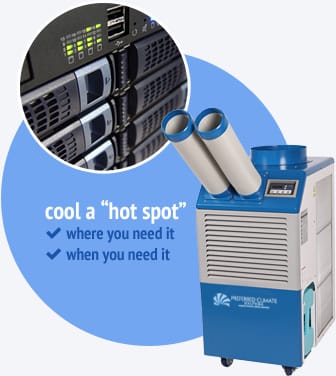
A portable air conditioner that can easily be moved to different locations, a spot cooler is an excellent way to keep a room, tent or building with no air conditioning cool even at the height of summer. Many have built-in generators or can run off their own power to keep areas cool even if there is no electricity available or your venue loses power.

Spot Cooler Sizes

Rated cooling power for spot coolers is anywhere from 1 to 5 tons, or 12,000 BTU (body temperature units) to 60,000 BTU to put it in home air conditioner terms. One or two people are generally fine with a 10,000-14,000 BTU for average summer temperatures. If the area where you need cooling tends to get up above 100 degrees Fahrenheit outdoors and it’s a large volume room, you will need significantly more cooling power, potentially as much as 34,0000 BTUs. Spot coolers come in all different sizes, but knowing which one is right for you depends on the space and how many people or the type of equipment that will be used.

Choosing The Right Size Spot Cooler

The first thing you need to do is determine the volume of the area you need to keep cool. If you don’t have access to that number, you can estimate the square footage of space by counting ceiling tiles (squares are usually 2ft. X 2 ft., rectangles are 2 ft. x 4 ft.), and then finding the height of the ceiling. For tents, just measure the height, width, and depth of your tent. Dimensions are usually marked on the package or storage container, and it may even have a measurement in cubic feet in the manual.

Once you have the cubic feet calculated, you can estimate how many cooling BTU you need to keep the temperature comfortable in a given space. For example, a 400 square foot office space with a 10 ft. ceiling with just a few people in it needs about 12,000 BTU or 1 ton of cooling. Changing the square footage while using the same ceiling height and adding equipment and people, you will need an estimate of 1 additional ton of cooling per 250 additional square feet.

Scratching your head at the math? Worried you might order the wrong spot cooler? Contact our team at Preferred Climate Solutions to get an estimate from our experienced professionals. We’ll make sure you’ve got the right spot cooler for your space and event.

event ac
Blog

Renting a tent for outdoor events is always a sound plan, but how you keep that tent cool in the Texas summer heat is less obvious. Here are some tips for keeping your tented event cool even in summer.

  1. Stay In The Shade

A tent may be a portable shelter to create shade, but if the tent itself is not in a shady spot it can get hot quickly. Some venues and rental companies won’t allow you to set your tent up underneath a tree due to damage liability in a storm, but as a rule, it’s the best source of shade possible. Should the rules forbid setting up under a tall tree, find a berm, embankment or hillside that will keep you shaded for at least part of the day. You want to keep the landscape between you and the sun as much as possible, so grab your compass and set up your tent on whichever side will be in shadow during the heat of the day.

  1. Asphalt Is Not Your Friend.

Level paved surfaces are great in a basement, but building a tent over asphalt makes it hot to walk to your tent. Worse still, asphalt radiates heat even if it’s not directly exposed to sunlight, so you are basically setting up your tent on the heated floor. To stay cool, set up on a grassy surface if you can.

  1. Good Air Circulation Is Key

Don’t “batten down the hatches” on your tent. You want to keep ventilation panels open and allow for cross ventilation. Otherwise, you are trapping all the hot air inside, and when people start filling up the tent it only gets worse. Be smart, and keep that air flowing through.

  1. Use Ceiling Fans

Nothing keeps air moving briskly like a fan, and you can actually install ceiling fans in some larger event tents. If ceiling fans are an option (you’ll need electricity), don’t hesitate. Texas summers are no joke and any additional circulation matters.

  1. Rent a Spot Cooler

If you have electricity available (and even if you don’t) you may want to consider renting a spot cooler, also called a mobile air conditioning unit. Spot coolers are both air and water cooled systems that are great for cooling off the interior of tents or outbuildings with no air conditioning like barns and stock halls.

As hot as Texas gets in the summer outdoors, it’s wise to invest some of your event budgets in spot coolers to keep everything in your tent or outbuilding at a livable temperature. Preferred Climate Solutions specializes in spot coolers, and we have the knowledge and experience to get you the best unit for your event needs.

  1. Evaporative Coolers

These inexpensive tent coolers to keep interior temperatures low in the summer by using a fan to circulate air over ice or ice water. The cold air blows through the tent and lowers the temperature and keeps the tent noticeably cooler. In the dry Texas heat, this is an excellent solution for cooling off your tent or tents at a summer event.

  1. Misters Work Well Inside or Outside a Tent

These devices cool the air by spraying a fine mist of cold water, lowering the air temperature without creating excessive humidity. This is the ideal solution for Texas summers as the air is extremely dry and hot. Misters are so effective because they help restore humidity and keep people cool inside and outside of your tent.

Regardless of what solution you choose, it’s important to be smart and prepared to keep tents cool at outdoor events. It’s safer for you, your staff, vendors, and visitors.

homepage bg event
Blog

A successful wedding day takes extensive planning and preparation, and making a reception just as successful is an even greater challenge. Outdoor receptions are especially complex because the weather plays a large role in how the day plays out.

Hot weather, cold weather, and precipitation are luck of the draw depending on the season of the year, but there are some ways you can minimize the effects of Mother Nature on your big day. Here are some tips for making your wedding reception successful even in bad weather:

Make Plans For Your Plans

Sometimes Plan B is not enough to contend with the curveballs and problems that life throws at you on your wedding day. Have a plan for everything from refreshments and food to seating and music, and then make a backup plan for each of those plans if everything goes wrong, especially the weather.

Tent Up

Get a tent for your outdoor reception. Even if you are hosting a wedding and reception in your own backyard or the backyard of a family member, you need a sheltered space where people can retreat from the weather so your schedule of events can continue uninterrupted. Another advantage of putting up a tent is it allows you to control the temperature with portable heating or cooling units. If you are getting married in the summer in Texas, these are a must-have item.

Make Sure You Have Some Type Of Climate Control

The ability to cool or heat a tent at an outdoor event should not be undervalued. If you get an unseasonably cold and wet day, having some upright propane heaters in or around the shelter allows your guests to keep warm and not need heavy coats over their formal wear. If your reception days is a real scorcher, having portable misting coolers running will help your guests stay cool even in an event shelter or large catering tent.

Set A Theme

It may not seem important to some, but a theme help cements your ideas together to create a memorable day that will be treasured forever. If you’re the bride and groom, it should be a meaningful theme to you both, even if it’s based around a favorite film or TV show. Wedding and event planners should take a similar approach when planning outdoor receptions, too.

Following these simple tips can make all the difference when the day of your wedding and reception finally arrives. If you take nothing else away from this, at least plan on having a tent and some sort of heating/cooling system in place for your outdoor reception. Your guests will be grateful for your foresight.

what is spot cooler2
Uncategorized

There are two different types of commercial spot coolers to consider: Air cooled and water cooled. Water cool units require water to help cool warm air, while air-cooled units convert warm air into cool air with an icy cold coil. Here are the pros and cons for each air cooled and water cooled spot coolers.

Air Cooled – Pros

These spot coolers do not require a water hookup like their water-cooled counterparts, so these are more common among spot cooler owners. This means you require fewer resources in order to get them up and running.

These spot coolers have a much higher limit in cooling power compared to water coolers. You can get an air-cooled sport cooler that goes up to 120,000 BTU, whereas the most powerful water-cooled spot cooler can only go up to half of that.

Most air-cooled spot coolers are considered to be portable. They have a set of wheels so that you can move it from one room to another if need be. You will, however, need to consider disassembling and reassembling ventilation of the moisture that it captures.

Air Cooled – Cons

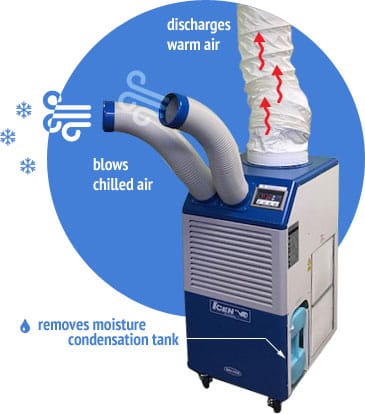
For air-cooled units, you need the moisture to be properly ventilated so that the warm moisture has the means to escape your room. If you have a window or ceiling tile, you have a great way of doing this, but setting it up has to be done so that the warmth doesn’t enter or re-enter the room.

Additionally, there is no way to enhance an air-cooled spot cooler with a chiller system, such as with a water-cooled spot cooler. The max BTU your cooler comes with cannot go any higher by any means necessary.

Water Cooled – Pros

Water cooled spot coolers tend to be more energy efficient, meaning they will use less power and cost less money to run than air-cooled spot coolers.

These types of spot coolers are self-contained, so they do not require any setups with ducting systems. They just simply make the warm air cold thanks to adding colder moisture. This is great if you don’t want to have to deal with opening windows or worrying about that warm air coming back into the room.

The performance of a water-cooled spot cooler can be enhanced if you also have a chiller system. This can help make your spot cooler run colder, thus further making it more energy efficient and produce cooler air.

Water Cooled – Cons

While they can help to save on your electrical bill, they could raise your water bill. Because you constantly need water to keep this spot cooler going, you will need to continually use water for the spot cooler’s water supply.

Also, water-cooled spot coolers tend to be heavier, occupy more space and become more immobile, thanks to the added need for water supply. These are only good spot coolers if you have just one and only room that you have to cool.

Contact us at 888.466.7180. No one offers faster response than we do.

We’re based in southeast Houston, near the Sam Houston Tollway and South Freeway. We also have offices in Dallas / Fort Worth, just off the President George Bush Turnpike in Carrollton, and in Austin, just off the Pickle Parkway in Hutto.

how spot cooler works2
Uncategorized

Spot coolers are amazing appliances to help you stay cool inside of a garage, workshop, basement, or tented area outdoors. But the lines still might be unclear when it comes to whether or not you might need a commercial spot cooler or a personal spot cooler, because not all living and working conditions are similar to one another. Here are some things to consider when contemplating personal and commercial spot coolers.

Usage

What you need the spot cooler for should better clarify which kind of spot cooler you need. For personal spot coolers, you can use it to cool a bedroom, a sunroom or simply when you want to save money by not running an air conditioner in the home. Commercial spot coolers are ideal for cooling an office, a server room, for stores and restaurants and for garages for mechanics and other auto specialists.

Power

Personal spot coolers run on 115-volt power, which is what you get from your average outlet. You basically just plug it in and turn it on with no additional steps to take. For commercial spot coolers, they typically come with greater power than personal coolers, but a dedicated circuit with a proper receptacle is necessary, so it needs a more complex power source in order to run aside from just plugging it into an outlet. You might need to have an electrician help you install a commercial spot cooler.

Exhaust

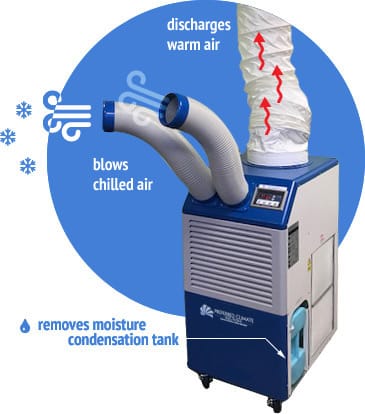
That moisture has to go somewhere, of course. For many commercial spot coolers, this moisture can travel through a hose and out of your window. For personal spot coolers, this moisture goes inside of a tank that you would need to empty from time to time, and depending on the size of the cooler, the tank also has a limit to how much water it can hold. Some commercial spot coolers, however, offer both forms of the exhaust. The hose is more ideal for people that do not want to worry about emptying the tank again and again.

Durability

Commercial spot coolers tend to last a very long time due to what they are made of Insulated metal and reinforced ABS plastic. Drain pads are even made of stainless steel so that moisture doesn’t wear them out over time. For personal spot coolers, these are made of more affordable plastic. They will not last as long as commercial spot coolers, so in order to get the most out of them, ongoing care and maintenance are strongly recommended.

Price

Due to the power, performance, and durability of a commercial spot cooler, these tend to cost much more money. Personal spot coolers are more affordable, in comparison, due to using simpler components and more affordable materials. It might make sense for some owners to choose personal spot coolers to save money, but then again, the performance of commercial spot coolers can make it well worth the investment.

Contact us at 888.466.7180. No one offers faster response than we do.

We’re based in southeast Houston, near the Sam Houston Tollway and South Freeway. We also have offices in Dallas / Fort Worth, just off the President George Bush Turnpike in Carrollton, and in Austin, just off the Pickle Parkway in Hutto.

homepage bg spotcoolers
Uncategorized

Spot coolers are great to have for many different occasions, from outdoor events to business conferences that last a whole weekend. These coolers can even be useful in the event of a power outage or another emergency situation.

When it comes to spotting coolers, you can choose between owning one forever or borrowing one for a limited time. We often get asked about which is better, and the answer to this question isn’t quite clear, as either one seems like a better plan over the over, depending on the situation. So we have compiled four things to consider when choosing a spot cooler to either rent to buy.

How Long Are You Planning To Use The Cooler?

This should be the easiest question for potential spot cooler owners to answer. Many consumers want a spot cooler that they can use for the years ahead. It wouldn’t make sense for these people to sporadically rent out a spot cooler if they need to rely on one for the long term, so if you see yourself needing a spot cooler for more than one occasion, buy it and make it yours. If you only see yourself needing the spot cooler just for one occasion in the near future, rent it and save some money. If you aren’t sure how long you might need the cooler for, continue to read on for other points to consider.

Do You Need The Cooler Unexpectedly?

You might need to get a spot cooler due to an emergency, but it might be unclear for how long you need it for, or if you need it again following the emergency. In most emergencies, consumers tend to rent spot coolers until they no longer need them. However, if you tend to get power outages in your neighborhood more than seldom, buying a spot cooler can be a good idea too, so that you can use it in case of other emergencies in the future. If you understand how often you encounter blackouts in your area, you should be certain about whether or not to buy or rent a spot cooler.

Do You Expect Changes With Cooling In The Future?

If you see yourself needing a cooler for a long period of time, and don’t see that changing any time soon, then you should consider buying the spot cooler. If you are undergoing changes for your home or business, and you momentarily won’t have other means of cooling at hand, then you should definitely rent a cooler.

This also applies to seasonal changes, as well. If you live in a warm area and don’t get cooling in a certain room of the home, such as the bedroom or basement, it would be better to buy a spot cooler over renting it. Even though it might only get hot and humid for a few months during the year, you will always need to use it again next year and the years after that.

Contact us 888.466.7180. No one offers a faster response than we do.

We’re based in southeast Houston, near the Sam Houston Tollway and South Freeway. We also have offices in Dallas / Fort Worth, just off the President George Bush Turnpike in Carrollton, and in Austin, just off the Pickle Parkway in Hutto.

homepage bg event
Uncategorized

Whether it is for an outdoor event or for sleeping outside, having an air conditioner is important to keep yourself dry, cool and comfortable if you are looking to be inside your tent for lengthy periods of time. Without anything to cool you from inside your tent, you will be perspiring nonstop under hot and humid temperatures.

But what are some things to consider when buying a portable air conditioner for tents? Of course, there isn’t such a thing as air conditioners that are one-size-fits-all. Here is what you need to know about portable air conditioners in general before buying one for your tent.

Power And Energy

Arguably the biggest factor when choosing an air conditioner for the tent is what kind of power do you want yours to run on. The most common type of portable air conditioner is battery-powered. These air conditioners are affordable, and you can also buy batteries for them that can be recharged. These, however, are not made to be powerful or are capable of cooling large tents. For the most part, battery-powered air conditioners last throughout the night before you have to replace the battery.

For most situations, an electrically-operated air conditioner isn’t ideal unless you have nearby access to a power supply or generator. You can draw this power from either an electrical grid or a large vehicle, such as an RV or trailer.

Cooling Capacity

Another important consideration is to know how much cooling itself that you need. If you are sleeping in temperatures that are less than 80 degrees, you likely won’t need much cooling. Most air conditioners for tents lie in between 5,000 and 12,000 BTU, with the higher the number meaning the unit can cool a larger room. If you have a tent that is 10 by 10 feet, a 5,000 BTU air conditioner should suffice, but if your tent is larger, then easily pick one with more BTU.

Size

You are sure to move your portable air conditioner quite often, so buying one that is easy to carry or move can also be important to some consumers. There are basically two types of air conditioners that have different degrees of mobility: Window units and portable units. Window units are heavier and have to be positioned next to your tent, so it is necessary to check how much it weighs first to see whether or not it is a unit you can move without trouble.

Additional Features

To further enjoy the experience you get from your portable air conditioner, many of them come with adjustable features so that you can use yours exactly the way you want to need it to. Examples of some additional features include adjustable thermostats, variable fan speeds, an on/off timer, low-battery indicators, and more. Often times, air conditioners with basic settings are the most affordable, but they usually aren’t worth it if there are plenty of things that you wish you could change about it.

We’re based in southeast Houston, near the Sam Houston Tollway and South Freeway. We also have offices in Dallas / Fort Worth, just off the President George Bush Turnpike in Carrollton, and in Austin, just off the Pickle Parkway in Hutto.

Contact us 888.466.7180. No one offers a faster response than we do.

Scroll to Top