
Author name: pcsadmin

water image
Blog

There is a surplus of reasons that renting a heater is an excellent idea, like increased warmth, portability, and so much more.

But one of the questions that we see commonly asked is, “will renting a heater increase my efficiency during winter?”

That’s a fantastic question that deserves an answer, but it can be a little complicated.

So we’ll answer that question in two different ways. 1) We’ll tell you how a heater can lead to higher productivity and efficiency. 2) We’ll explain exactly how renting a heater will lead to better energy efficiency in the long run.

Now that you know what our goal is and what you’ll gain if you stick around let’s start by answering the first question.

How will a heater lead to higher productivity and efficiency?

If you’re interested in renting a heater to warm up a work environment, you’re no doubt curious as to what benefits come along, and we have good news, there’s a lot.

To get the obvious point out of the way, nobody likes to work in the cold. Many studies have proven that lower temperatures in a work environment diminish workers’ effectiveness. It doesn’t even have to be a large decrease in temperature.

A small temperature variation can make many workers less productive and create a huge problem in the workplace.

A study by CareerBuilder said that 53 percent of the employees in the survey found themselves to be much less productive when their environment was too cold.

If you think that the problem can be ignored, you’re wrong. Another study by Cornell showed that even at a meager temperature of 68 degrees, employees committed 44 percent more errors and were even less than half productive. No matter what your company or organization does, that’s a problem.

A simple solution

For such a serious problem, you may think that there’s a grand scheme to fix it. However, that’s not the case. Simple solutions are often the best, and they certainly work here. Renting a heater for your workplace will lead to a steep increase in productivity.

We feel that we’ve sufficiently covered this question. So it’s about time that we move on to the next.

How will renting a heater will lead to more energy efficiency?

Did you know that electric heaters are said to be 100 percent energy efficient? It’s true. That’s because they turn all of the energy they consume directly into heat that they then give you.

Pretty efficient, huh?

Even though that seems all well and good, we want to be clear. Regarding heating an entire home, renting a heater may not be the right move.

However, that statement is only said after assuming two things. 1) You have a built-in heating unit that’s capable of heating your space. 2) That you’re heating an entire building with the heater you rent.

If either one of those situations doesn’t apply to you, renting a heater is still a viable option! That’s because a space heater is efficient mainly at heating a single space, not a collection of them. That means that if your goal is to heat a single room or a single office, you’re good to go!

On the other hand, renting a heater can be your best option if you’re in locations that don’t have a built-in unit, like a construction site or if maintenance issues are bugging you down.

The biggest tip that we can give you is to spot heat. That means that if you have an area you use a lot and another that you rarely use, why waste energy on heating the ladder? Only focus on the areas that you need.

That’s that!

How are you feeling about renting a heater now? Our hope is that you see the real advantages that come along with renting one so you can get a clear idea of what you’re getting, and we’re sure that this article did just that.

If you want to learn more or rent a heater, AC unit or air scrubber, contact Preferred Climate Solutions now.
dehumidifier
Blog

We all know what a heater is.

It’s a standard device used to heat a single, small or medium-sized area, which is obviously different from central heating, that connects and heats multiple areas at once.

These heaters can run on electricity or burnable fuel. But whatever the case, they require constant vigilance to ensure nothing dangerous arises. Despite that fact, many people seem to have the misconception that they’re without their own set of risks.

If you have that misconception or you’re interested in being as safe as possible, you’re in the right place. At Preferred Climate Solutions, we have over 17 years of experience dealing with portable heaters, so you can have confidence in us.

In this post, we’ll include three safety tips that you need to stick by and ensure everyone else does as well.

Our first safety tip is one that too many forget.

Heaters belong on the floor.

We know that it could be tempting to place your heater in a place that you deem optimal. However, unless you are told explicitly by a professional that you can keep your heater on another object or suspend it, you should never attempt to do so.

Ideally, you should keep your heater on hard, solid ground, including tile, wood flooring, concrete, and other things of that nature. You can sometimes get away with putting it on a rug or some short carpet, but it should be avoided if possible.

We understand that it seems safe, yet heaters are put at risk of tipping over or even overheating on those sorts of surfaces.

Avoid plugging it into anything other than a wall outlet.

Typically, most heaters come with enough slack that you can plug them directly into the wall without using an extension cord or anything else, and that’s for a good reason.

Heaters are usually designed only to be plugged directly into the wall. Manufacturers often advise against using surge protectors, extension cords, outlets with reset buttons or plug timers.

The added layers of electrical connection can sometimes cause the circuit to overload or create resistance that could allow the heat to build up. That could spring into a fire or internal damage.

You should also keep your heater away from the wall, at least by a few feet. That’s so the wall itself doesn’t overheat, causing a whole other problem. One final note about plugging the heater in, avoid using a plug that’s out of sight.

Whenever possible, you want to see the plug. Places like behind a dresser, behind a door or anything that obstructs your line of sight is bad.

Additional point: Never leave it alone

On a similar note as not letting the plug out of sight, the same idea applies to the actual heater.

You always want to be in the same room as the unit, especially if there’s a child around. The U.S. Fire Administration suggests keeping young children at least three feet from a heater. In addition to the obvious fire risk, a young child could also receive a nasty burn or shock.

If you do happen to leave the room unoccupied, you need to turn it off and unplug it a minute or two before leaving.

Test your smoke detectors often.

This can seem like an over-the-top safety tip. We know. With that said, it’s nonetheless essential.

Of course, all of our other tips aim to prevent the worst-case scenario of a fire, but we also want to ensure that you and your loved ones or coworkers are thoroughly prepared.

You should always have up-to-date, working smoke alarms. It’s a good idea to test your smoke detectors and make sure they’re working before you begin using your space heater.

Even after you’ve confirmed they work, you should test them once a month to ensure the batteries still work. Note that the NFPA recommends you replace your smoke detectors every ten years.

Bonus tips:

  1. Make sure that the heater you have or are going to use has an automatic shut-off switch. If something goes wrong and the heater is knocked over or overheats, that function can save a life.
  2. Keep it away from water. You most likely know this one without somebody telling you. But just be clear and safe, we’re telling you again.
  3. Remove any flammable objects from the area. You should aim to keep a good few feet between any object that could overheat or catch fire and your heater.

The final thing that we’ll say, use your common sense. If you’re using your heater and something feels off, then turn it off and unplug it. There’s no sense at all in risking anything.

If you have more questions we could answer or need an AC, heater or air scrubber, we have your back. Contact Preferred Climate Solutions today.

phrs
Blog

Understanding a portable heater and how it works is surprisingly simple.

These useful tools enable us to live and work comfortably when it’s seemingly too cold to do anything.

We’ll cover everything there is to know about these helpful tools.

That way, if you find yourself shopping for your first one or replacing the old one, you’ll have all the information you need.

Don’t worry. You’re in good hands on this one. Preferred Climate Solutions has worked with portable heating and cooling systems for over 17 years!

With all of that experience, it’s more than safe to say that we know how these systems work.

So let’s begin with the main two types that you can expect.

Convection vs. Radiant Heat

These are two ways heaters can produce heat and keep you feeling warm. Let’s explain what they both are and what benefits they provide, so you have a good understanding.

Convection heating works by heating up air that comes in contact with the main heating element. As that air gets hotter, it will expand, filling up the room and getting further from the heating element.

Once that happens, the colder air will be pushed towards the walls, then downwards, creating a constant circulation through the room.

Radiant heat is a little different. Radiant heat comes straight from a heating element from thermal radiation. Which means that there’s no air current required.

Because thermal radiation travels on electromagnetic waves, it heats the room, essentially like the sun heats a car up. As a car sits in the sun, the body of the car itself heats up and then emits its own heat, correct?

Well, the same applies to these heaters.

For the best results from radiant heaters, you need to be standing in direct sight of the heater itself.

Now let’s discuss the benefits of each method.

Benefits of convection heaters.

A big reason that convection heaters are so popular is that they provide warmth for the entire room that they’re stationed in. By constantly heating the air surrounding it and then dispersing it throughout, you’ll have a sort of bubble of warmth in the room.

Note: Radiant heaters will also heat the entire room. However, radiant heaters do at a much slower pace.

Benefits of radiant heaters.

Radiant heaters don’t rely on fans to move air around the room and provide heat. Because of that, they’re very quiet in comparison to convection heaters. They also provide warmth to you quickly because they don’t need to heat all the air around them.

Radiant heaters are also the best option if you’re looking to stay warm in a large area (bus stops, patios or vestibules). 

There are also combustion heaters, although these heaters require much more attention to provide proper ventilation and consume gas or other fuel sources.

Energy efficiency.

If you simply need a heater that’s more likely to be energy efficient, radiant heaters are the way to go. These heaters can produce heat very quickly, which results in less energy consumption.

On the other hand, convection heaters use more energy by taking longer to heat the air around them.

How do I know which option is best for my needs?

After you’ve found yourself with a good understanding of each type and its benefits, you may still find yourself at a loss. If that’s the case, all you need to do is keep a few questions in mind while you’re shopping.

  1. Do you need to provide supplemental to a space?
  2. Do you need to warm the area fast?
  3. Is the space that you’re trying to warm up indoor or outdoor?
  4. Is the heater only meant to warm up a small space for people waiting?

Another thing to consider is what safety features the heater has. The last thing that you need is for something to happen, and in a work or public setting, you can’t always control everything.

Those questions are key to understanding which option is the best fit for your needs.

When you’re ready to decide, or you need more information, we can help you. Take a look at our website or contact us today to ensure that you have the best coverage. We have a heating option ready to go for any type of event or site. Contact us Preferred Climate Solutions now.
To read more on the different heating options that are available to you, check out our blog here.

ps2pdf.com  1
Blog

It can be tough to find the best heat pump available for rent.

However, these heat pumps can be incredibly useful and effective at keeping you and your space warm or cool.

So how do you go about finding the best rental? In this full guide, you’ll get the answer to precisely that.

We’ll cover how to find it, know it when you see it, and even what it is—all to ensure that you have the answer to any question you might generate.

Let’s start where you’re likely to start as well.

What is a heat pump rental?

As you may already know, a heat pump is an easy way to provide warmth to your space (home, office or workspace) without installing an entire unit for a hefty price. But what is it beyond that?

These pumps are also capable of providing cooling to your space as well. Portable heat pumps have also been referred to as reversible portable air conditioners. That’s because they essentially work as a funnel between your space and outside.

If you need cooling, it will pump out the heat inside the building (thus the name). However, if you need heating, it will suck the heat out of the outside air, even in cold temperatures, and redisperse it in the building.

In the case that temperatures outside are too low to provide heat, these pumps have a built-in electric heater to get the job done.

All in all, pretty interesting, right? Now,

What are the advantages?

You know what it is, but not exactly how it holds advantages over other solutions, so let’s talk about that now.

  • First off, these systems are highly energy-efficient.

That’s because each unit blows air of the right temperature directly into the space, which means there’s no energy-efficient loss due to ductwork. That alone can improve overall efficiency by up to 35 percent compared to conventional systems.

  • No need for ductwork.

If the space you’re trying to provide heating or cooling to lacks ductwork, that’s no problem. Systems like these don’t depend on preexisting ductwork to function. That feature makes them ideal for quickly setting up job sites or locations you don’t want to invest in heavily.

Another benefit of using a heat pump is saving space. Given that they don’t require ducts, you can maximize the amount of usable space.

  • Adjust heating or cooling with ease.

When you have multiple units set up in a location, you can finely tune each of them to your specifications. If you need one room to be cool and then the other warm, these units can easily accommodate that.

That results in lower energy consumption and allows residents to tailor the conditions to their preferences.

  • Secure installation.

Compared to many other units that require a window mount or whole areas to be reconstructed, these heat pumps only need a tiny hole here and there. That means that they have an overall smaller impact on the building’s security.

When can I make the most of these benefits?

Heat pumps can serve you really well as temporary, supplemental, and emergency heating or cooling.

If you have a temporary location experiencing hot days or cold nights, a heat pump could do you a lot of good.

On the other hand, if you have a permanent location that often deals with a cold/warm spot or two, a heat pump can help even out that space. This is especially useful if a few workers like to operate in different conditions.

A number of other accommodations that could find great benefits from one of these units include schools, offices, storage facilities, temporary event locations, hospitals and even restaurants.

Okay, you understand the best uses, the top benefits and how it functions. Now, you need to know how to pick the right one for the job.

How to find the right heat pump rental.

When you go looking for a heat pump rental, you need to keep a few ideas in mind.

First, you need to think about the size of the location and the size of the unit. Understanding how large of an area that it will be covering can help a lot.

You also need to make sure the unit doesn’t overpower the space by being too large.

Second, are you using it for residential or commercial properties? Some heat pumps specialize in certain applications, so always check.

Lastly, the product’s specifications matter a lot when it comes to heat pumps.

How much power does it typically consume? Check the voltage and how many tons of air it can heat or cool per hour.

These are very important things to understand.

The bottom line.

If you go through all of this and you’re ready to rent a heat pump, but you don’t trust any one place enough, we’re always here. At Preferred Climate Solutions, we understand your needs, and we’ll give you the best deals on excellent rentals. When you need the right cooling or heating, call us as soon as possible.

In the meantime, be sure to visit the rest of our website and check up on the portable heat pumps that we have available here!

heatpump fimg
Blog

How do you like your temperature? Hot or cold? We know Texas weather conditions and temperatures are always unpredictable. Extremely hot summer seasons that could cause a heat stroke to the sudden biting winter conditions.

You may have come to a point where your heating or cooling systems in your work might not be doing its job as well. One minute you and your staff could be sweating from the heat or feel your fingers going numb from the cold.

What if we told you that there is a system out there where you don’t need the hassle of having two separate units? An air conditioner and a heater all in one system. A portable heat pump. AC unit nor working? Heat pump. Heater not working? Heat pump.

Maybe a portable heat pump could be the solution. But first, we want to give you a little tour about portable heat pumps.

What is a portable heat pump

Don’t let the name fool you. Heat pumps are a fairly recent technology that uses air conditioning systems to produce both cooling and heating. Think of Spot cooler, but producing heat as well at the touch of a remote switch or thermostat.

Portable heat pumps are also known as reversible portable air conditioners. You can move it around from A to B. During the hot seasons, the heat pump takes the heat from inside your space and moves it outside. And during colder seasons, the process works in reverse. Even though it may be cold outside, there is still some heat in the air. The heat pump will pull this heat that’s outside in the air and bring it into your space. If the heat from the outside isn’t sufficient then the electric heater from the heat pump will supplement the outdoor air so your heating needs are met.

Where & when to use a portable heat pump

Heat pumps can serve well as supplemental, temporary, or emergency cooling or heating except in extreme weather conditions.

Seasons with hot days and cool nights are the perfect way to climate control using a heat pump. Temporary events or locations can also benefit from heat pumps. It’s all about climate control.

Failure of the main HVAC system, renovation, construction planned maintenance, or sudden cold snap or heatwave in a temperate zone can also benefit from a portable heat pump system.

Large buildings often have cold or warm spots. These buildings could be an office, retails, manufacturing and storage spaces. Heat pumps are useful for workers with different comfort preferences. Some might like it hot and some might like it cold.

Schools, hospitals, lobbies, conference areas, and restaurants are the top candidates for portable heat pumps. Outbuildings, guest apartments, garages, or rooms in homes that require heating and cooling without having to change the settings for the whole building is another great example of how heat pump systems can come in handy.

What are the benefits

Like many products you want to know if this is really something that you need. More thought goes into that decision especially for an industry or commercial spaces. Is this the right heating and cooling system solution for you? Here are some benefits of a portable heat pump:

  • Size
    • You can rent or buy portable heat pumps for your industrial or commercial spaces. They are also among the smallest heating and cooling systems. Most usually weigh significantly less than many portable air conditioning systems and will typically run on standard 120V AC power.
  • Installation
    • Installation has never been so easy. As long as there is a window or other exterior points, portable heat pumps can be installed anywhere. Really. Anywhere. Roll the heat pump to the window or access point, set up the exhaust hose, plug it in, and turn it on. You don’t even have to worry about temperature control. That control is available at the touch of a button.
  • Mobility
    • A lot of portable heating and cooling systems can be inconvenient and bulky. If an integrated generator or power supply isn’t installed, they require a heavy generator to keep them running. That’s a lot of extra weight. Portable heat pumps require less than what is mentioned. They have minimal power requirements and are lighter than other portable heaters or air conditioners. Along with the provision of both heating and cooling for small spaces. You can keep your area cool or warm with one single unit.
  • Convenience
    • Installing or renting an HVAC system can require more time. A heat pump, which has heating and cooling in one, makes it more convenient. Most portable heat pumps have underside-mounted casters. You can roll your heat pump to wherever they are needed. Another convenience, heat pumps can run on AC power or small generator powers in case of an emergency. Most importantly, heavy maintenance is not required and little storage space when not in use.
  • Energy efficiency
    • A portable heat pump uses significantly lower energy than running a heating and air conditioning separately. This means energy costs are lowered during extreme weather conditions, too.

How to choose the right heat pump for you

In the end, buying a portable heat pump would depend on whether it would work for your industrial or commercial space. Our advice? We recommend getting a heat pump that can be used in a smaller workspace. An office, or small workspace. Portable heat pumps could also be a supplement to your other cooling or heating systems.

Portable heat pumps are simple, convenient, and efficient. They are a 3-in1.

Preferred Climate Solutions

At Preferred Climate Solutions clients will be given the different selections of portable heat pumps. If you’re unsure about purchasing a portable heat pump, Preferred Climate Solutions rents out heat pumps at competitive rates. We have professional experts who can provide you with the expertise to direct you to the heat pumps that are suitable for you and if it is the best solution for your work space. Contact us today to get a consultation.

dehumidifier
Blog

Let’s talk about dehumidifiers. If you’ve heard about dehumidifiers then chances are you already own one or you might be thinking about getting one. Dehumidifiers can be beneficial for your home but they can also be beneficial for your office space.

What is a commercial dehumidifier

Commercial humidifiers have come a long way since its invention in 1955. It has become a solving mechanism for many industries with solving humidity problems.

A commercial or industrial dehumidifier is an appliance that reduces the humidity level to actually improve the indoor air quality. Dehumidifiers, or more specifically, commercial dehumidifiers, are so powerful that they can remove about 150 to 250 points of moisture from the air per day.

Ideal uses of commercial dehumidifiers

When you think of commercial humidifiers, think big. Commercial dehumidifiers are ideal for manufacturing facilities, warehouses, greenhouses, supermarkets, hospitals, gyms, and so much more. When we say think big, we mean large spaces.

They are also great for areas affected by flooding, water leakage, or natural disasters where humidity is affected.

Problems caused by humidity

When there is a high-level of humidity a range of problems can arise. Humidity can cause damage that can be expensive to solve, cause unnecessary downtime, and could potentially create unfixable damage.

  • Corrosion is the conversion of refined metals into a more chemically stable metal. Metals that are used to make cars or machinery. This material reacts with the air and moisture, which will cause rusting. The more humid an area is, the more corrosion will happen.
  • Mold and hygiene issues. What is the perfect climate for mold to grow in? Humid climates. That means a high humidity can provide the best breeding ground for mold and bacteria. If you’re in the food industry, mold and bacteria are your worst enemy. A sterile environment is necessary for the health and safety of consumers. Not to mention, in severe cases mold can cause serious health issues such as respiratory conditions.
  • Damage to machinery. If you work in an industry where heavy machinery is used, then humidity is not your friend. In some industries, steam is an unavoidable by-product. If a lot of water is constantly deposited onto the surfaces, machinery, or pipework connected to it, it becomes more vulnerable to damage. We can already picture where that damage is going to lead to… and it’s not a road we want you to go down.
  • Quality control. Many sectors like the pharmaceutical industry need to have a controlled humidity level. A controlled humidity level is important because measurements are required to be extremely precise. Including the quality control of the drugs that have to be executed to the highest degree. This quality control will protect public health. High humidity degrades the quality of drugs as the product may absorb the moisture.

How to choose the perfect commercial dehumidifier

So what are the things you should look for to find the right commercial dehumidifier for you?

  • Size of your space (sq. ft.)
  • Room temperature
  • Relative Humidity (RH)

Room size

Keep in mind dehumidifiers remove the excess water that’s measured in pints per day. The sizing of your room can affect the performance or removal rate. Here is a guide to help you determine the size of your space.

  • 150 Pint Commercial Dehumidifiers are ideal for spaces up to 8,500 sq. ft.
    • Large basements, gyms, workshops, sheds
  • 200 Pint Commercial Dehumidifiers are ideal for spaces up to 11,000 sq. ft.
    • Small construction sites, large gyms, offices, greenhouses
  • 250 Pint Commercial Dehumidifiers are ideal for spaces up to 15,500 sq. ft.
    • Warehouses, hospitals, supermarkets

Applications across various industries

  • Food industry
    • Excess humidity will cause condensation and a broad range of hygiene issues in the product. Consistent and controlled moisture conditions are necessary. Using a commercial dehumidifier can control the moisture content. This can lead to perfect coating and longer shelf-life of products.
  • Lithium batteries
    • The essential environment for the making of lithium batteries is a dry room with very low humidity. Lithium is highly sensitive to moisture, so high moisture in the space will lead to a reduction in battery performance and life of the batteries.
  • Pharmaceutical industry
    • Dehumidifiers help pharmaceutical industries in keeping to the required humidity parameters for processing, drying, storing, and transporting the medicine.
  • Cold stores
    • To prevent flowers, fruits, vegetables, milk, and processed food from going bad they are cooled and cold stored in low moisture conditions. Dehumidified air helps control the access of moisture entering the cold rooms.
  • Defense industries
    • Military equipment are extremely prone to humidity damage when they are stored for long periods. Dehumidifiers help prevent corrosion on the equipment by keeping humidity levels.
  • Turbine industry
    • Moisture can corrode turbines, boilers, condensers and many other machines when they are kept for maintenance during the layup process. High humidity causes corrosion and rusting on the equipment leading to their malfunctioning. Industrial dehumidifiers help in keeping moisture levels low during the storage of the product; thus, preventing corrosion.
  • Leather industry
    • Excess moisture will cause the growth of mold and mildew on leather. Proper humidity control is necessary otherwise leather will lose its shine, produce foul smell, will lose its strength, and will start decomposing. Dehumidifiers help provide controlled moisture conditions during the processing of leather products.
  • Museums and archives
    • Paper, cotton, wood, natural fibre, and etc are organic materials that are used in materials in museums and archives. These organic materials absorb moisture at a high rate. The absorption of moisture can lead to fungi growth, which will result in the deterioration of the products. Dehumidifiers help with moisture control and keeping the materials in ideal condition.

Summary

Controlling humidity has become not just a want but a necessary item for all industries. The consequences of moisture affects the different parts of stages in the industries. Manufacturing, processing, packaging, storage, transporting, and testing every process of production requires moisture control.

Commercial dehumidifiers might sound like a big investment, but the benefits of having a moisture control machine outweigh the installation costs in the long run. Think of it this way. Would you rather spend more money on buying a machine that was damaged due to moisture? Buying machines is not cheap. Investing in a commercial humidifier will save you from that potential.

Give us a call

If you are a Texas-based business and thinking about investing in a commercial dehumidifier, contact us today for a consultation.

JS230 rface web1
Blog

If you live or work in a hot climate, you already know how important it is to have working air conditioning. Going beyond personal comfort, the issue of unavailable or inefficient cooling can lead to serious danger. If your air conditioning fails, or you need to find a way to cool a space for an event or other purpose, renting a portable air conditioner may be the best option. Luckily, there is a wide range of portable air conditioning units available for rent that can fit your needs, whatever they are. But before you dive in, you might have some questions about portable air conditioner rentals. Today, we are going to do our best to answer these questions. Here are the most important things to know before renting a portable air conditioner.

The Different Types of Portable Air Conditioners

The job of an air conditioner is fairly simple; it cools a space. But don’t let this fact lead you to believe all air conditioners are the same. The truth is, an air conditioner, with its simple purpose, has to be designed quite specifically. Not only does it need to provide the correct amount of cooling for a given volume of space, it needs to provide the right kind of cooling for its intended purpose. The list of applications for a portable air conditioner goes on and on, calling for more specialized units. Here are the main types of portable air conditioners and what they are designed to do.

Spot Coolers

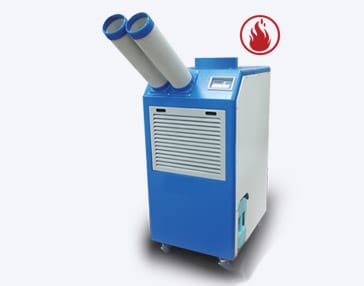
Spot coolers are a nifty subset of air conditioners that can provide efficient, localized cooling and save you money. Where traditional air conditioners are designed to pump out enough chilled air to cool a certain volume of space, spot coolers emit a more precise stream of cold air. This allows for the cooling of specific spaces within a building or room, eliminating the need to cool the entire space. This can be useful in manufacturing environments, for example, where an area surrounding a specific machine gets too hot and needs to be kept cool. They can even be directed at the machine itself as an extra cooling measure to keep everything running as intended. These machines have many uses, and are great for situations that could not reasonably be remedied by a traditional unit.

Evaporative Coolers

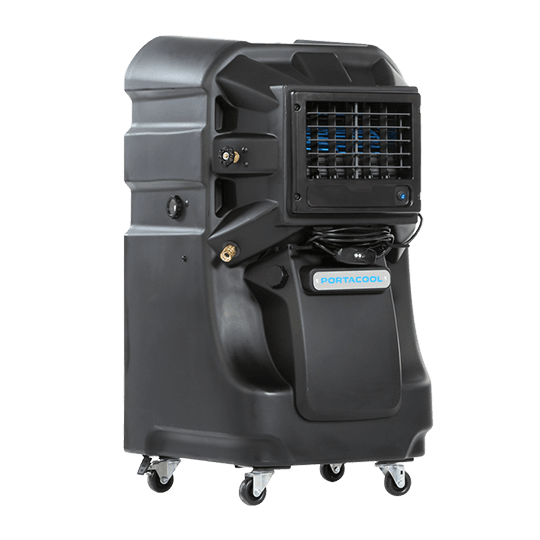
Evaporative air conditioners use a unique method of cooling that sets them apart from other kinds of units. Also known as swamp coolers, these machines take advantage of a basic scientific principle: in order for water to evaporate and become water vapor, it must use energy. When you boil a pot of water, heat from a burner provides the energy that allows the water to boil. The same idea applies to evaporative cooling. These units work by pulling in warm air from their surroundings, which is then filtered through water-soaked pads inside. The water in the pads uses up the heat energy in the air to evaporate, and, because much of the heat energy in the air has been used up, it comes out of the machine significantly cooler. Because they rely on the heat in the air to work, these machines work best outdoors, but they are also very efficient for large indoor spaces as well. Evaporative coolers come in large sizes with great output, making them the perfect solution for outdoor events and parties.

Water Cooled Portable Air Conditioners

Finally, we have water cooled portable air conditioners, which are the most similar to what you might have in your window at home. The only difference is that these machines use water to cool their compressors rather than air. These units are meant for indoor use, and can be a great option when you are in need of emergency air conditioning or other temporary cooling. Their water cooled design makes them more efficient than air cooled systems, and they are perfect for cooling individual rooms.

How to Avoid Setup Woes

While portable air conditioners definitely live up to their name, everything is relative. These are still large machines in some cases, and it is important to have a plan for how you are going to get them to where they need to be and make sure they are set up properly. If you are in a situation where your air conditioning has failed, or you need to plan a large event, you probably want to be worrying as little as possible about air conditioner logistics. That’s why it’s important to rent from somewhere that will do all the heavy lifting for you. Make sure you will be able to have your portable air conditioner delivered and set up right when you need it.

Make Sure You Choose the Right Model

As illustrated earlier when we looked at some of the different types of portable air conditioners, there are many different models to choose from with different designs and functions. So when you are deciding which one to rent, it will pay off to choose carefully. First of all, make sure that you are looking at the right type of air conditioner. If you only need a small area cooled, for example, an evaporative cooler, while it may get the job done, will not be the most efficient choice. You also want to be sure to choose the right model within that type. If your space is too large for the model you rent, you won’t have enough cooling. But if your unit is too powerful for the space, you might be overpaying.

Conclusion

Renting a portable air conditioner can be an extraordinarily cost-effective solution that’s likely to save you a lot of stress and trouble. From home use to large-scale events to medical and manufacturing applications, portable air conditioning rental is a great tool to have at your disposal when you really need it. If you want to rent a great selection of air conditioners at a reasonable price with delivery and setup, call Preferred Climate Solutions today, or find us online at https://preferredclimatesolutions.com.

airscrubbers fimg
Blog

Air quality is serious business. If you or your loved ones suffer from allergies, asthma, or other respiratory conditions, then you likely already think about it quite frequently. But, especially given the ongoing pandemic, it is important to be attentive when it comes to respiratory health and air quality. If you have been looking into air purification options, you may have heard of air scrubbers. But what does this device do? Is it effective? Today, we are going to shed some light on these questions and tell you all you need to know about air scrubbers, including some of the most common situations that call for one.

What is an Air Scrubber?

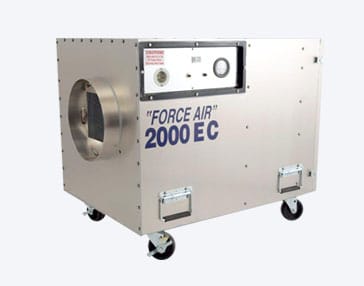
An air scrubber is an air purification device that pulls in air and filters out a wide variety of contaminants. They will reduce the presence of dust, various allergens, chemicals, mold spores, and unpleasant odors in the air of an indoor space. While they are all referred to as air scrubbers, these devices come in a range of shapes, sizes, and intended uses. Some air scrubbers attach to HVAC systems and are intended as long-term fixtures for homes, offices, or other indoor spaces. Others are portable and designed to be positioned on the floor. These portable units are usually meant for more temporary use. They are commonly available for rent, and can be used during renovations or other temporary situations that demand the utmost attention to air quality.

How Effective Are Air Scrubbers?

While an air scrubber cannot promise to completely eliminate all pollutants from your air, the technology they use has proven to be incredibly effective in a great number of different applications. Most air scrubber models are able to eliminate a vast majority of the airborne contaminants that pass through them, virtually destroying threats of illness from black mold and similar dangers. One testament to the effectiveness of air scrubbers is the extent to which they reduce undesirable smells in indoor spaces. Because they filter out pet dander and airborne particles and chemicals, odors from pets, smoke, and fumes can usually be greatly reduced in the presence of an air scrubber. Less smell means less contamination going into your lungs.

When Might You Need an Air Scrubber?

During Renovations

Renovating your home or other space can be exciting, but it also usually means you will be kicking up a lot of dust and debris. Materials like sawdust, drywall, and insulation are frequently released into the air when conducting renovations, and they can pose serious risks to your respiratory health. If you are planning to be in a situation like this, you should definitely consider renting an air scrubber to keep the site safe while the work is going on.

When Entering a Space With Water Damage

Water damage can be devastating for more than just your belongings. It also leads to the rapid growth of mold, and many types of mold pose significant risks to your health. Breathing in the spores emitted by mold can cause a number of health problems, from allergies all the way to serious illness. In other words, it’s best not to take any chances when it comes to mold, and an air scrubber is an effective way to keep air quality high when you know you will be exposed.

When You Just Can’t Get Rid Of That Smell

Have you ever encountered a strange smell that lingered longer than it had any right to? Odors from paint fumes or kitchen projects gone wrong can sometimes just stick around for a while. An air scrubber can be a great way to speed up the process of getting your space back to smelling normal. As it pulls in air and purifies it, a scrubber will eliminate the primary sources of most types of airborne odors, making for a great solution to this seemingly inescapable problem. You may not be able to hide from a smell, but at least you can scrub it away!

When Your Allergies Are Killing You

Allergies can be a huge hindrance in your daily life, and it isn’t always an option to go somewhere that is allergen-free. One incredibly common allergen that is found nearly everywhere is dust. It can easily fill the air during cleaning, moving, and anything else that happens to set it free from its dusty resting place. If your allergies start to worsen or you know you are going to be cleaning a dusty space sometime soon, an air scrubber can save you a lot of grief by filtering out that dust.

When You Need To Account For Pet Allergies

Of course, the best way to deal with pet allergies is to limit exposure to pets as much as possible. But that isn’t always an easy task. Sometimes exposure is inevitable. Luckily, air scrubbers can do a pretty good job of reducing allergies by removing allergens from the air. Most commonly, allergies to cats and dogs are triggered by either flakes of dead skin known as dander or by saliva left on pet hair. The amount of both of these can be greatly reduced by an air scrubber, making for a much more welcoming environment for those with allergies.

Is An Air Scrubber Right For You?

We’ve gone through what air scrubbers do, how effective they can be, and some of the most common situations that call for them. While these machines can’t fix every problem, they are great tools for a surprisingly long list of applications, and they might be able to greatly improve your air quality when you need it most. And one of the best things about them is their availability for rent, which allows you to use them when you need them without having to worry about storage. If you are interested in renting an air scrubber, go to https://preferredclimatesolutions.com/air-scrubbers/ and check out the great options available.

swamp cooler slide1
Blog

For those of you looking to beat the heat in the summer, it’s important to know that you have several options. While a standard central or portable air conditioner unit is a usual choice, there are other ways to keep cool. One of those ways that you might have heard about before is a swamp cooler.

What Is a Swamp Cooler?

A swamp cooler is a type of low-maintenance, lower-energy air conditioning that relies on the evaporation of water vapor to cool an area. These units blow hot, dry air over moisture-laden pads. These pads allow the air to pick up moisture and bring it into the room, where it then acts to cool down the space.

This is actually a method that has been used for thousands of years in more basic formats (such as hanging wet sheets outside of an open window and letting the wind take over) but it doesn’t work in all situations.

What’s the Science Here?

So now that we have the basics out of the way, let’s get into the more nitty-gritty science to learn just how swamp coolers work.

Humanity has long known that things that are wet tend to feel cooler. If you’ve ever licked your finger then held it up to the wind, you’ve noticed this. That coolness comes from the moisture on your finger evaporating in the wind. As moisture evaporates, it draws heat into the air and away from the body, cooling you down. Our own sweat works on much the same principle: as the sweat evaporates from your skin, it cools you down.

Swamp coolers use that same effect, pumping air full of evaporated water droplets into a space. These droplets actually draw the heat from the room as they enter, cooling it down. The result is a cooler, more humid space than you initially started with.

Can Swamp Coolers Work for Everyone?

Unfortunately, the answer to this question is no. You might have noticed in that last paragraph that a room cooled with a swamp cooler ends up being more humid than before. Because of this, and because of the way these units work, swamp coolers are really only effective in dryer conditions. If you live in more arid climates, such as the southwest, then a swamp cooler might just do the trick, However, if you live in the southeast, or any other part of the country known to be more humid, than a swamp cooler can actually end up making things worse by making the air even more humid than it was to start with.

In addition to that, swamp coolers don’t really work in huge spaces. This is because the air they pump into a room needs to be able to exit the room somehow. This is a basic rule of physics: you can’t put material into a space without there being room for it. Just like you can’t put more water into a glass if it’s already full, without some water leaving, you can’t put more air into a room without a way for the air that’s already in there to escape. In a normal air conditioning unit, air is drawn out of the room and back into the unit through a series of intake ducts.

With a swamp cooler, this same problem is usually solved by opening a window or two (this is because swamp units aren’t typically centrally located, so they don’t have intake ducts to rely on.) The result is a less efficient system of air escaping, which means that they can’t cool as large a space as a typical a/c unit.

Swamp Cooler Maintenance

So, you might be wondering why these units are called swamp coolers. It’s a bit of a misnomer, really, when you think about the fact that swamps are the sort of places these coolers are the least likely to work. While the origin of this name isn’t exactly clear, one theory is that these units, if not properly maintained, can get quite smelly. This is because swamp coolers draw air across a series of moisturized pads. If not cleaned or changed regularly, these pads can get quite smelly. The resulting odor is a thick, humid, musty smell – just like you might find in a swamp.

This brings basic maintenance to mind. While swamp coolers don’t have all the parts and complicated machinery of an air conditioner, parts do need to be monitored, cleaned and changed regularly in order to ensure your swamp cooler is functioning properly.

Swamp Coolers vs. Air Conditioning: What To Do

Now that you know a little about swamp coolers, you might be wondering which sort of cooling system is best for you. It all boils down to where you live and what you’re trying to cool. Here are some things to keep in mind:

  • Like we said above, swamp coolers only work well in dryer areas. If you live in a humid climate, then you’re going to want to use a regular air conditioner (which, ironically, still uses evaporation technology but works by getting rid of moisture in the air, not adding it!). The more humid the air, the less you’ll feel the effects of a swamp cooler until, at some point, it stops helping all together.
  • Another factor to consider is room size. If you’re looking to cool a small space, then a swamp cooler can work for you. All you have to remember is to open a window or two, or leave some other way for inside air to escape. For larger rooms, the cooler becomes less effective as it can only blow so much air into a space at one time. Once you start looking at really large rooms, or multi-roomed buildings, the swamp cooler becomes more and more useless.
  • A third item is maintenance and upkeep. In this category, swamp coolers win hands-down. They have fewer parts which cost less to buy, and they are much easier to maintain. Even better: swamp coolers use much less energy than air conditioners!

As you can see, swamp coolers can be a helpful unit in the right conditions. If you’re looking to cool off, one of these units might be just right for you.

airscrubbers fimg
Blog

In these days of heightened concern over viruses, bacteria and other air-borne toxins, knowing how to clean the air around you is important. Gone are the days when we could just open a window and declare it “good enough.” Now, it’s more important than ever to make sure that the air you breathe is safe and as free from contaminants as possible.

To do this, there are a number of products on the market. When it comes to air quality, most of these products fall into one of two categories: portable air purifiers and portable air scrubbers. You might not realize it, but these two types of machines work very differently in trying to clean the air around you. Knowing your needs can help you go a long way towards choosing the right product for your situation.

Air Purifiers

When most people think of improving their air quality, they think of portable air purifiers. This is because these purifiers use a filtration system which is similar in some respects to the air filters you might find in your home HVAC system. With an air purifier, air is dragged through one or more filters, which literally block particles that are too big to pass through the mesh screen of the filter.

Different filters are available to screen out particles and contaminants of different sizes, so it’s easy to upgrade your filters if you feel like the one you have in place isn’t doing a good enough job. Of course, you also have to know that the higher-quality filters, which filter out smaller and smaller particles, also create more drag in the purifier itself. This drag comes because it takes longer for the air to squeeze through the smaller and smaller holes in the mesh screen. Some purifiers struggle when there is too much drag, so it’s important to know what your purifier is rated for.

Air purifiers can range in size from very small, personal machines to much larger ones capable of working on larger rooms. However, portable air purifiers have a limit due to the amount of air that can pass through the filters at any given time. Obviously, larger spaces take longer to clean.

Pros and Cons of Purifiers

Because purifiers can catch the tiniest of particles (down to .3 microns in size) they are extremely effective at cleaning the air, provided the space is not too big. Air filters not only remove particles, the right types of carbon filters can also be very effective at removing odors such as cigarette smoke and pet smells. However, one thing air purifiers do not handle well is contaminants in the form of gas. When you are dealing with gases in the air, it’s better to look at a portable air scrubber.

Air Scrubbers

At first glance, it might seem like there’s not much difference between portable air purifiers and scrubbers. Yes, it’s true that they both typically use filtration technology to help clean the air. However, that’s where the similarities end. While purifiers rely on the mechanical action of stopping particles and contaminants over a certain size, air scrubbers use chemistry.

If you took high school chemistry, you may remember that atoms, the smallest basic unit of matter, are made up of particles called protons, neutrons and electrons. These particles carry charges of either positive or negative energy. While an atom is, typically, neutral, atoms called ions exist that carry either a positive or negative charge.

One of the basic principles of this is that charged ions are always looking for equal, opposite charges to balance themselves out. So, positively charged ions are looking for negative ions, and vice versa. This action causes many natural phenomena, such as lightning, but in this case it can also help us clean the air.

How? It turns out that most air contaminants are positively charged. Knowing this, air scrubbers work by using negative ions. As air passes through the scrubber, the negative ions bond with the positively charged particles, causing them to fall out of the air, basically, into a collecting surface.

However, not all air scrubbers use filters. Some actually send out sprays of these negatively charged ions (in the form of a hydrating mist, for example) which can actually just bond with participles in the air, or on surfaces such as walls. Either way, the result is the same: the now-neutral particles are much heavier and fall to the floor, where they can easily be cleaned later.

The Pros and Cons of Air Scrubbers

Just like purifiers, there are good and bad points to this technology:

  • One good thing about scrubbers is that they work on gas-related contamination, which is something that air purifiers just don’t do. So, if you need gases scrubbed out of the air (like CO2, for example) air scrubbers are the way to go. They can also work in larger areas.
  • On the downside, air scrubbers are not effective when it comes to removing odors. So, while they may be able to remove cigarette smoke from an area, the stench of the cigarette will remain long afterwards, and the scrubber is unable to remove it.

As you can see, purifiers and scrubbers are both great ways to help clean up the air you’re breathing. Which one you might want, however, will depend on what you’re looking to clean. If you’re in a smaller space and mostly worried about dust and other physical contaminants, or if you have smells you need to clean, then air purifiers might be the better option. On the other hand, if you’re dealing with gas-related contamination, or if you’re hoping to clean a larger space, then an air scrubber might be what you’re looking for.

Scroll to Top