
Author name: pcsadmin

hp spot cooler
Blog

Hey, we at Preferred Climate Solutions know all too well that the summers in Texas are brutal. We also know that this isn’t the case for all of us. Some of you like the heat!

Air conditioning units are a common feature in many homes and businesses. But they tend to be pretty expensive to buy and install. There are other ways to cool your home, though, that don’t require a large purchase or professional installation (unless you are renting).

One of these is evaporative cooling. It’s a process that works by using air to lower the temperature of something else, usually water. 

You can easily rent one of nearly any size you need. Let’s take a look at some benefits of using evaporative coolers.

What Is Evaporative Cooling?

Evaporative cooling is the type of air conditioning in which the air temperature is cooled using the power of evaporation. When water evaporates, it is converted from liquid to gas.

In this case, the evaporation of the water leads to a drop in temperature. This is why a damp cloth feels great on a hot day. The dampness lowers the temperature of your head as the water evaporates. 

How Does an Evaporative Cooler Work?

An evaporative cooler automates basic evaporation to effectively lower the air temperature in your home. 

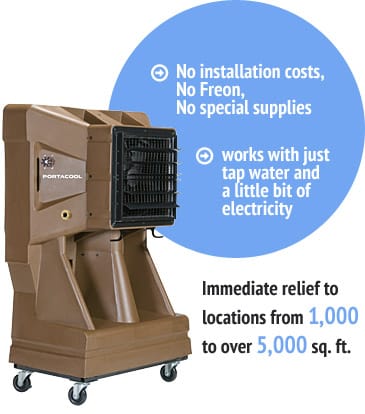
Generally, there is a fan, hood, water tank, and some extra controls to regulate everything. The process starts when the cooler starts to draw air through it. The warm air will then pass over the wet cooler pads. 

The pads get wet from absorbing water from the cooler’s tank. The pads have many layers to add surface area. The water on the surface of the pads evaporates, and the cool air is circulated. 

This can lower the air temperature in your rooms – often by up to 20 degrees. Then it blows this cold air into your room, where you can enjoy yourself on a warm day. 

What Are the Benefits of Evaporative Coolers?

Fresh Air

One of the best benefits of using an evaporative cooler is its air-cleaning abilities. The cooler constantly pulls in air from all over your home or business. This air must pass through the evaporative pads within the cooler itself, cleaning the air. 

If you or family members suffer from allergies, there are alternative pads with enhanced microfibers that can greatly reduce allergens in the air. These alternative pads are great for eliminating irritants that can cause respiratory flare-ups also.

Ecological

An Evaporative Cooling Unit is a great way of keeping your home cool, especially if you live in a humid area where air conditioners are not as effective as they should be. 

They work by using a water pump and a series of tubes to draw outside air through a wet pad which cools the air down. This cooled air is then pumped through your home. This system has a number of benefits over air conditioners. 

Evaporative coolers are more environmentally friendly. Air conditioners use Freon gas which is extremely damaging to the planet. The Evaporative Cooling Unit does not use Freon gas and is kinder to the environment

Energy Efficient

One benefit is that they are an energy-efficient alternative to an air conditioner. As compared to an air conditioner, these units only use a fraction of the electricity. 

An evaporative cooling system only needs 1.5 kilowatts of electricity to provide enough cool air for most homes. This is less than half of what an air conditioner will use. 

The average air conditioner will cost you somewhere between $600 and $1,200 per year, and the cost of running it is typically around $100 per month during the peak summer season.

Lower Cost

Evaporative cooling units are energy-efficient and effective in warmer temperatures. Air conditioning is extremely expensive to run. 

One should consider the cost of electricity or gas to run an air conditioner. Evaporative cooling units use less energy than air conditioning. Therefore these units help you save money.

Must Read: Difference Between Air Conditioners and Evaporative Coolers

If you are looking for a way to save money on your home cooling bills, consider renting one. The evaporative cooling units rented through Preferred Climate Solutions are a great way to do so.

With evaporative coolers, you will be able to lower the temp in your home by as much as 15 degrees. These coolers can even save you as much as 30 percent on your energy bills. 

As you can imagine, the purchase or rental of these units can save you a substantial amount of money over time.

No More of The “Damps”

There’s nothing worse than walking into a home or office when it’s hot and getting that “damp” feeling. You know, that ultra-humid, sweaty, jungle-like humidity that makes you want to walk right back out again. 

You’ll never get that feeling with an evaporative cooler. The air you get will always be comfortable with just the right amount of humidity to it. This is because evaporative coolers add humidity before blowing out air.

They Can be Used Outdoors

Evaporative coolers are great for staying comfy inside your home. But did you know their cooling effects can be brought outside to provide relief from the heat during summer? 

They have been used for this purpose for quite some time. Whether they are installed as a permanent fixture or just a portable unit, they can help fight the scorching heat.

Preferred Climate Solutions Is Here for Your Evaporative Cooler Needs

When it comes to maximizing your cooler needs, consider getting with 

Preferred Climate Solutions. We know we have the right evaporative cooler for your home, office or event. 

Our highly trained experts have a combined lifetime of experience. They’ll be happy to assist you with your cooling needs. 

With over 17 years in the business, we are extremely proud of the reputation that we’ve built. Our customers are located in the Austin, Dallas/Ft Worth and Houston areas.  

To learn more about our cooling solutions, contact Preferred Climate Solutions today to get started.
swamp coolers why be cool
Blog

With summer fast approaching, many of our customers are getting ready to rent or install a swamp cooler. The good news is that swamp coolers are easy to use and provide excellent air conditioning. They can also save hundreds of dollars on your energy bill. 

Here at Preferred Climate Solutions, we also find that swamp coolers are extremely cost-effective to cool a room. This is important when you consider that energy companies seem to be constantly increasing their rates.

While not as efficient as central air conditioners, swamp coolers can supply plenty of cool air. Swamp coolers are great to use during the hottest days of summer. 

Getting the maximum use from your swamp cooler is pretty easy. Check out our best tips to improve the efficiency of your swamp cooler.

What Is a Swamp Cooler?

A swamp cooler is a type of evaporative cooler. It is used in dry climates to cool the air. This air conditioning unit is also known as a swamp cooler, evaporative cooler, evaporative air cooler, desert cooler, or dry cooler. 

This unit works by using a fan to blow air over wet pads that have been soaked in water. The water evaporates, and the temperature of the air goes down. And, because the pads are wet, there is no need for additional cooling.

The water evaporates and reduces the temperature of the air by about 20 degrees.

How Is a Swamp Cooler Different From Central Air Conditioning?

Swamp coolers are popular in the desert Southwest because their adobe homes are not air-conditioned and the desert climate is almost always hot. Swamp coolers aren’t as efficient as a central air conditioning system, but they cost less to buy and have lower maintenance costs. 

Think of a swamp cooler as essentially a personal air conditioner that relies on evaporation to cool your home. It’s considered a cooling system, but it’s really a dehumidifier, like the ones you have in your house. 

Evaporative coolers don’t reduce the temperature of the air itself within a home. Rather, they lower the temperature of the home by removing the moisture from the air. 

These Tips Will Maximize Your Swamp Cooler Efficiency

Leave Those Windows Open

You’ll want to leave your windows open when using the swamp cooler. Remember, your cooler needs air to operate efficiently. 

Swamp coolers work by pulling in cool air from outside and pushing the hot air out. If you have already installed a swamp cooler, use this tip to make it more efficient.

When you open all of your windows around 2 inches or so, your cooler will work much better. The more air it can draw into your home or business the happier your swamp cooler will be.

Regular Maintenance

Just like your car, your swamp cooler needs regular maintenance in order to continue to run smoothly and efficiently. Your swamp cooler’s engine is composed of many moving parts, and regular maintenance can help keep them running smoothly, even as they age.

If you’re renting a swamp cooler from us here at Preferred Climate Solutions then you’ll have no maintenance worries.

Fan Replacement

Replace the fan if it’s over five years old. Fans in-home air conditioners and swamp coolers need to turn at high speeds to effectively cool the air. 

But as they age, fans develop cracks and nicks that make them less effective at moving air. If you notice that your fan seems to be turning slower than it used to, it’s time to invest in a new one.

Leave the Ice in Your Freezer

Although many think that pouring ice inside of a swamp cooler helps cool down your home or business faster, you’ll soon find that you’re just wasting your time. This is because swamp coolers are meant to work within certain temperatures of water but notice. 

Sure, you might get a (very) temporary cooling fix with ice. But you have to remember that ice doesn’t evaporate. It has to melt first. So just leave the ice for your drinks. 

Filler Up

If your swamp cooler is not cooling as it should, then you may have a problem with your cooler tank. Swamp coolers operate by evaporating water into vapor, cooling the surrounding air, and then condensing the vapor back into the water. 

Your swamp cooler has a tank that holds the water that is evaporated and condensed. Sometimes sediment and algae can build up in the tank, which may prevent the swamp cooler from operating properly. 

A dirty tank may also cause leaks, which can cause damage to your ceiling. To make sure your swamp cooler is cooling properly, you need to check the cooler tank to make sure it has enough water and that the tank isn’t dirty.

Soak Your Pads

Make sure your unit’s cooling pads are thoroughly soaked before you run your cooler. This might take a while when draining or cleaning your tank. It will also take some time for the pads to soak when new. 

Use the Right Water Temperature

Room temperature or cooler water will work in a swamp cooler much more effectively than warm or hot water. The cooler is designed to evaporate the water quicker this way, believe it or not.

Dehumidify Your Home or Office

If you’ve ever been in a home with damp air, you also know how uncomfortable it can be. When humidity is too high, it can cause health problems and lead to mold and mildew. 

Consider adding some plants to your home or office. Get the kind that specializes in living off of the humidity in the air. Boston ferns, any of the cacti family, ivy plants, aloe and more will work just fine.

Why Preferred Climate Solutions Can Help Keep Your Home and Business Cool

We proudly serve our customers in several areas in Texas including Austin, Dallas/Ft Worth and Houston. With over 17 years in business, you can bet we’ve learned how to take care of your cooling needs.

Whether outside events or home and business use, our highly trained technicians have got you covered. Contact Preferred Climate Solutions today to get started.
heatpump slide1
Blog

Texas weather is extreme and unpredictable at the best of times. Searing heat in the summer and deep cold snaps in winter are both a regular part of life in the Lone Star State each year. Commercial and industrial spaces can quickly discover their existing heating and cooling is insufficient to keep workspaces comfortable during hot summers and frigid winters. 

Many businesses choose to rent a heating or cooling solution during harsh weather conditions to keep workers comfortable and preserve raw materials/product inventory. One  of the best potential solutions for smaller spaces is a portable heat pump. Whether it’s the right fit for your business is a matter of weighing the pros and cons and deciding if you need more or less heating/cooling capability, and what type of power source is available. Unsure if a portable heat pump is right for your commercial or industrial space? Here’s a brief overview of the pros and cons of portable heat pumps, and what types of spaces most suitable.

Pros of Portable Heat Pumps

Size

Portable heat pumps are among the smallest heating/cooling systems you can rent or buy for industrial and commercial spaces. Most weigh significantly less than many portable air conditioning systems, and they typically run on standard 120V AC power. 

Ease of Installation

So long as there is a window space or other exterior access point, portable heat pumps can be installed anywhere. All you have to do is roll the unit into place, set up the intake/exhaust hose, plug it in and power it on. Air temperature control is now available at the touch of a button.

Convenience

Heating and cooling in one portable unit is significantly more convenient than renting or installing an HVAC system. Most have underside-mounted casters, so they can be rolled to where they are needed. Additionally, they can run on AC power or small generator power in an emergency. Best of all, they require little maintenance and storage space when they aren’t in use.

Mobility

Many portable heating and cooling solutions are cumbersome and bulky. If they don’t have an integrated generator or power supply, they also require a heavy generator to keep them running. Portable heat pumps have minimal power requirements, and they are far lighter than other portable heaters or air conditioners. More importantly, they provide both heating and cooling for small spaces, allowing facility managers and owners to keep things warm or cool with a single unit

Energy Efficiency

The power draw involved in operating a portable heat pump is significantly lower than running separate air conditioning and heating systems. This means lower energy costs during extreme weather conditions, too. 

Cons of Portable Heat Pumps

Cost Of Dual Vs. Single Pumps

Dual pumps use a two hose system to draw and expel air where the unit is placed for more efficient heating and cooling. The drawback here is the higher cost of dual portable heat pumps. Single hose pumps are less expensive, but also less effective and possess a smaller coverage area.

Limited Coverage Area

While portable heat pumps are excellent at heating and cooling small spaces, they do have a much more limited coverage area than other portable HVAC solutions. In small spaces and homes, they work well. In larger warehouses or shops, portable heat pumps may prove less effective or even insufficient to keep conditions comfortable in the workplace. Many owners and property managers often find the unit needs to be unplugged and rolled to a different location throughout the day to keep conditions comfortable.

Effect Of External Conditions

Extreme heat or extreme cold outdoors directly affects the performance of portable heat pumps. Since they draw air from outside and process it through the pump, effectiveness is directly impacted by the prevailing weather. If it’s too hot or too cold outdoors, portable heat pumps are far less effective. 

Placement Complications

If there isn’t an access point for the single or dual hose system, placing a portable heat pump can be difficult and inconvenient. For smaller shops and spaces this isn’t an issue, but it is a consideration that sometimes eliminates portable heat pumps as a viable solution.

Noise

Unlike central or outdoor heating and cooling systems, all machinery processes take place inside the portable heat pump itself. That means that all the noise of an air conditioning unit is inside the room instead of outside and muffled by the exterior walls and windows. In machine shops or manufacturing spaces it probably won’t be noticeable, but in commercial and office spaces it can create an irritatingly noisy environment.

Final Thoughts 

Ultimately, the space to be heated or cooled determines whether a portable heat pump is a viable option for a commercial or industrial space. Buying a unit outright and keeping it for those searing hot or freezing cold days or weeks can require a hefty up-front investment, and that also carries the risk that the unit will be less effective than other, more powerful and expensive portable HVAC solutions. 

For these reasons, many businesses choose to rent portable heat pumps as needed throughout the year as a means of controlling costs and preserving storage space. Rentals also carry the benefit of upgrades should a portable heat pump prove insufficient for the space where it’s needed due to placement complications or an insufficient coverage area. 

It may be that a portable heat pump is perfect for the needs of a commercial or industrial space, or it may not. Better to rent and discover the effectiveness of the solution rather than invest in a portable heat pump and have it come up short.

Are you a Texas-based business considering a portable heat pump for your commercial or industrial workspace? Preferred Climate Solutions has an excellent selection of single and dual portable heat pumps available for rental at competitive rates. Moreover, they have the expertise to determine if a portable heat pump is the best heating and cooling solution for your workspace. Contact us today for a consultation and estimate.

indirect fired heaters
Blog

Choosing the right heating solution for your industrial space isn’t an especially difficult choice: Most heaters are either direct-fired or indirect-fired, and they will generate as much heat as their maximum factory specifications will allow. 

That being said, there are certain benefits to choosing an indirect-fired heater over a direct-fired heater that most business owners may not be aware of when installing a new system. Here’s an overview of why indirect-fired heaters are the smart choice for your industrial space and the unique benefits they offer.

Direct-Fired vs. Indirect-Fired: What’s The Difference?

Direct-Fired Heating

It’s all in the name: direct-fired heaters heat up air by burning combustible fuel. To distribute heat throughout a structure, air is forced over the open flame and vented out via internal components. There’s no need for heating ducts unless the hot air needs to travel a long distance, and even if you do have ductwork there’s only minimal risk that air will carry fumes or exhaust. 

The drawback of a direct-fired heating unit is they aren’t suitable for tightly sealed spaces or for use near flammable materials. The open flame, exhaust and fumes produced by direct-fired heaters can pose both an air quality and fire safety hazard. Furthermore, direct-fired heating spaces require an air exchange system or and/or an exterior door/window that can be opened to vent the space in an emergency. 

While the likelihood is small, there is still a risk that fumes or exhaust could be leaked into the ventilation system. Finally, direct-fired heaters produce warm, dry air, but they aren’t suitable for maintaining specific humidity in an enclosed space when exterior humidity is high. 

Indirect-Fired Heating

Like oil or gas-burning home furnaces that use a chimney, indirect-fired heaters use a flame in a burn chamber to increase the temperature of a heat exchanger. The indirect-fired heating system draws in cool air via two different chambers, passing it over and around the heat exchanger to raise air temperature without ever coming into contact with the open flame or fumes. This warm air is then pushed out into the ventilation system to maintain consistent temperature and humidity. 

Like direct-fired heaters, indirect-fired heating has its drawbacks, too. The units tend to be a slightly more expensive to maintain due to the added complexity of the heat exchange system, and they do take up more space. It’s also worth noting while they run cleaner than direct-fired heaters,  indirect-fired heaters need an exhaust hose vented to the outside from the burn chamber if they are oil or gas powered. That being said, the benefits far outweigh the disadvantages for industrial spaces.

Benefits of Indirect-Fired Heaters

High Quality, Safer Air

Thanks to the heat exchange system, indirect-fired heating produces clean air pulled from an outside source. When paired with a high-quality filtration and ventilation system, there is zero risk of exposure to pollutants, combustion by products or fumes within the space or building you are heating. Choosing indirect-fired heating is always going to be the best option where you deal with combustible materials or areas that require air-tight seals with pollutant and contaminant free air. Moreover, they are also easier to integrate with existing HVAC systems.

Humidity Control

The ability to manage or eliminate moisture in a building or space is essential to many commercial and manufacturing facilities. Direct-fired heaters do not allow for complete humidity control because they pass exterior intake air directly over the heat source and out into the workspace. The heater may dry the air out completely, but if especially humid weather conditions are at play, excess moisture may be pulled in with the hot air. 

Indirect-fired systems can completely eliminate all humidity thanks to their heat exchange system, allowing facilities to maintain zero humidity or controlled humidity environments. In spaces like warehouses or manufacturing storage areas where materials need to be kept at a constant temperature and humidity, indirect-fired heating is always going to be the best choice.

Energy Flexibility and Savings

Direct-fired heaters are dependent on oil or gas to increase air temperature. Not only does this increase the carbon footprint of a workspace or facility, but it also means heating is only possible if fuel is readily available. It also puts businesses at the mercy of the fossil fuel market and the weather, making it difficult to budget for energy costs each year.

Conversely, indirect-fired systems can run on oil, gas or electricity. There are even systems designed to run primarily on electricity with a fuel oil or propane backup system in the event of a power outage. Combined with an alternative energy source like wind or solar power, you can easily maintain temperature and humidity all year long in any weather. 

Why Indirect-Fired Heating Is Ideal For Industrial Spaces

No matter the type of raw material used or the product produced, maintaining consistent temperature and humidity at all times is critical to any industrial process. Direct-fired systems are limited to spaces that can be easily ventilated and must be kept well away from combustible materials. While they have a few advantages like better fuel efficiency and lower operating temperatures, they are unsuitable for many industrial spaces due to their ventilation and proximity safety requirements.

Using indirect-fired heating is always going to be the ideal choice because of its energy versatility, heat exchange system, and superior humidity control. There are some drawbacks:  indirect-fired heating carries the potential for up to a 20% energy loss in the thermal exchange between the heating chamber and the heat exchange system. Additionally, the unit must be installed in a location where a ventilation hose can be run to vent the exhaust from the combustion chamber. Despite these minor mitigating factors, indirect-fired heating remains the best option for heating industrial spaces.

Final Thoughts

All in all, choosing the best heating solution for your industrial space isn’t a complicated process. That being said, the benefits of choosing indirect-fired heating over direct-fired heating for industrial spaces are clear: better air quality, better energy flexibility, and better environmental control for enclosed spaces. 

Are you a Texas-based industrial facility owner or manager needing a temporary heating system? Preferred Climate Solutions has the resources and expertise to help you choose the perfect portable indirect-fired heating system for your industrial operation. Contact us today for a free consultation and estimate.

electric heaters
Blog

Temperature regulation is a tricky task in workspaces lacking built-in HVAC systems. This is particularly true on construction sites with open-air and temporary work setups that make project-long heating an expensive prospect. Still, being able to provide a comfortable environment that encourages productivity could make the difference in maintaining workflow, meeting deadlines and ensuring the comfort and well-being of employees.

Many high-powered heating solutions for entire commercial spaces fall into direct-fired heating or indirect-fired heating solutions. Indirect-fired heaters, while safer due to lower CO, CO2 and NO2 emissions, do not supply heat with the energy efficiency of direct-fired heaters. 

For many enclosed spaces and construction projects alike, one direct-fired heater, the salamander heater, is a particularly popular option for providing consistent temperature control.

What is the Salamander?

A salamander heater is a portable heating unit employed as a temporary heating solution. Units often run on fuel, commonly kerosene or propane, while still requiring electricity for power.

Salamander heaters have been around for over 100 years, dating back to the early 1900s. Originally produced by Scheu Manufacturing for farmers to use during extreme weather in the 1940s, the modern salamander unit has become a go-to choice for large-scale heating needs. They are typically found not only on construction sites but also in large warehouses, workshops and even open-air sports venues.

Salamander heaters are available under a number of common alternative names, including “salamander furnace”, “torpedo heater” or the more basic “salamander”. The salamander name derives from a traditional Spanish wood burning stove called a “salamandra”. The name stems from the ancient legend of the salamander that could control and thrive in the fire, a myth fueled by the supposed occurrence of salamanders crawling from logs on the fire.

How Do Salamander Heaters Work?

Salamander heaters are a form of direct-fired heaters. It is an easily transportable forced-air or convection heater. Product air is forced over a heating element, making direct contact with either an electric coil or open flame. The air is then blown out at rapid speed (lending to the nickname “torpedo heater”). 

All of this occurs within a single open-ended tube. Cool air is drawn in by the fan on one end, passes over the heating element and gets shot out of the other end.

Benefits of Salamander Heaters

Direct-fired heaters are regarded as less safe for enclosed spaces because of the direct contact air has with combustion inside the unit. Harmful byproducts, including dangerous gases, are subsequently circulated into the work area. The fuel that many salamander heaters run on poses carbon monoxide poisoning and oxygen deficiency risks. 

Fortunately, electric salamander heaters exist to mitigate the health hazards of fuel-burning units while offering the same level of heating power, control and efficiency. With air being blown over a series of electric coils, toxic fumes are eliminated and the heaters can be subsequently employed in confined and enclosed spaces with little risk.

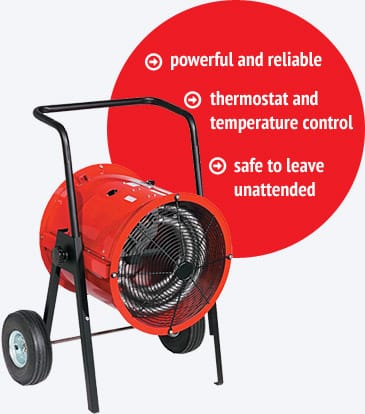
Electric salamander heaters provide clean, fume and odor-free heated air, which can be tightly controlled with built-in thermostats. The coils heat up quickly, allowing for much faster heat production and warm air circulation. Standard safety features on many electric units include automatic overheat protection, which helps maintain its longevity. Many also have the option to be used in a fan mode to circulate cool air when needed.

Salamander heaters are relatively lightweight and designed for portability. Sporting wheels and push handles, these are easy to transport and maneuver throughout workspaces. 

Electric salamander heaters only require a standard power source for use, making setup easy and worry-free with compatibility to generators, panels and power outlets. Plus, compared to fuel-burning models, electric units are less susceptible to failure.

Electric salamander heaters come in a wide range of sizes, allowing you to choose the perfect size to fit your space. For their safety, space-efficiency and heat output, salamander heaters are excellent heating options for a variety of spaces including:

  • Workshops and garages.
  • Retail floors.
  • Office spaces.
  • Schools.
  • Outdoor tents.
  • Construction sites.

Disadvantages of Salamander Heaters

When discussing electric salamanders, the benefits greatly outweigh the disadvantages. Nonetheless, certain drawbacks must be considered for their effect on the space and those using it.

As mentioned, these units do get dangerously hot. Although they do not pose health risks in confined areas from the air they expel, being able to keep them out of the way is critically important for employee safety. Furthermore, the intense heat they produce can cause considerable discomfort in poorly ventilated areas.

Salamanders are generally safe to leave unattended but if left on while near flammable items, the risk of starting a fire is greatly increased. When attempting to move a salamander, it is also absolutely essential to let the unit turn off and cool entirely beforehand.

Electric salamander heaters are also relatively limited in heat output. Their ability to generate over 200,000 BTUs far exceeds the capacity of most space heaters but still pales in comparison to many indirect-fired or fuel-burning direct-fired heaters. In large, airy warehouses or open construction sites, more powerful options may be more budget-friendly.

Electric Salamander Heaters from Preferred Climate Solutions

Electric salamander heaters available through Preferred Climate Solutions combine industrial-power heating ability with conscientious safety features and user-friendly controls. We carry electric units in a variety of sizes, ranging from 50,000 BTUs to 205,000 BTUs, making it easy to find the appropriate solution to fit your exact space requirements. Warm air produced by these units can be sustained at up to 100 degrees Fahrenheit.

We carefully select the units we make available for rent, opting for the best blends of power, reliability and user control. Our quality products are backed with exceptional service. We understand that temporary climate-control solutions can arise unexpectedly and urgently. We work hard to provide expedited service by being available 24/7 for our customers throughout Texas.

We strive to be the premier provider of heating and cooling solutions for commercial spaces in Texas. Contact our team of experts to discover how the salamander heater or any of our other quality commercial heating options can be the perfect fit for your needs.

heater rental service
Blog

Maintaining proper heating of commercial workplaces is critically important for the safety, health, comfort and productivity of employees sharing the space. In new commercial properties or construction sites, central heating may not be possible and supplemental heating apparatus may need to be installed. These temporary heating solutions are available in two options: direct-fired heaters and indirect-fired heaters.

Direct-Fired vs. Indirect-Fired Heat

Direct-fired and indirect-fired heaters differ in how air is heated within the unit. In a direct-fired heater, air is exposed directly to the hot flame and combustion that heats it before it is pumped out of the blower. 

Indirect-fired heaters add a heat exchanger for the burner to fire into, creating a barrier between the combustion and the air that is blown out. Similar to the operation of residential gas or oil furnaces, cool air moves over and around the heat exchanger to warm it before being pumped out of the blower. Combustion byproducts are removed from the exchanger through a flue, as opposed to combining with the product air that gets pumped into the occupied space.

Because the product air is exposed directly to the combustion occurring within the heater, direct-fired heaters produce warm air more efficiently. For large areas like warehouses and sites with poor insulation, direct-fired heaters are a less expensive and more energy-efficient option. Since the open flame makes direct contact with the product air, nearly 100 percent of the burned fuel contributes to the output. They are effective in extremely low temperatures and offer excellent control in managing the heat output.

Despite the benefits of direct-fired heaters, many common commercial spaces can actually get better use out of an indirect heater. Here we will discuss the reasons for choosing an indirect heater and appropriate settings for this type of temporary temperature control.

Benefits of Indirect Heaters in Commercial Areas

To begin, the size and layout of the commercial workspace can determine whether the benefits outweigh the disadvantages of both types of heaters. Certain spaces may be better serviced by direct-fired heaters while others may get the most use out of indirect heaters.

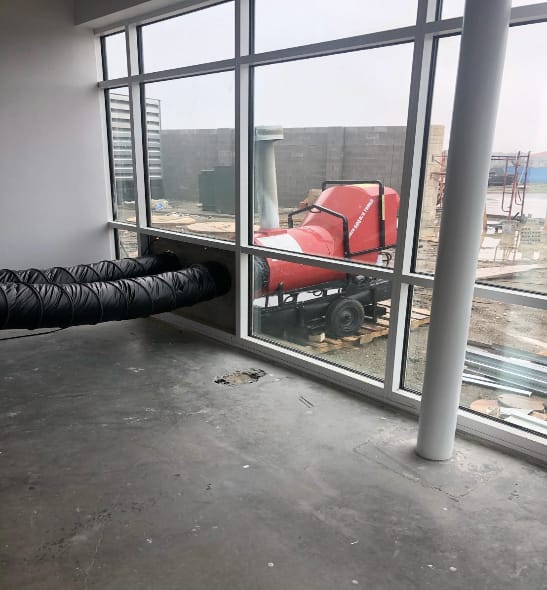
Indirect-fired heaters are placed outside of the building, using ducts to channel the warm air into the workspace. An exhaust ventilation tube connects to the chamber to dispense fumes and combustion byproducts from the heat exchanger outside.

For many commercial setups and certain industries, this heating arrangement yields important benefits:

  • The air being introduced to the work environment is 100 percent clean and dry, free from any combustion byproducts.
  • The system recirculates air, saving on fuel and offsetting the lower efficiency compared to direct-fired heating options.
  • Built-in thermostats offer adjustable heating.
  • Indirect-fired heaters do not release carbon dioxide into space, making it both safer and able to be applied to existing ductwork for better circulation throughout the space.
  • Heaters can operate in tighter, confined spaces.
  • There is a lower potential for sparking a fire.
  • Indirect heaters are useful for protecting against frost.
  • Indirect-fired heaters produce much drier air than direct-fired models. This creates less humidity, which can improve overall comfort and reduce the risk of harmful mold development. Plus, the dry air can also speed up drying and curing processes.

Despite their relatively high use and maintenance costs and inherent transportation difficulty, indirect heaters are a non-negotiable necessity for certain spaces. 

The biggest advantage of these units is the cleaner, safer air they provide, free from harmful byproducts and gases such as carbon monoxide, carbon dioxide and nitrogen dioxide. Hundreds of individuals throughout the country lose their lives and countless more are hospitalized due to carbon monoxide inhalation every year. Improper ventilation combined with the use of direct-heating apparatus, similar to grills, for instance, is a major cause of these health issues.

Outside of large, airy warehouses and open construction sites, indirect-fired heaters are the best solution.

They are particularly useful in enclosed areas and establishments that require high levels of cleanliness, including:

  • Hospitals and health care facilities.
  • Restaurants and food preparation sites.
  • Tight office spaces.
  • Schools and universities.
  • Chemical handling and production facilities.
  • Retail spaces.

Additionally, indirect-heaters can be useful even in construction sites where a direct heater may seem like the best option. When pouring cement, for example, the dry air from indirect heating units is preferable in expediting the curing process.

Choosing Indirect Heaters

Indirect heaters are a great temporary solution for enclosed spaces and rentals are a great option to keep your heating cost-effective. Carefully investigate the most appropriate setup for your space and consider how you plan to install the unit and circulate the air. Keep in mind that indirect-fired heaters are often much larger than direct-fired heaters, making their setup less versatile in certain spaces and more difficult to transport.

The ability for many indirect heaters to recirculate warm air helps reduce energy consumption costs so taking advantage of that feature can be significantly beneficial.

The higher rental, purchase and maintenance costs of these units is an important factor to consider with regard to indirect heating. Plan your budget accordingly and explore smaller electric space heaters if the costs are prohibitive.

Indirect Heater Options from Preferred Climate Solutions

Temperature and climate-controlled environments can make a difference in the health and productivity of workers. Choosing the right heating option for your space is absolutely essential to promote efficiency in your operations. 

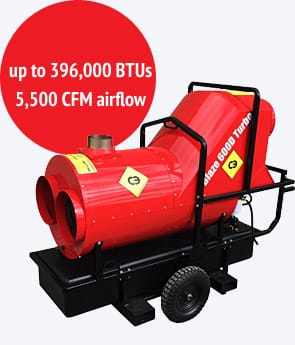
At Preferred Climate Solutions, we carry a comprehensive catalog of portable and temporary heating solutions to fit the production and budgetary needs of customers in all industries. Our Campo Blaze Turbo indirect-fired heaters offer up 588,000 BTUs of heat blowing at 2,500 CFM. These efficient and reliable machines produce higher quality heat in less time. We offer these units to customers across Texas, backing our solutions with convenient 24/7 service availability. 

We believe that heating and cooling solutions should be made a cost-effective priority and we work diligently to offer the highest value to our customers. Contact our team today for more information on available rental heating units for your commercial space.

homepage bg event
Blog

Regardless of season, anyone planning an outdoor tent event in Texas needs to consider what kind of cooling and heating system they will need to keep their guests comfortable. Summer sun and humidity can create brutal, sweltering conditions, and the chill of the winter time can leave your guests shivering and feeling underdressed. In addition to the variable environment, there are also multiple cooling and heating solutions available to suit every need and budget. How do you know which is the right solution for your event?

As a premier provider of mobile HVAC services, Preferred Climate Solutions (PCS) has the knowledge and experience to help you select the right system for your event that won’t waste energy or blow your budget.

Let’s take a look at our guide to choosing the right tent event cooling and heating system:

Planning Considerations

Before we discuss types of heating and cooling solutions, let’s examine what factors need to be taken into account during the planning stage. Write down concrete answers to the following, or consider these statements:

  • What time of day will your event take place and how long will it run?
  • What is the size of the area or tent you are attempting to cool or heat?
  • Event temperature control is about keeping the temperature within a set range, not adjusting it throughout the event
  • Reserve tent and HVAC accessories sooner rather than later so that you will have everything you need on the day of your event.

Once you have your plan in place, you are ready to start looking at what cooling or heating system will best suit your event needs.

Cooling Systems

The chief advantage to cooling a tent event is guests are out of direct sunlight (the chief culprit for heating things up when you are celebrating outdoors). That being said, you are still going to need some sort of cooling system to prevent the environment in the tent from becoming unbearable. Sometimes you can accomplish this without a tent AC unit, sometimes you can’t. We will consider all the options and take a look at some ways you can save energy and keep things cool even without using a standard electric cooling unit.

Tent Fans

A cost effective option, this allows you to keep air moving through the tent without costing a fortune in energy bills. Fans perform best when placed in corners or in every section of larger tents.

Cooling Units

A cooling unit will always be the most expensive option for two reasons: first, they have a higher rental rate, and second, you need a tent with sidewalls to make efficient use of them. They are well worth the greater investment, however, since they are more compact, less noisy and cool tent interiors more efficiently and effectively than fans.

Misting Fans

Like an ordinary tent fan for the most part, misting fans are an excellent solution for hot weather events where your guests won’t mind a little added humidity. Cool water is periodically sprayed into the airflow and distributed through the tent interior, cooling everyone off. 

The one drawback is guests are going to find themselves with slightly dampened clothes after a while. So long as everyone is okay with that, misting fans are an excellent and inexpensive way to keep a tent event cool.

Pro-Tip: Don’t Put Up Tents On Asphalt In Summer

Setting up a tent on the grass is cooler than setting up on asphalt by a factor of ten. In the winter time though, setting up a tent on asphalt later in the day is ideal. The heat trapped in the asphalt means you need less energy to keep your event warm with all that stored energy in the ground.

Pro-Tip: Plan Your Event For Later In The Day

Planning a tent event for midday may be a necessity for you depending on your booking, but summer tent events are always best scheduled during the latter half of the day. Not only do you catch the sunset, but you will also save significantly on your cooling costs.

Now that we have covered everything cooling related, let’s examine how tent heating solutions work.

Heating Systems

Renting a heating system for your tent event is a lot less complicated than renting a cooling solution. Your choices are propane or electrical depending on the venue. The only difference beyond energy source is how many or how large a heater you need for your tent event. Here are a few guidelines to help you out:

  1. Hang Tent Sidewalls

To control the temperature of any given space, it needs to be enclosed. To enclose a tent, you need to hang sidewall panels from the roof and leave no more than 10-20 feet of open space for entrances and exits. Where those 10-20 feet are depends on how you want foot traffic to flow and where you plan to place the heating units.

  1. Check Power Access Availability

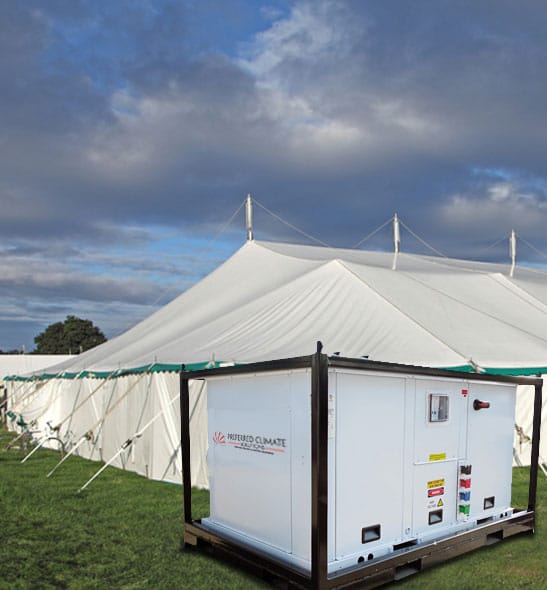
If you are running propane powered tent heaters, then access to electricity only concerns powering any equipment you may have inside the tent. All tent heating units are designed to run outside of the tent with a blower extended into the tent to maintain a comfortable temperature. 

It is highly recommended you have your tent heaters installed by the rental company to prevent malfunctions or failure during your event. This also allows professionals to assess the power access availability and safely run any extension cords needed.

  1. Calculate the Size/Number of Tent Heaters

This is actually the easy part. You need answers to the following questions to make this calculation:

  • What size is your event tent?
  • What is your desired temperature for the thermostat?
  • How long is the duration of your event?
  • What is your estimated run time for the heaters?
  • How many electrical outlets will you have access to on-site?

Give this information to your heating rental provider, and they will give you an estimate of how many heaters you need and for how long. Their technicians show up on the big day and ensure everything is configured and running properly before your start time.

Final Thoughts

Choosing a cooling or heating system for your tent event doesn’t have to be complicated. If you are a Houston local and planning a tent event for 2021, contact Preferred Climate Solutions today for a free estimate. Let us make the temperature the last thing on your mind at your next tent event.

heater rental service
Blog

As the days grow shorter, blustery and cold, many buildings and facilities managers find themselves needing a little extra heat to keep out the chill in normally comfortable workspaces. Keeping operations running as close to normal as possible is key to adapting to seasonal changes, so many operations managers move space heaters into various locations to help workers stay comfortable and maintain their productivity.

That being said, using space heaters indoors requires that all possible safety precautions are observed to prevent property damage, injury or worse. Are you planning to set up electric heaters at your commercial property or at your major event?

Here’s an overview of the ten most important safety tips you need to know:

  1. Only Use Electric Heaters

Not all space heaters are created equal, and the different types of energy a space heart uses determine whether it can be used indoors, outdoors, or in an intermediary space like a garage or workshop. As a rule, though, electric space heaters are far safer and more efficient than kerosene or propane heaters for indoor use. Preferred Climate Solutions recommends only using electric heaters since they are far less likely to cause accidents and present a significantly lower fire hazard risk.

  1. Ensure All Heaters Have Been Tested & Inspected

When you rent from PCS, you can rest easy in the knowledge that every electric heater has been tested and inspected since its last usage date. Additionally, we do not rent or use any equipment that does not have a testing and inspection label from a major electrical testing authority.

  1. Read All Operator Manuals Carefully

 It is unwise to switch on an electric heater without first consulting the manufacturer’s operation manual and getting familiar with the controls and indicators. The PCS technicians who deliver our mobile electric heaters always spend time with the client educating them on safe operation before they leave. This is a part of our commitment to your safety and provides everyone involved with peace of mind.

  1. Remember To Turn Heaters Off

Not only is it expensive to run heaters from a utility costs standpoint, but an active electric heater that doesn’t need to run during certain hours of the day is costing you money and presents real potential as a fire hazard. Always shut your heaters off when they are not in use.

  1. Always Use Heaters As Instructed

Electric climate heaters are meant for that specific purpose: altering the climate within a certain space. They are not intended to be used to dry wet clothes or thaw pipes, and using them for purposes outside of the manufacturer’s intended purpose is asking for trouble. More specifically, you are deliberately creating a fire hazard that may invalidate your fire insurance policy should the fire be sourced back to improper use of a space heater.

  1. Prepare For The Worst

To adhere to fire safety codes, every room in your building needs to be equipped with a smoke detector, sprinkler system and/or carbon monoxide detector. If you don’t have this fire safety equipment installed at your facility because you operate at a smaller scale, make sure you update your equipment to prevent tragedy. Safety should never be sacrificed to save on operating costs.

  1. Clear Surroundings

Space heaters and electric heaters work best when placed in high traffic areas. You may need to rearrange furniture or other equipment to accommodate this placement, and you need to make sure that nothing is touching the heater during operation that poses a fire hazard risk.

  1. Never Use A Powerstrip

The larger units we rent at PCS would never operate off of a power strip, but it is important to note space heaters should never be plugged into power strips or small-gauge extension cords. Space heaters draw a significant amount of current and generate significant amounts of heat within the circuit. Over an extended time period, this can actually cause a power strip to melt or ignite, neither of which is a desirable scenario. 

Additionally, only use 14 gauge or larger extension cords with any space heater, as these cables are designed to handle the higher current draw without melting or overheating. Last but not least, never run an extension cord or space heater cord under a rug or carpet, as this can lead to overheating.

  1. Place on Flat Surfaces Only

When PCS delivers heating units for your facility, we always ensure they are placed on a flat surface to ensure units are secure against bumping or other impacts that could compromise their stability. If you are placing a personal space heater. It is critical you never leave it on furniture, place it in a cabinet or leave it on a table. Tip-over safety shut off is also a must-have feature for any small space or personal space heater too, as it can make a significant difference between a close call and a tragedy.

  1. Incorporate Heaters Into Fire Safety Plan

Corporate fire safety plans should be reviewed and renewed annually, but that doesn’t mean that including space heater usage always makes the cut. Be certain that your company’s safety committee has reviewed the potential hazards of using electrical heaters, and that they are mentioned/discussed in the fire safety plan. 

Protocols and procedures should also be included to better direct first responders in the event of a fire at your facility as well. After all, if a space heater is a source of ignition, and they haven’t cut power to the building, it puts everyone at risk. 

Final Thoughts

Keeping your workers warm and productive during the winter months is important, but you also need to be operating safely, too. Be sure to review any changes to your safety plan with employees and educate them on safety protocols and operations for your electric heaters. You will be glad you did.

Are you in need of an indoor or outdoor electric heater solution? Preferred Climate solutions can help. Contact us today for more information.

heater rental service
Blog

Figuring out what kind of heat source you are going to use is the first step in planning out any Heating, Ventilation and Air Conditioning project (HVAC). The two primary types are direct and indirect fired heaters.

Direct Fired Heaters

A direct fired heater is called such because the heating fuel is funneled directly into the burner and combusts when combined with a spark and oxygen. Direct heaters are usually powered by natural gas or propane. The heat source is burned in an open flame but in a safe and effective manner. Heaters feature systems to channel the air-fuel mixture to ensure correct amounts of both. Direct fired heaters can heat huge industrial and commercial spaces.

Benefits of Direct Fired Heaters

Direct fired heaters have several benefits which make them very popular. One of the greatest advantages of using a direct fired heater is efficiency. Nearly 100 percent of the fuel is burnt in a way that is productive in creating heat. This means that you are not wasting fuel by having it not burn or not burn correctly. You can also control the temperature to a greater degree than with indirect heaters

Another benefit is easy maintenance, as these heaters feature a simple design that is less prone to breakages. Any error or breakdown can be resolved quickly, cheaply and without an extraordinary amount of skill or labor. Compared to indirect heaters, direct fired heaters tend to last longer, meaning you will have a reliable heating system for years to come.

Direct fired heaters also can be constructed to whatever size you will require in order to create the heat that you need. In many cases, this means a physically smaller heater that can better suit your specific needs to a greater degree. You can build the exact heater that is right for your specific purposes.

The downside to Direct Fired Heaters

Unfortunately, direct heaters are not perfect. Because they burn fuel directly in the form of an open flame, direct fired heaters require a proper ventilation system to dispose of exhaust fumes. The resulting gas from the combustion of fuel is toxic and needs to be redirected out of the workspace the heater is being used in.

This also means that certain workspaces will not be able to use direct fired heaters. The exhaust and byproducts may not be suitable or allowed in certain environments and workplaces. Be sure to make sure you can operate a direct fired heater on whatever premises you intend to use it on before making your decision.

Not only must exhaust be removed from the workspace, but outside air is required for the air-fuel mixture. Without proper air circulation within an enclosed space, fresh air often needs to be pumped inside. 

While direct fired heaters may be more versatile in their heating capabilities, they cannot be used everywhere. 

Indirect Fired Heaters

An indirect fired heater performs its combustion cycle in what is called a heat exchanger. As the heat exchanger grows hot, the air is drawn in around it and then warmed by coming in contact with the heat exchanger. The combustion byproducts remain in the heat exchanger for some time before leaving through a flue.

Benefits of an Indirect Fired Heater

Indirect fired heaters have several advantages that make them ideal for certain situations. The largest benefit is that they do not produce any combustion byproducts that are released back into the space they are heating. This makes them ideal for closed spaces and when working with material that is sensitive to contamination, like food. 

By recirculating air, indirect fired heaters save on fuel and do not usually require as much when compared to direct fired heaters. 

At no point does the air that is being heated actually make contact with the flame. While direct fired heaters are still incredibly safe, this can be seen as an additional safety feature that indirect fired heaters have. All of the air that is emitted from the heater is also fully clean. 

Disadvantages to Indirect Fired Heaters

While they might not use as much fuel, indirect fired heaters are not as efficient as direct fired heaters. They usually only operate at about 80 percent efficiency, meaning a good deal of the fuel that is burned does not go directly towards providing heat.

Indirect fired heaters are oftentimes more expensive than direct fired heaters because of their more complicated design. Not only does this raise initial costs, but maintenance will be much higher should anything breakdown. 

Because they are more complicated, getting the right heater for your needs may mean that the right-sized indirect fired heater will take up more space than its direct fired counterpart that produces the same amount of heat. They have specific sizes that cannot be as easily modified as direct fired heaters.

Another disadvantage of indirect fired heaters is that they do not feature as precise temperature control settings when compared with direct fired heaters. While still equipped with thermostats, these heaters tend to generate heat within a few degrees of the intended target temperature. If you need precise and constant heat, an indirect fired heater will not be suitable.

Conclusion

Both of these types of heaters can do a fantastic job of heating whatever sized space you need them to heat. Direct fired heaters feature a fluidity that makes them perfectly adaptable to your specific environment. Indirect fired heaters come in a variety of sizes, but those sizes are set by the manufacturer and cannot be tailored to your needs.

Because an indirect heater does not produce or secrete any type of exhaust back into the space in which they operate, they can be used in tightly sealed environments. A proper ventilation system is an absolute necessity for any direct fired heating system unless it is operating outdoors.

Whichever heating system is right for you and your business, Preferred Climate Solutions has you covered. We offer a variety of heaters and can work with you to better understand your HVAC needs. Give us a call today at 888-466-7180, and we will help you figure out exactly what kind of heating you require. We serve the entirety of Texas and offer 24/7 customer support. Take care of your business environment, and it will take care of your business. 

indirect fired heaters 400d
Blog

With winter fast approaching cold weather can start creeping in to weigh down your business’ productivity. If you are working in an outdoor or indoor environment that lacks climate control, you are more than aware of the temperature of the problem can pose. Keeping your business well heated in the winter means that you and your employees can stay productive and focused on the work instead of the weather. Additionally, if you work with water, keeping your pipes from freezing saves valuable work hours, and keeping your products at a stable temperature ensures consistent quality. 

Picking the right heater depends on a number of factors. You want to make sure that whatever heater you choose is up to the task and can do the job you expect of it. In a lot of ways, a proper heater is an investment because it is an improvement in infrastructure. Making the right investment means less time spent worrying about how to deal with climate control and more time actually tending to your business. 

There are a number of variables to keep in mind when looking for a portable heater to heat your workspace:

  • Size of the Workspace

The primary thing to keep in mind when considering a portable heater is how big it will need to be to fulfill your needs. Keeping this in mind, you can start out with a size that will best suit your environment. Different kinds of heaters are best suited for different sized spaces. For instance, industrial and commercial heaters are large enough to heat the entire warehouses. However, that much power can quickly overwhelm a smaller workspace that does not require as much heating. 

Portable heaters come in all different sizes, from being able to heat only small rooms to the largest spaces imaginable, so to find the right one for your space requirements, pay particular attention to Cubic Feet Per Minute, or CFM. A larger space requires a heater with a higher CFM number. For instance, a certain industrial heater may be rated to heat 3200 CFM. This means that the heater has the capability to heat 3200 cubic feet of space and maintain it heated at the desired temperature. The size of any area in cubic feet can be found by multiplying length times width times height.

CFM often relates to the power of the heater’s fan, as a fan is needed to circulate the hot air through the room and away from the heater.

  • Heat Required

It is also important to consider how much heat you will need to produce, and whether or not the heat level can be monitored and controlled. Many portable heaters will feature a thermostat, so keep this feature in mind during your search. Depending on your specific needs, you may be looking to keep a workspace hot or just warm enough to operate comfortably. You can determine how much heat a heater produces by either looking directly at the temperature gauge that it offers or by looking at its BTU (British Thermal Units) output. 

When you need more heat, check out how many BTUs the heater produces to find the temperature best suited for your workspace. Having a workspace that is overheated is as bad as having one without any heat at all.

Smaller heaters best suited for smaller spaces may have a BTU measurement of around 5,000 to 25,000 BTU. The higher the BTU, generally the larger space the heater is meant for. Industrial heaters can have a BTU output of up to and exceeding 500,000. While the BTU output can be adjusted on most heaters, there is usually a set maximum and minimum temperature. The larger heaters that produce higher temperatures may also produce a great deal of heat even when at their lowest settings. Be sure to take into consideration exactly how much heat you will need in order to protect both your products and your employees.

  • Power Source

Heaters can be powered by electricity, gasoline and many other fuel types. The power source of some heaters varies, however, electrical power is the most common. Electric heaters can function in both indoor and outdoor settings, so long as there is a consistent electricity supply. Check the voltage on the outlets in your workspace to ensure that they can handle the heaters you intend to use. Industrial heaters may require a voltage of 115 or 240, depending on the model. 

If you are using a fuel source such as gasoline or propane, it is important to provide proper ventilation. If heating an open outdoor space you do not have to worry about ventilation. But an indoor space needs to be properly ventilated when burning any kind of fuel to ensure that your employees and yourself are safe while they work. 

Space heaters can vastly improve your business’ productivity and the comfort level of your employees. They provide the capacity to continue working through tough winters. To find the right heater for your workspace, it is important to keep in mind:

  • How much space you will be heating;
  • How high you need the temperature to be;
  • What kind of power source will allow you to operate safely and effectively.

If you’re looking for a portable heater, we here at Preferred Climate Solutions can help. We service the entire state of Texas and offer superior customer service 24/7. If you ever experience any issues with your heater we are on call at all times to help sort it out. We feature a variety of portable heaters to best fit your needs and the needs of your business. Call us today at 888-466-7180 and take care to keep warm.

Scroll to Top