
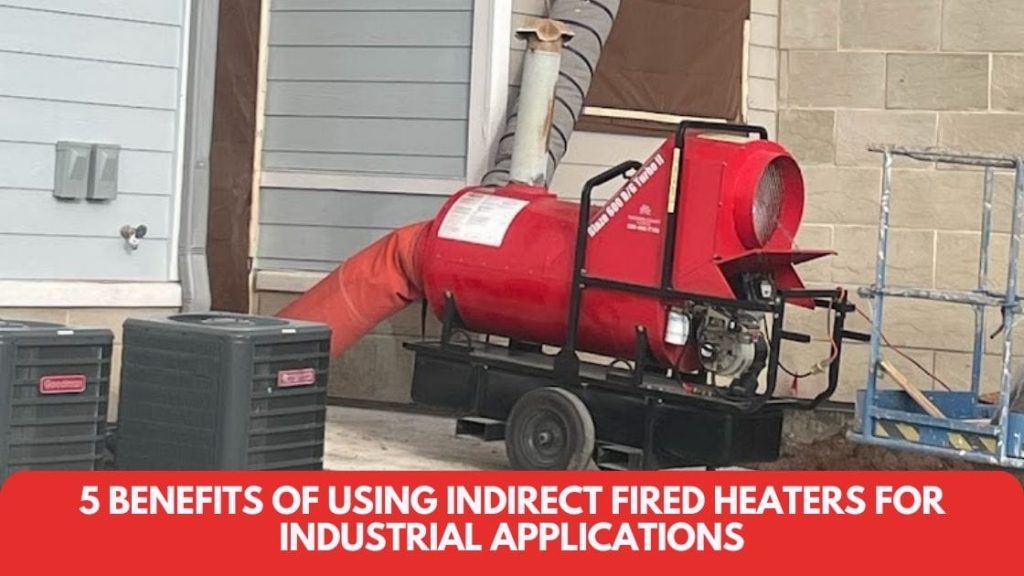
Indirect Fired Heaters

5 Benefits of Using Indirect Fired Heaters for Industrial Applications
Blog

Are you using industrial heaters on your job site yet?

Indirect-fired heaters, which separate the combustion process from the air being heated, offer key benefits in numerous industrial settings. They perform functions other types of heaters cannot, leading to increased efficiency, safety, and other benefits.

In this article, we’ll explore five major advantages of using indirect-fired heaters, and show you the easiest and most affordable way to use them.

Indirect Fired Heaters: An Overview

Indirect-fired heaters stand out because they heat air without directly exposing it to flame. This separation of combustion from the heating process differentiates them from direct-fired heaters, which mix the air with combustion products.

In industrial settings, these heaters are widely used for their clean and safe heat delivery. They’re particularly useful in environments where air quality is crucial, such as construction sites, warehouses, and manufacturing plants.

5 Benefits of Indirect Fired Heaters

Let’s dive into five key benefits that make indirect-fired heaters the go-to heroes for your industrial heating needs:

1. Safety

One of the most compelling benefits of using indirect-fired heaters in industrial applications is their enhanced safety. These heaters operate by keeping the combustion process completely separate from the air being heated. As a result, there is no risk of direct exposure to combustion byproducts or open flames.

They’re ideal for use in refineries, chemical plants, confined spaces, and other environments with an elevated risk of danger. They’re also necessary for environments that require the highest air quality levels.

Unlike direct-fired heaters, where combustion fumes mingle directly with the heated medium, indirect-fired heaters boast a closed-loop system. This separation dramatically reduces the risk of contamination, eliminating concerns about explosions, fumes, and product degradation.

2. Versatility

Indirect-fired heaters are highly adaptable, making them well-suited for a broad spectrum of industrial uses. They excel in various settings, from heating vast construction sites to drying agricultural produce and managing temperatures in manufacturing processes. This adaptability positions them as a versatile solution for numerous heating requirements.

These heaters skillfully manage diverse thermal transfer needs, from heating thick asphalt in road construction to delicate glycol mixtures in anti-freeze production. Their capability spans a wide temperature range, capable of achieving extreme highs over 700°F (371°C) or providing gentle heat around 100°F (38°C).

Regardless of the industry, whether it’s a major chemical enterprise or a modest warehouse operation, indirect-fired heaters can precisely cater to specific thermal needs. Their flexibility and efficiency make them indispensable in a variety of industrial contexts.

3. Efficiency

Indirect-fired heaters are a boon for industries focused on cost-saving and profit maximization. Their closed-loop design and efficient heat exchangers ensure maximum energy utilization, directly translating to lower fuel consumption and significant cost savings.

These heaters are designed for consistent temperature control with minimal energy input, thanks to a heat transfer fluid that acts like a thermal battery. This efficiency reduces operational costs, a key advantage for any business’s financial health.

Additionally, the absence of combustion byproducts from indirect-fired heaters means a cleaner environment. This not only aids in reducing environmental impact but also enhances a company’s environmental, social, and governance profile, aligning business operations with sustainability goals.

4. Easy to Maintain

Indirect-fired heaters are celebrated for their low-maintenance requirements, owing to their sturdy construction and few moving parts. This robust design significantly diminishes the frequency of repairs and maintenance interventions.

Their closed-loop system minimizes the need for intricate burner adjustments, reducing wear and tear on combustion-related components. This results in fewer frequent breakdowns, longer equipment lifespan, and lower maintenance expenses.

With indirect-fired heaters, businesses experience fewer disruptions and can concentrate on production rather than constant equipment maintenance. This reliability provides a sense of security and operational efficiency, enhancing productivity.

5. Affordable

Indirect fired heaters are one of the most affordable heating options, especially if you rent instead of buy. Heater rentals offer a practical solution for temporary or seasonal heating needs, allowing you to pay only when necessary, significantly cutting down on long-term capital expenses.

Temporary heater Rental is well-suited for managing seasonal temperature dips, production increases, or unforeseen equipment failures without the financial burden of ownership.

Additionally, by choosing indirect heater rental, businesses avoid additional costs associated with maintenance and storage. They can simply rent a top-of-the-line, expertly-maintained heater whenever they need one.

Conclusion

In the world of industrial heating, indirect fired heaters offer unparalleled safety, convenience, and affordability. They’re the right choice whether you’re battling the winter chill in a warehouse, ensuring optimal viscosity in a chemical plant, warming delicate solutions in a food processing facility, and for many other situations.

Indirect heaters keep your operations running smoothly, safely, and efficiently, allowing you to focus on what truly matters – industrial success. For more information, including the advantages of indirect heater rental for your project, contact the experts at Preferred Climate Solutions.
, ,
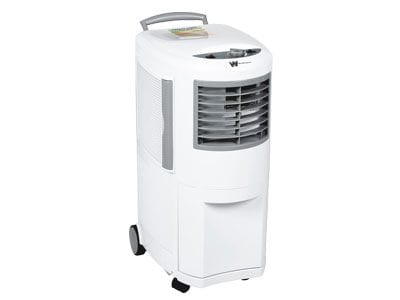
dehumidifier
Uncategorized

When it comes to heating large commercial or industrial spaces, indirect-fired heaters are a smart choice for maintaining consistent and controlled temperatures. But what exactly are indirect-fired heaters, and how do they differ from direct-fired heaters? 

This blog post will discuss indirect-fired heaters’ key features and benefits and explain why they’re the preferred choice for many businesses and facilities.

First, let’s define direct and indirect-fired heaters. 

Direct-fired heaters burn fuel directly in the heating chamber, which heats the air circulated throughout the space. 

On the other hand, indirect-fired heaters use a heat exchanger to transfer heat from the combustion process to the air circulated throughout the space. That means that the heated air never comes into contact with the combustion process, making indirect-fired heaters a safer and more efficient option.

One of the most significant advantages of indirect-fired heaters is their ability to provide consistent and controlled temperatures. Because the heat exchanger separates the combustion process from the heated air, the temperature can be easily regulated and maintained consistently. 

This is especially important in large commercial or industrial spaces, where maintaining a consistent temperature is crucial for employee comfort and productivity.

High efficiency

Another benefit of indirect-fired heaters is theirhigh efficiency. Because the heat exchanger separates the combustion process from the heated air, the heat energy can be used more effectively and with less waste. This means that indirectly fired heaters use less fuel to heat the same amount of space, resulting in significant energy savings over time.

Durable

In addition to their energy efficiency, indirect-fired heaters are also known for their durability and long lifespan. The heat exchanger is typically made from durable materials such as stainless steel, which can withstand the high temperatures and pressures of the combustion process. This means that indirect-fired heaters require less maintenance and repairs and can last many years with proper care and maintenance.

Provide clean & safe heat

Another benefit of indirect-fired heaters is their ability to provide clean, safe heat. There is no risk of carbon monoxide or other harmful gases entering space. This makes indirect-fired heaters a safer option for commercial and industrial spaces, especially those where people spend extended periods.

Versatile

Indirect-fired heaters are also versatile and can be used in various settings. They are commonly used in large commercial and industrial spaces such as warehouses, manufacturing facilities, and distribution centers. They are also used in outdoor settings such as construction sites and agricultural facilities.

Increased Flexibility

Because the combustion process is separate from the air or fluid being heated, indirect-fired heaters can be designed to heat various fluids, including air, water, and thermally conductive fluids. Additionally, indirect-fired heaters can be designed to heat various industrial processes, including space heating, process heating, and drying.

Low Maintenance

Indirect-fired heaters also require less maintenance than direct-fired heaters. There is less wear and tear on the heat exchanger. Additionally, the design of indirect-fired heaters allows for using a heat exchanger specifically designed for the fluid being heated, which can further decrease maintenance.

Cost Effective

Lastly, Indirect fired heaters are cost-effective in the long run. The heat exchanger is a vital component of the indirect-fired heater, which can be replaced at a lower cost than replacing the entire unit. Additionally, indirect-fired heaters are more energy-efficient, which can result in significant cost savings over time.

FAQs about Indirect-fired Heater

What is an indirect-fired heater? 

An indirect-fired heater is an industrial heating equipment that uses a heat exchanger to transfer heat from the combustion process to the heated air or fluid. This design allows for more excellent safety, efficiency, and flexibility in heating various fluids and industrial processes.

How does an indirect-fired heater work? 

An indirect-fired heater burns fuel in a separate chamber from the heated air or fluid. The heat generated by the combustion process is then transferred to the air or fluid through a heat exchanger. This design allows for excellent safety and efficiency in heating various fluids and industrial processes.

What are the benefits of using an indirect-fired heater? 

The benefits of using an indirect-fired heater include increased safety, increased efficiency, increased flexibility, low maintenance, and cost-effective nature. Indirect-fired heaters can be used to heat a variety of fluids, including air, water, and thermally conductive fluids. They can be used in various industrial processes, including space heating, process heating, and drying.

Can indirect-fired heaters be used in outdoor or harsh environments? 

Yes, indirect-fired heaters can be used in outdoor or harsh environments. They are designed to withstand various weather conditions and can be equipped with additional features, such as weatherproofing and corrosion-resistant materials, to ensure reliable operation in harsh environments.

How often do indirect-fired heaters need to be serviced? 

The frequency of service required for indirect-fired heaters will depend on the specific unit and the conditions in which it is used. However, indirect-fired heaters require less maintenance than direct-fired heaters and have a long lifespan.

Can indirect-fired heaters be integrated into existing heating systems? 

Yes, Indirect fired heaters can be integrated into existing heating systems. They can be used as a primary or supplementary heat source and connected to existing ductwork or piping. Additionally, Indirect fired heaters can be equipped with temperature control systems, allowing for precise temperature control and consistent heating. In conclusion, indirect-fired heaters are a smart choice for businesses and facilities that need consistent and controlled temperatures. With high efficiency, durability, and safety, indirect-fired heaters offer many benefits over direct-fired heaters. They are a cost-effective and long-term solution for heating large commercial and industrial spaces, and their versatility makes them suitable for a wide range of settings.

Scroll to Top