
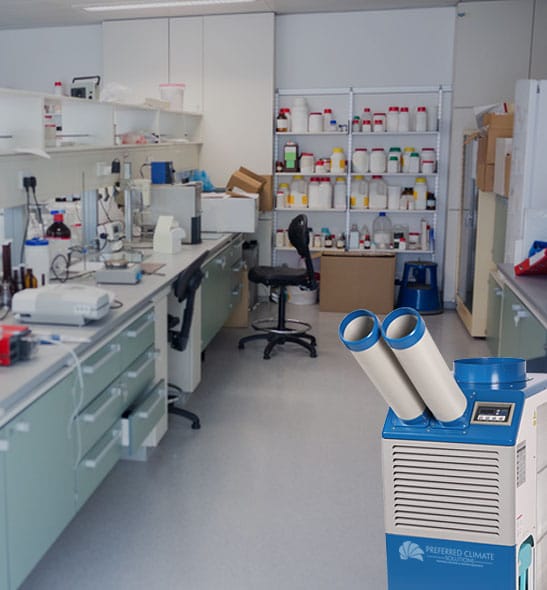
swamp coolers

homepage bg spotcoolers
Blog

Finding a cost-effective and efficient cooling system for large warehousing spaces can be quite challenging. Did you know that swamp coolers, or evaporative coolers, can deliver up to 25,000 cubic feet per minute of chilled air? This post will guide you through the benefits and considerations of using swamp cooler rental in your warehouse.

Keep reading to discover how this simple solution could transform your work environment into a comfortable space, even during peak summer months!
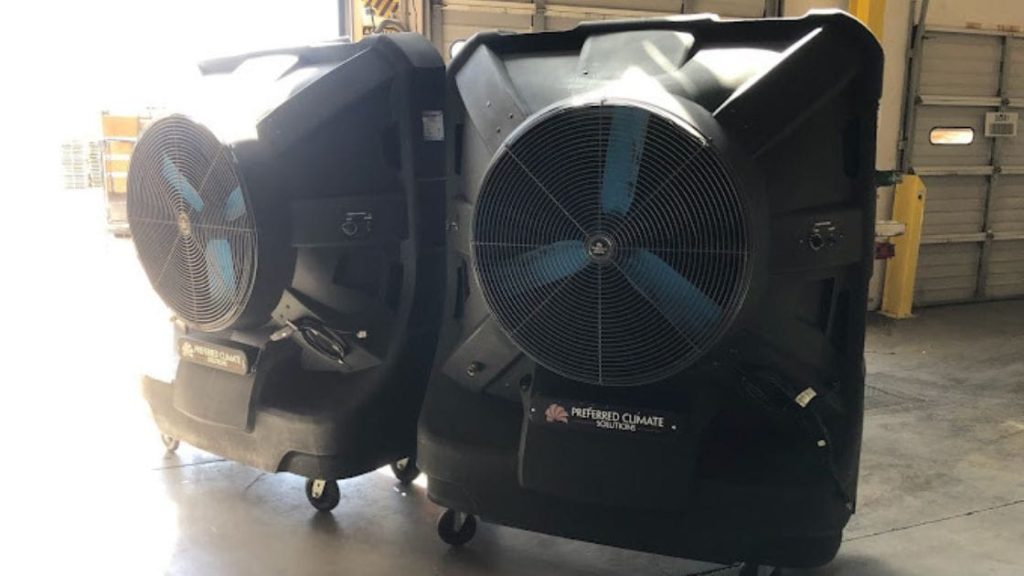
Benefits of Evaporative Coolers for Warehouse Spaces

Swamp coolers deliver several advantages for warehouse spaces, including:

  • Energy Efficiency: Swamp coolers consume less power than traditional air conditioners, reducing energy costs dramatically.
  • Effective Cooling: They work best in hot and dry climates, making them ideal for large warehouse spaces.
  • Water Evaporation: Using the principle of evaporative cooling, these units effectively reduce temperature by transforming water into vapor.
  • Environmentally Friendly: The use of swamp coolers supports sustainability as they limit carbon emissions compared to other mechanical cooling systems.
  • Cost Effectiveness: These coolers are affordable to install and maintain, resulting in substantial savings over time.
  • Performance in Low Humidity: They excel in environments with low humidity, often found in large warehouses or storage facilities.
  • Adaptability to Large Spaces: Their design allows for effective cooling of vast open areas such as warehouses.
  • Minimal Maintenance Needs: Regular cleaning is all that’s needed to keep them operating at their best.

Factors To Consider for Effective Use of Evaporative Coolers in Warehouses

Proper ventilation and air circulation are essential for the effective use of evaporative coolers in warehouses. Regular maintenance and cleaning also play a crucial role, along with considering humidity levels and choosing the appropriate size and placement of the evaporative coolers.

Proper Ventilation and Air Circulation

Ventilation systems in warehouses play a crucial role when using evaporative coolers. They help maintain an adequate airflow, ensuring the cooler operates at its best capacity. The ideal setup involves exchanging indoor air with fresh outdoor air to optimize cooling efficiency and improve indoor air quality.

The design of the ventilation system is just as important. For example, cross ventilation can effectively distribute cool air throughout the warehouse while expelling warm air out.

Incorporating circulation fans can also enhance this air movement significantly, adhering to industry-standard ventilation requirements. Moreover, it’s beneficial to have an evaporative cooler that offers a vent-only option for times when outdoor conditions are favorable for natural cooling processes.

Regular Maintenance and Cleaning

Ensuring regular maintenance and cleaning greatly improves the efficiency of evaporative coolers in warehouse spaces. Here are some essential steps:

  • Implement a routine of continuous upkeep and cleansing for optimal performance.
  • Regularly remove sediment and minerals that could impede the cooler’s function.
  • Schedule seasonal deep cleanings to maintain overall system health.
  • Carry out maintenance multiple times throughout the year, not just during peak usage seasons.
  • Strictly adhere to a clean, odor-free water reservoir policy to reduce buildup and unpleasant smells.

Consideration of Humidity Levels

Evaporative coolers, also known as swamp coolers, are an effective cooling solution for warehouses. However, it is important to consider the humidity levels in these spaces. Evaporative coolers work best in lower humidity conditions below 50% relative humidity.

The effectiveness of evaporative cooling is directly influenced by the relative humidity level. It’s worth noting that evaporative cooling systems raise the internal humidity significantly while they provide a cooler environment.

To ensure optimal efficiency and comfort, it’s crucial to monitor and control indoor humidity levels when using evaporative coolers in warehouse spaces. By doing so, you can take full advantage of their cooling capabilities and create a more comfortable working environment for your employees.

Size and Placement of Evaporative Coolers

To ensure effective cooling in warehouses, it is crucial to consider the size and placement of evaporative coolers. The optimal size of the cooler should be determined based on the square footage and height of the warehouse space.

A properly sized cooler will provide sufficient airflow and cooling capacity for the entire area. Strategic placement is also important; coolers should be positioned near open doors or windows to draw in fresh air and create proper ventilation.

Additionally, placing coolers away from obstacles such as walls or equipment will allow for more efficient airflow throughout the space. By carefully considering the size and placement of evaporative coolers, you can maximize their effectiveness in keeping your warehouse comfortable and cool.

Comparison of Evaporative Coolers to Air Conditioners for Warehouse Cooling

Evaporative cooler rentals offer a more energy-efficient and cost-effective cooling solution for warehouses compared to traditional air conditioners. They have a lower environmental impact and are especially effective in hot and dry climates, providing cool humidity while maintaining warehouse ventilation.

Energy Efficiency and Cost-Effectiveness

Evaporative coolers, also known as swamp coolers, offer significant benefits in terms of energy efficiency and cost-effectiveness for cooling warehouse spaces. Compared to air conditioners, evaporative coolers use up to 80 percent less electricity, resulting in lower energy consumption and reduced electricity costs.

This makes them a more economical option for large warehouse spaces where cooling requirements can be high. Additionally, evaporative coolers are typically less expensive to purchase and operate than traditional air conditioners, making them an affordable choice for businesses looking for efficient cooling solutions.

Environmental Impact

Evaporative coolers have a positive environmental impact compared to traditional air conditioners. These cooling systems produce lower CO2 emissions and do not use harmful refrigerant chemicals, reducing their carbon footprint.

With their energy efficiency, swamp coolers consume only 15% to 35% of the energy that air conditioners typically use, resulting in cost savings and decreased energy consumption. By choosing evaporative cooling for your warehouse space, you contribute to sustainable and eco-friendly practices while effectively keeping the area cool.

Cooling Effectiveness in Dry Climates

Evaporative coolers are highly effective at reducing heat and cooling a room in hot, dry climates. They work best in the dry regions of the United States, such as Las Vegas, marked as red areas on a map.

In these industrial spaces, swamp coolers can provide more efficient cooling compared to traditional air conditioning systems. However, it’s important to note that evaporative coolers are not as effective in hot and humid climates.

They work best in environments with low humidity levels for maximum cooling efficiency. It’s worth mentioning that indoor swamp coolers may not cool as effectively as air conditioners, so it’s essential to consider the specific needs of your warehouse space before making a decision.

Conclusion

Swamp coolers, also known as evaporative coolers, are highly efficient cooling solutions for warehouse spaces. With their ability to reduce temperatures by up to 20 degrees and cover areas up to 5,000 square feet, they provide effective cooling even in hot and dry rooms.

These energy-efficient systems not only save costs but also improve indoor air quality and ventilation in large industrial spaces. When it comes to warehouse cooling, renting swamp coolers from Preferred Climate Solutions are a reliable and economical choice compared to traditional air conditioning units.
, , , ,
dehumidifier
Blog

Are you tired of sticky, sweaty summer days ruining your outdoor patio enjoyment? According to the US Department of Energy, swamp coolers can reduce temperatures by 5 to 15 degrees! This blog will guide you through how they work, their benefits and limitations to keeping your patio chilled.

Continue reading and discover how swamp coolers might be the perfect addition to your outdoor space.

How Swamp Coolers Work

Swamp coolers, otherwise known as evaporative coolers, use the principle of evaporation to lower temperatures. Their operational mechanism is relatively straightforward—outdoor air gets pulled over water-soaked pads resulting in the evaporation of water.

This conversion process absorbs heat from the surrounding atmosphere and significantly cools the incoming air.

The newly cooled air is circulated into your outdoor patio area, providing much-needed relief during hot summers. Swamp coolers work best in an environment with low humidity levels, as dry air has higher capacity to absorb moisture which maximizes cooling efficiency.

You’ll find swamp coolers or roof swamp coolers are especially useful for cooling extensive outdoor spaces like patios.

Benefits of Using Swamp Coolers for Outdoor Patio Areas

Swamp coolers offer three main benefits for outdoor patio areas: they lower the temperature, increase humidity, and are cost-effective.

Lowering temperature

Swamp coolers offer an impressive cooling potential for outdoor patio areas, even during the hottest summer months. They function through a simple principle called evaporative cooling.

As hot air passes over water-soaked pads in the swamp cooler, evaporation occurs. This evaporation significantly reduces the air temperature, and cooled air then circulates, creating the perfect chilled environment.

The US Department of Energy has stated that these unique devices can decrease ambient temperatures by 5 to 15 degrees. In fact, depending on their efficiency, swamp coolers can lower the heat level by as much as 95% of the wet bulb depression.

Portable versions of these appliances are now available, providing flexibility and convenience for your patio setup since they’re easy to move around with wheels attached. Therefore, outdoor swamp cooler rental guarantees a comfortable oasis on those sweltering sunny days while ensuring you maintain cost-effectiveness due to their low energy use compared to traditional AC units.

Increasing humidity

Swamp coolers are excellent at injecting moisture into the air, a feature particularly beneficial for dry climates. By evaporating water into the surrounding atmosphere, these devices increase humidity levels.

The higher humidity can make your outdoor patio area more comfortable and promote skin hydration. As well as preventing the irritating dryness often associated with low-humidity conditions, it aids in natural body cooling by enhancing perspiration.

In this way, an outdoor swamp cooler for your patio not only decreases temperature but also boosts ambient comfort through increased humidity.

Cost-effectiveness

Swamp coolers, also known as evaporative coolers, are a highly cost-effective option for cooling outdoor patio areas. Unlike central air conditioners, swamp coolers have significantly lower initial installation costs and monthly operating expenses.

In fact, they cost less than half the price to install and operate compared to traditional air conditioning systems. Additionally, swamp coolers use about one-quarter as much energy as central AC units, meaning you can stay comfortable without having to worry about skyrocketing electricity bills.

With their affordability and energy efficiency, swamp coolers are an excellent choice for keeping your outdoor patio area comfortably cool during the hot summer months.

Factors That Affect the Effectiveness of Swamp Coolers

Factors that affect the effectiveness of swamp coolers include climate and humidity levels, size of the patio area, and airflow and ventilation. Want to know more about how these factors impact the performance? Keep reading!

Climate and humidity levels

The climate and humidity levels play a crucial role in determining the effectiveness of swamp coolers for outdoor patio areas. These evaporative coolers work best in dry climates with low relative huvmidity.

In such conditions, the drier air can absorb more water, leading to greater cooling effects. Evaporative coolers are most effective when the humidity level is 50% or lower, particularly for indoor use.

However, in humid climates, the efficiency of swamp coolers may be affected due to high humidity levels. It’s important to consider the local climate and humidity levels before deciding on using a swamp cooler for your outdoor patio area.

Size of the patio area

The size of the patio area is an important factor to consider when determining the effectiveness of a swamp cooler. Larger areas require more powerful coolers to effectively lower the temperature.

It’s crucial to choose a swamp cooler that matches the square footage of your outdoor space, as this will ensure proper cooling and optimal comfort for you and your guests. A smaller unit may struggle to cool down a larger patio, while an oversized one might waste energy without providing significant benefits.

So, it’s essential to assess the size of your patio area before selecting the right swamp cooler for efficient cooling performance.

Airflow and ventilation

Proper airflow and ventilation are crucial factors that affect the effectiveness of swamp coolers in outdoor patio areas. Good air circulation helps distribute the cooled air throughout the space, ensuring that every corner of your patio stays comfortably cool.

Additionally, proper ventilation allows for the expulsion of stale or hot air, replacing it with fresh and cooler air from outside. This exchange of air helps maintain a consistent temperature and prevents any buildup of heat or humidity in your patio area.

It’s important to ensure that there is adequate airflow through open doors, windows, or vents to maximize the cooling effect of your swamp cooler.

Conclusion

Swamp coolers can be highly effective for outdoor patio areas. They have the ability to lower temperatures and increase humidity, creating a more comfortable environment for outdoor activities.

Factors such as climate, size of the patio area, and airflow will affect their effectiveness. However, when used correctly in hot and dry climates, swamp coolers are a cost-effective and efficient way to keep your outdoor space cool during the summer months.

, , ,
PCS 2000
Blog

When comparing the performances of different commercial AC solutions, one of the key specs to look at is the cooling capacity.

You’ll often see this spec expressed in tons of cooling. Here’s what this spec means and how to figure out how many tons of cooling per square foot you need in a commercial setting.

What Are Tons of Cooling?

A ton of refrigeration is a unit of power that indicates the capacity of an AC system to extract heat from the air. A ton is equal to 12,000 BTU per hour.

A BTU, or British Thermal Unit, is the equivalent of the amount of energy it takes to heat a pound of water by a Fahrenheit degree. In the context of cooling, a BTU is equal to lowering the temperature by one degree in the space of 55 cubic feet.

An AC unit with a rating of a ton or 12,000 BTU can lower the temperature by 10 degrees over 66,000 cubic feet.

When looking at commercial AC equipment, you’ll often see manufacturers indicate refrigeration in tons rather than BTUs since it’s a more convenient unit when dealing with powerful systems.

Determining How Much Cooling You Need

There are a few things to consider when choosing a commercial AC solution.

The Size of the Building

A commercial AC system needs to be powerful enough to remove heat from the interior of your commercial building. The larger the building is, the more refrigeration you’ll need.

Square feet aren’t an accurate way to determine the size of your building since these dimensions fail to capture how high the ceiling is.

Instead, you should multiply the length, depth, and height of the structure to obtain its volume in cubic feet. This measure will accurately reflect how much air the building holds.

Heat Gain

Another factor to consider is how quickly the indoor air inside your commercial building heats up. A building with high heat gains calls for a more performing AC unit.

Here are the main factors influencing heat gain in commercial settings:

  • The climate. Hot weather and high humidity levels are a combination that results in warm air seeping in from the outside.
  • The building envelope. A building with good insulation will keep cool air inside and limit heat gain from the outside.
  • The activity levels. A busy building with multiple employees, machinery, and computers can feel warm due to internal heat generation.

Assessing heat gain for a commercial building can be complex. If you need precise results, your best option is to work with a building heat load calculation expert.

More On Heat Gain and Air Exchange

The ideal amount of refrigeration can vary a lot from one commercial space to another because not all buildings have the same rate of air exchange with the outside.

The thickness and quality of the insulation are major factors that influence how much hot air from the outside gets in and how much cool air the building loses. An energy-efficient building with properly sealed vents and windows will require a commercial AC solution with less refrigeration power.

On the other hand, an old building or a temporary event tent will need more refrigeration due to the increased air exchange.

Building materials can also influence heat exchange with the outside. Some materials perform better than others. For instance, foam ceramic and silica aerogel blankets tend to limit heat exchange while closed-cell polystyrene can absorb a lot of heat from the outside, especially if humidity levels are high.

You’ll also have to consider how much traffic your commercial building is getting. A busy building where patrons are coming in and out will have a higher rate of heat exchange due to the doors opening and closing.

Are All Commercial Cooling Solutions the Same?

Some AC solutions are more effective than others, and it’s acceptable to opt for a lower BTU rating if you’re investing in a cooling solution that will do a better job of removing heat from the air.

In many instances, evaporative or swamp coolers can maintain a comfortable temperature in commercial buildings while reducing energy usage.

Traditional AC units use a closed system. They take air from the outside, absorb heat through coils, and blow the heat generated by this process outside.

The cool air keeps circulating in your building, and the AC unit maintains a comfortable temperature by continuously removing heat introduced by heat exchange from the outside.

Evaporative coolers use an open system instead. They also introduce humidity into the air rather than removing it.

Evaporative or swamp coolers use a sponge-like media saturated with water to introduce humidity to your indoor air. As hot air passes over this media, the system uses energy from the air to get the water to evaporate.

This approach can cool a commercial building more effectively while using less electricity, and you might be able to invest in an evaporative cooler with a lower BTU rating as long as your building has enough open space to balance out the humidity levels.

How Many Tons of Cooling Do You Need?

A good rule of thumb is to aim for a ton of refrigeration for 500 square feet. However, you’ll need to adjust this rule based on different factors:

  • Consider the total volume of your building and increase the amount of refrigeration if you have high ceilings.
  • Increase the amount of refrigeration in hot weather and high humidity conditions.
  • You’ll need a more performing AC solution in buildings with high traffic, machinery, or limited insulation.
  • Tents and other temporary structures require more refrigeration.

Conclusion

Assessing the amount of cooling you need for your commercial space is crucial because an AC unit that is not performing enough will draw a lot of electricity while failing to maintain a comfortable temperature.

Investing in an AC unit with more refrigeration power than needed also means the unit will not run effectively, and you’ll see your energy bills go up.

Get help from our team of experts at Preferred Climate Solutions to figure out the right amount of cooling and the best AC solution for your commercial space. Tell us more about your space or event by filling out our contact form, and we’ll get back to you.

,
Scroll to Top