ac rental

Heat Pumps vs Traditional HVAC Systems
Blog

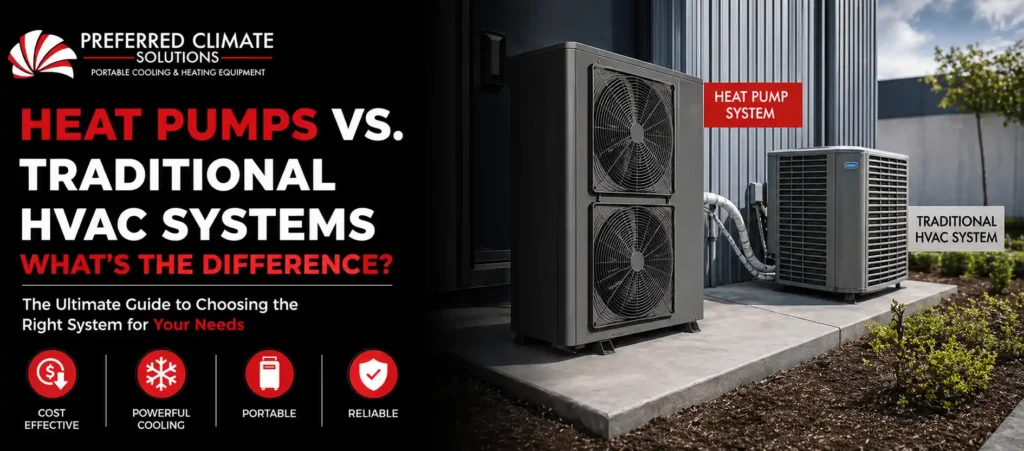
Selecting the right heating and cooling system is crucial for both comfort and cost-efficiency in your home or business. With options like heat pumps and traditional HVAC systems available, understanding their differences can guide your decision-making process.

Heat pumps and traditional HVAC systems serve the same fundamental purpose—to regulate the indoor climate of your home or business—but they operate based on different principles and technologies.

This detailed guide compares both systems, providing essential insights to choose the best fit for your specific needs.

Understanding the Basics of Heat Pumps and Traditional HVAC Systems

A heat pump is a versatile device that uses heat transfer principles to heat and cool a building. Unlike traditional heating systems that generate heat by burning fuel, heat pumps move heat from one place to another using a refrigerant cycle similar to that used in an air conditioning unit.

Commercial heaters extract heat from the outside air—even in cold temperatures—and transfer it indoors in the winter. During the summer months, the process reverses, and the heat pump expels heat from the interior of your building to cool it down.

There are two main types of heat pumps: air-source and ground-source. Air-source heat pumps are more common and generally less expensive to install. They draw heat from the ambient air outside.

Ground-source or geothermal heat pumps, however, utilize heat from the ground or nearby water sources, which remain at a constant temperature, making them more efficient but costly and invasive to install.

Traditional HVAC Systems Explained

Traditional HVAC systems typically consist of two separate mechanisms: a furnace for heating and an air conditioning unit for cooling. The furnace component may operate on natural gas, oil, or electricity, burning fuel to create heat distributed throughout the building via ducts and vents.

The air conditioning component compresses refrigerant, which absorbs heat from the indoor air and releases it outside, thereby cooling the air inside the building.

HVAC systems are highly effective in extreme weather conditions, providing a powerful heating or cooling output as needed. They are particularly useful in regions with significant temperature fluctuations between seasons.

The distinct separation of heating and cooling functions allows each unit to specialize in one task, often making them more effective at each function than a heat pump might be under extreme conditions.

Comparing Heat Pumps and Traditional HVAC Systems

Choosing between a heat pump and a traditional HVAC system depends on climate, cost, and energy efficiency considerations. Heat pumps are most effective in moderate climates where extreme cold temperatures are uncommon, as they can struggle to extract heat from extremely cold air.

However, their ability to heat and cool efficiently makes them an attractive option for energy conservation and lower utility bills.

In contrast, traditional HVAC systems are indispensable in areas experiencing both hot summers and cold winters. They offer robust and reliable performance that can comfortably handle drastic temperature changes, ensuring indoor environments remain stable regardless of external weather conditions.

Both systems have their merits, and the choice between a heat pump and a traditional HVAC system should be informed by an understanding of these fundamental differences and how they relate to your specific heating and cooling needs.

Efficiency of Heat Pumps and Traditional HVAC Systems

When selecting a system to manage the climate in your space, it is essential to understand the efficiency of heat pumps compared to traditional HVAC systems. Each has strengths and operational efficiencies that can significantly impact energy use and cost over time.

Heat Pump Efficiency

Heat pumps are lauded for their efficiency, primarily because they transfer heat rather than generate it. This process requires significantly less energy, making heat pumps advantageous in mild to moderate climates.

An air-source heat pump can deliver one-and-a-half to three times more heat energy to a home than the electrical energy it consumes. This is possible because it moves heat rather than converting it from a fuel like combustion heating systems do.

However, the efficiency of a heat pump can decrease as the temperature drops. In very cold climates, traditional heat pumps may struggle to extract heat from severely cold air, requiring supplementary heating sources, which can reduce overall energy efficiency.

Traditional HVAC System Efficiency

On the other hand, traditional HVAC systems might not match heat pumps’ energy efficiency in mild conditions but are essential for extreme climates. These systems are split between a furnace, often powered by natural gas, oil, or electricity, and an air conditioning unit.

The furnace provides powerful heating capacity and maintains warmth even in the coldest weather, making it ideal for regions with harsh winters.

The air conditioning unit in a traditional HVAC system operates similarly to a heat pump by transferring heat from the indoors to the outdoors. However, because each unit specializes in heating or cooling, they can perform more effectively in their respective roles during extreme temperatures.

Heat pumps are more energy-efficient in stable, milder climates, whereas traditional HVAC systems offer reliable comfort and performance in regions experiencing wider temperature ranges. This makes understanding the typical climate of your area crucial in choosing the most efficient and cost-effective system for your needs.

Evaluating the Environmental Impact

The environmental impact of heating and cooling systems is an increasingly important consideration for homeowners and businesses alike. Both heat pumps and traditional HVAC systems have specific environmental footprints that depend on their energy sources, operational efficiency, and refrigerants used.

Environmental Impact of Heat Pumps

Heat pumps are generally considered more environmentally friendly than traditional HVAC systems. This is largely due to their operational method, which involves transferring heat rather than generating it through combustion.

By utilizing the ambient air or ground as heat sources or sinks, heat pumps reduce the amount of fossil fuels needed, thereby decreasing greenhouse gas emissions. Moreover, the shift towards using low global warming potential (GWP) refrigerants in newer models enhances their eco-friendly credentials further.

Heat pumps can efficiently manage heating and cooling, offering a year-round, energy-efficient solution that helps lower overall carbon footprints. In regions with electricity sourced from renewable energies, the environmental benefits of installing a heat pump are even more pronounced, aligning with global efforts to combat climate change.

Traditional HVAC Systems Environmental Impact

Traditional HVAC systems typically rely on separate units for heating and cooling, with furnaces that may burn natural gas, oil, or use electricity. The combustion of fossil fuels is a major contributor to carbon dioxide emissions, a leading greenhouse gas.

While modern HVAC systems are becoming more efficient and less polluting, the inherent reliance on fossil fuels for heating makes them less sustainable than heat pumps.

Air conditioners in traditional setups also have an environmental impact, primarily through their use of refrigerants. Older models often use refrigerants with high GWPs, which contribute to global warming when they leak.

Efforts to phase out harmful refrigerants and replace them with eco-friendly options are underway, improving the environmental profile of new traditional HVAC systems.

While both systems have environmental drawbacks, heat pumps generally offer a more sustainable option, particularly where reducing energy consumption and minimizing reliance on fossil fuels are priorities.

Cost Analysis: Initial Investment vs. Long-Term Savings

The financial considerations of choosing between a heat pump and a traditional HVAC system encompass the upfront costs and the ongoing operational expenses.

Initial Investment:  Generally, heat pumps carry a higher initial cost, especially if opting for geothermal systems, which require extensive installation procedures like underground piping.

However, air-source heat pumps or heater rentals might present a more cost-competitive upfront investment compared to traditional HVAC systems, depending on the existing infrastructure.

Long-Term Savings: Heat pumps often yield greater long-term savings due to their superior energy efficiency. They are particularly cost-effective in climates where extreme cold is not prevalent, as they utilize less energy to transfer heat than traditional systems for heating and cooling.

This efficiency translates into lower monthly utility bills. Additionally, with fewer mechanical components, heat pumps typically have lower maintenance costs and longer life spans, which can mitigate the initial higher investment over time.

Traditional HVAC Systems: while possibly cheaper initially, tend to have higher operating costs, particularly in regions with extreme weather conditions due to their higher energy demands. Frequent use under harsh conditions can also increase wear and tear, necessitating more frequent repairs and replacements.

When evaluating costs, it’s important to consider both the short-term financial outlay and the long-term financial impacts, including potential energy savings and maintenance expenses, to determine which system offers the best financial return.

Applications and Suitability

The choice between heat pumps and traditional HVAC systems often hinges on specific environmental and architectural factors that dictate their best use cases.

Applications of Heat Pumps

Heat pumps are particularly well-suited for regions with mild to moderate climates where extreme cold temperatures are not a frequent concern. They efficiently transfer heat from the mild outside air or ground into the building.

Their dual functionality allows them to cool spaces in the summer and heat them in the winter, making them a versatile choice for areas with moderate temperature extremes, such as the Pacific Northwest or parts of the Mid-Atlantic.

Suitability of Traditional HVAC Systems

On the other hand, traditional HVAC systems are more appropriate for areas experiencing severe weather conditions, including deep freezes or scorching heat waves. These systems provide robust heating and cooling, ensuring indoor comfort despite harsh external temperatures.

Separating heating and cooling units allows each to operate with maximum efficiency and reliability. Traditional HVAC systems deliver the dependable performance needed to maintain stable indoor environments year-round in extreme weather regions like the upper Midwest or desert areas.

The decision between using a heat pump and a traditional HVAC system should consider the typical climate of the area, the building’s insulation and design, and the specific heating and cooling needs of the space to ensure optimal comfort and efficiency.

Installation and Maintenance Essentials

Correct installation and regular maintenance are vital for the longevity and efficiency of any heating and cooling system.

  • Professional Installation: Certified professionals should install both systems to ensure optimal efficiency and safety.
  • Regular Maintenance: Maintenance schedules vary; heat pumps require less frequent checks, while traditional HVAC systems need regular attention to ensure all components function correctly.

FAQ

Answers to common questions about HVAC systems and heat pumps to help with making informed decisions.

What are the 4 types of HVAC systems?

The four main types of HVAC systems are: 1) Split systems with separate indoor and outdoor units, 2) Hybrid systems that adjust energy use by switching between gas and electric power, 3) Ductless mini-splits, and 4) Packaged heating and air systems typically installed outdoors.

How is HVAC different from AC?

HVAC stands for Heating, Ventilation, and Air Conditioning, encompassing heating, cooling, and air quality. AC refers only to Air Conditioning, which cools indoor air. HVAC systems provide a comprehensive climate control solution, while AC systems are solely focused on cooling.

How often should HVAC be serviced?

HVAC systems should be serviced at least once a year to ensure efficient operation and prevent unexpected breakdowns. Having the heating system checked in the fall and the air conditioning in the spring is common.

What is the working principle of an HVAC system?

The working principle of an HVAC system involves three main processes: heating, ventilation, and air conditioning. These systems regulate indoor temperature by using a heat exchanger for heating, a compressor cycle for cooling, and fans or ducts to distribute the conditioned air.

How often should HVAC be serviced?

An HVAC system typically lasts between 15 to 25 years, depending on the type of system, quality of installation, brand, and how well it has been maintained. Regular servicing and timely repairs can significantly extend the life of an HVAC system.

Find Heating Comfort For Your Space

Choosing between a heat pump and a traditional HVAC system involves considering various factors, including your local climate, the size of your space, and your budget. Both commercial heater services offer distinct advantages, but the right choice depends on your particular needs and circumstances.

Ready to optimize the comfort and efficiency of your space? Consult with a professional to determine whether a heat pump or a traditional HVAC system is best suited for your needs.

Contact Preferred Climate Solutions today for HVAC systems, heat pumps, heater rental, and AC rental to get started on improving your heating and cooling solutions.

, , , ,
hvac system
Blog

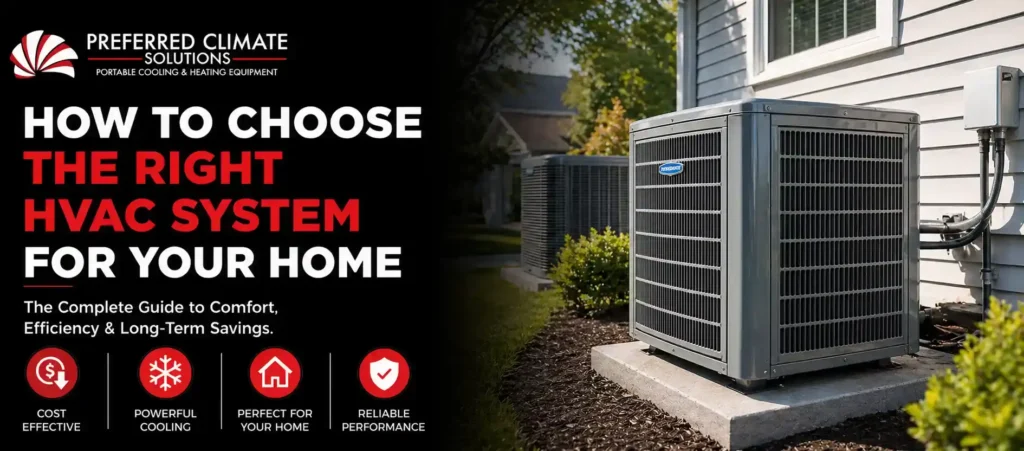
The right HVAC system makes a big impact on your home’s comfort, energy costs, and air quality. From central units to portable solutions, finding the right fit requires a close look at your needs. This guide covers key factors you should know to help you make an informed, cost-effective decision.

Assessing Your Home’s Requirements

Begin by noting down the unique needs of your home. Climate, home size, and layout play key roles in determining which system to keep your space comfortable year-round without wasting energy or overspending.

Climate and Weather Conditions

What is your local climate? Invest in cooling systems with higher capacities in warm or tropical regions, as they must handle sustained high temperatures.

Reliable and efficient heating systems take priority in colder climates. A system optimized for your weather ensures comfortable temperatures without overworking the equipment.

In areas with summer and winter, look for a versatile HVAC setup, like as a heat pump that can adapt to different temperature requirements.

Home Size and Layout

The size and layout of your home affect which HVAC system will work best.

Larger homes need a system that can cover a bigger area. A central HVAC system can maintain consistent temperatures across multiple rooms in these cases.

However, oversized units often lead to short cycling, where the system frequently turns on and off, reducing efficiency and increasing energy costs. Proper sizing will produce optimal performance and cost savings.

For smaller homes or apartments, compact or ductless systems, like mini-splits, can provide adequate heating and cooling without taking up much space. With a mini-split, you can control each room independently, allowing targeted cooling or heating without impacting other areas.

Types of HVAC Systems: Pros and Cons

Choosing the right HVAC system involves understanding the available options and how they match your home’s needs.

Each type of system comes with its own set of benefits and potential limitations, so weighing these factors helps make an informed decision.

Central HVAC Systems

Central HVAC systems are popular for homes with existing ductwork or when the goal is to control the temperature across a large area. Using a central unit connected to ductwork, it distributes air to each room, offering a balanced and consistent temperature throughout the home.

Pros:

  • Central systems provide even temperature distribution, ideal for larger homes or those with open floor plans.
  • High energy efficiency with modern units can lead to lower long-term utility costs.
  • Quiet operation, as the main unit is typically placed outside or in an insulated area.

Cons:

  • Higher initial installation costs, especially if ductwork needs to be added or updated.
  • Potential for energy loss through ductwork, especially if ducts are poorly insulated or improperly sealed.
  • Less flexibility for zoned heating and cooling, as the entire house is typically maintained at the same temperature.

Ductless Mini-Split Systems

Ductless mini-split systems are versatile, compact, and ideal for homes without existing ductwork or those who want to avoid the energy loss associated with ducts. In small homes and multi-zone setups, these systems allow each area to be controlled independently.

Pros:

  • Energy-efficient and versatile, making them ideal for homes of all sizes, especially those without ductwork.
  • Flexible for zoning, as each unit can be controlled separately, providing individualized comfort for each room.
  • Quick and cost-effective installation without the need for invasive ductwork.

Cons:

  • Higher upfront costs per unit can add up if several units are needed.
  • Visible wall-mounted units may not blend seamlessly with home decor.
  • May struggle to provide enough heating in very cold climates, as mini-splits are generally designed for mild to moderate weather.

Heat Pumps

Heat pumps are an energy-efficient choice, especially in regions with moderate climates. These systems work by transferring heat from outside to inside during the winter and reversing the process in the summer, providing both heating and cooling.

Pros:

  • Energy-efficient operation since they transfer heat rather than generating it, leading to lower energy bills.
  • Suited for mild climates, they can efficiently provide heating and cooling without requiring separate systems.
  • Environmentally friendly, with low greenhouse gas emissions compared to traditional HVAC systems.

Cons:

  • Decreased efficiency in extremely cold temperatures may require a backup heating source.
  • Higher initial investment, though the long-term energy savings, can offset this cost over time.
  • Performance can vary based on outdoor temperatures, potentially impacting comfort during extreme weather.

Portable Cooling and Heating Equipment

Portable heating and cooling equipment can be an effective option for those with short-term needs or smaller spaces. Portable units are available for both cooling (like portable air conditioners) and heating (such as space heaters or portable furnaces), and they’re ideal for temporary or supplemental climate control.

Pros:

  • Cost-effective solution for temporary needs, such as during home renovations or for short-term rental properties.
  • Flexibility to move the unit between rooms or to adjust the location as needed.
  • No permanent installation is required, making them ideal for renters or limited use.

Cons:

  • Limited coverage area, so they work best for single rooms rather than entire homes.
  • Generally less energy efficient than permanent HVAC systems, leading to higher operating costs over time.
  • Portable units can be noisy and take up floor space, which can be inconvenient in smaller rooms.

Renting portable HVAC equipment can be a practical choice if you only need it temporarily or in a specific situation.

Preferred Climate Solutions offers various rental options, including AC rentals and heater rentals, which provide flexibility and affordability without the commitment of a full system purchase. Their portable equipment applications cover diverse requirements, making adapting the equipment to specific events or short-term needs easy.

Each HVAC option has distinct features that suit different home layouts, climate needs, and budgets. Consider these pros and cons when you’re selecting the system that offers the best balance of efficiency, comfort, and cost for their unique situations.

Choosing Energy-Efficient Options

Energy efficiency has become a very important aspect of an HVAC system. Efficient systems reduce utility costs, lessen environmental impact, and maintain comfort with less energy. Energy ratings and features can help you narrow the choices.

Importance of Energy Efficiency

An efficient HVAC system requires less energy to heat or cool a home, lowering monthly energy bills. Energy efficiency ratings provide a standardized way to compare systems:

  • AFUE (Annual Fuel Utilization Efficiency): Applied to furnaces, this rating reflects how effectively a furnace converts fuel to heat. A higher AFUE percentage means less fuel waste.

Compared to less efficient models, a system with high SEER, AFUE, or HSPF ratings can save hundreds of dollars annually on energy bills. Choose a system with ratings that meet the needs of your climate and home size, as well as any energy-saving goals you may have.

Seasonal Recommendations

Portable cooling and heating equipment rentals can offer a practical and energy-efficient solution without the long-term commitment.

  • Summer: In hot climates, a temporary air conditioner rental can cool specific rooms or zones without increasing energy use throughout the house.
  • Winter: Heater rentals provide warmth without requiring a new installation or overworking a central HVAC system. This is useful for temporary housing, seasonal spaces, or home renovations.

Energy-Efficient Equipment Features

When choosing an HVAC system, look for features that contribute to long-term efficiency.

  • Programmable Thermostats: These allow homeowners to adjust temperatures based on daily schedules, ensuring the system isn’t running unnecessarily when no one is home.
  • Zoning Options: Systems with zoning allow you to set different temperatures for different areas in the home, reducing energy waste in unused spaces.
  • Variable-Speed Motors: These motors adjust speed based on demand, using less energy when full power isn’t needed and providing a more consistent temperature.

Modern HVAC systems often integrate these features to create energy-efficient environments. Choosing a system with these options can significantly impact long-term savings and reduce environmental impact.

Benefits of Energy Efficiency for the Environment and Budget

In addition to cost savings, efficient systems contribute to a reduced environmental footprint by consuming less energy. Over time, this reduction can have a meaningful impact on overall emissions, especially in homes that rely heavily on HVAC systems year-round.

Air Scrubbers and Indoor Air Quality

Air scrubbers improve indoor air quality by reducing contaminants such as dust, allergens, mold spores, and other pollutants. These systems use advanced filtration and air purification technology like UV light to neutralize airborne particles and improve air circulation, making them beneficial for allergies, asthma, or sensitivities to indoor air pollutants.

Humidifiers and Dehumidifiers

Managing indoor humidity levels can impact the efficiency of an HVAC system. Proper humidity levels help prevent dry skin, respiratory discomfort, mold growth, and damage to wood and furnishings. Generally, indoor humidity should be maintained between 30% and 50% for optimal comfort and health.

Humidifiers add moisture to the air, helping alleviate dry skin, sore throats, and respiratory issues while reducing static electricity.

Dehumidifiers help control excess moisture, which can lead to mold growth, musty odors, and damage to walls or furniture. By reducing humidity, dehumidifiers create a more comfortable indoor environment and relieve some strain on the air conditioner, improving overall energy efficiency.

Cost Considerations and Financing Options

Investing in the best HVAC system involves upfront costs, installation fees, and ongoing maintenance, which can vary depending on the system’s size, type, and features. Evaluating the short-term and long-term financial impacts helps ensure a cost-effective choice that suits your budget and needs.

Installation Costs and Long-Term Savings

HVAC installation costs vary widely based on the system’s complexity and whether additional components, such as ductwork, air scrubbers, or humidifiers, are needed. Central HVAC systems with extensive ductwork typically cost more upfront than ductless mini-splits, though they may offer greater efficiency for larger homes.

Here’s a breakdown of costs to consider:

  • System Size: Larger systems cost more initially but are necessary for homes with greater square footage.
  • Energy-Efficient Models: Energy-efficient models might come with a higher initial cost but can lead to significant savings on utility bills. Often, the initial investment can be recouped over a few years.

Investing in energy-efficient equipment and ensuring proper installation can lower long-term costs. Over time, the system’s reduced energy consumption adds up, making it a financially sound decision for your budget and your home’s value.

Maintenance and Service

Scheduling annual or biannual maintenance—especially at the start of the heating and cooling seasons—helps prevent costly repairs and ensures optimal performance. Typical maintenance costs include filter replacements, system cleanings, and routine inspections, which can identify minor issues before they escalate into expensive repairs.

Neglecting regular maintenance can lead to problems such as clogged filters, which reduce airflow, or refrigerant leaks, which impact cooling performance.

Financing and Rebates

Financing options make investing in a quality HVAC system easier without straining your budget. Many HVAC providers offer financing plans that allow homeowners to spread payments over several months or years, making the initial investment more manageable.

Preferred Climate Solutions can guide customers through available financing options, making choosing a high-efficiency system within budget easier.

Rebates and incentives may also be available for energy-efficient systems, particularly those with high SEER or AFUE ratings. Many utility companies and government programs offer rebates for energy-saving home improvements. These rebates can offset some of the installation costs, making high-efficiency systems even more affordable.

Renting vs. Buying HVAC Equipment

Deciding between renting and buying HVAC equipment depends on factors like budget, duration of use, and specific needs. Each option has benefits, so considering your situation and goals will help you make the best choice.

When to Rent

Renting HVAC equipment works well for short-term needs or when full ownership isn’t necessary, such as home renovations or seasonal use. Renting a portable AC or heater offers a quick and affordable solution. Renting can also be far less costly than buying for short-term or occasional use, particularly for spaces that don’t need continuous heating or cooling.

Conclusion

Choosing the right HVAC system involves understanding your home’s needs, from climate and size to budget and comfort preferences. Each system type—central, ductless, heat pump, or portable—offers distinct advantages, and adding components like air scrubbers or humidifiers can enhance air quality and comfort.

Weighing installation and maintenance costs, as well as financing options, ensures long-term value and efficiency. Renting versus buying also provides flexibility for different situations, allowing for cost-effective solutions that meet temporary and permanent needs.

Contact Preferred Climate Solutions to help you find the ideal HVAC setup for lasting comfort and savings.

, , , , , , ,
Scroll to Top